This content has been automatically translated from Ukrainian.
Articulation in art and architecture is a method of stylizing joints in the formal elements of architectural design.
In architecture, the term "Articulation" refers to the separation or expressiveness of details and elements of a building or structure. This means defining and expressing different parts of an architectural object through the use of elements such as relief, textures, projections, setbacks, arches, columns, and other architectural details.
Articulation helps create an expressive and structured appearance of a building, making it aesthetically appealing and functional.
Through articulation, each part is connected to the whole structure in such a way that the connected parts blend in styles ranging from exceptionally clear connections to the opposite of high articulation — fluidity and continuity of connection. In highly articulated structures, each part is clearly defined and distinctly highlighted. The articulation of a building shows how parts fit into the whole, emphasizing each part separately.
Continuity and fusion
The opposite of clear articulation is "Continuity and fusion," which reduces the separateness of parts. Clear articulation emphasizes the "strategic break," while continuity articulation focuses on smooth transitions. Continuity (or fusion) reduces the independence of elements and concentrates on the largest element of the whole, while simultaneously reducing attention to other independent elements.
Articulation and space
Architecture is called the art of articulating space. Geometry is the primary tool of the architect, but it is not the system of communication of the architect. This system is the definition of the object in the surrounding space. Articulation is the geometry of form and space.
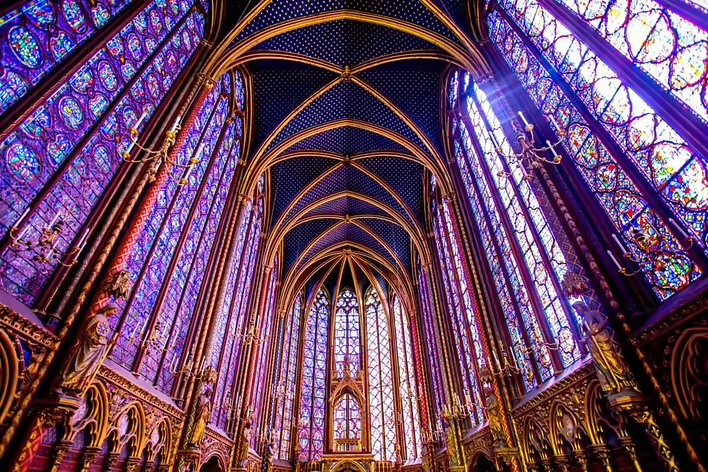
Examples of articulation:


Like it?React
🧵
This post doesn't have any additions from the author yet.