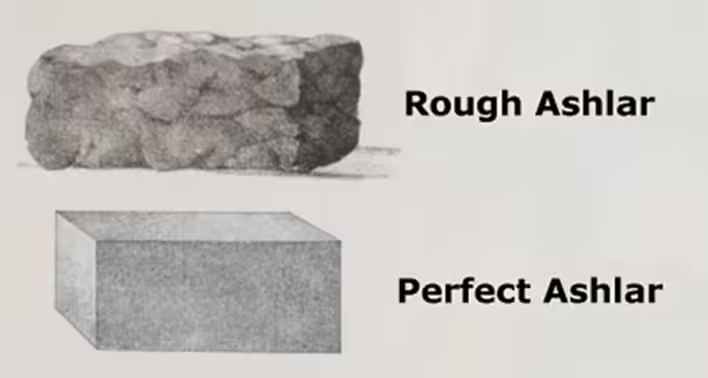
Ashlar in architecture refers to the method of processing and using stone in construction. Ashlar is also a type of dressed stone used to create walls, facades, and other architectural elements.
The history of the term ashlar in architecture
The word is attested in Middle English and comes from the Old French aisselier, from the Latin axilla, a diminutive of axis, meaning "board".
In an architectural context, the term "ashlar" has come to define a specific style of stone processing. It describes a method of working stone where the material is evenly cut or shaped into smooth, flat surfaces.
The use of the term ashlar in architecture is quite old, and its traces can be found in architectural styles from various eras and cultures. From antiquity to the Middle Ages and beyond, ashlar has been used to create monumental and refined structures.
"Джерело - bricksmasons"
Where and how is Ashlar used in architecture?
Building facades:
Ashlar is often used to adorn building facades, giving them a uniform and smooth appearance. This is especially common in high-quality residences, palaces, temples, and historic buildings.
Багатокутна кладка з тесаного каменю в Куско, Перу. "Джерело - Вікіпедія"
Columns and arches:
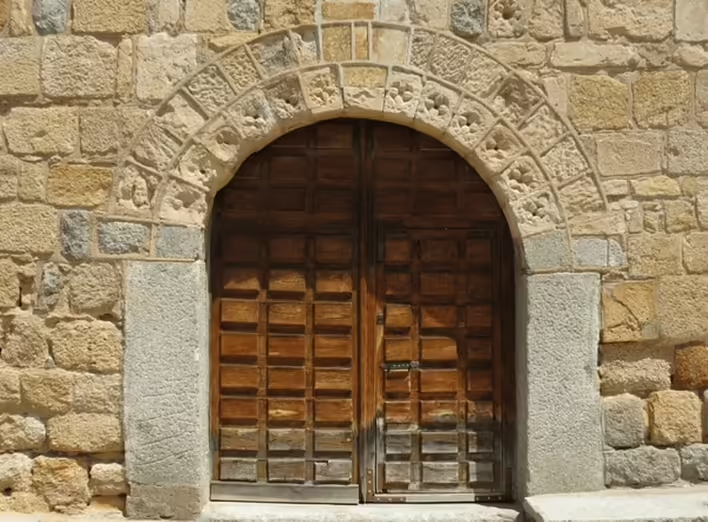
The use of Ashlar to create columns and arches adds structural strength and aesthetic refinement. This can often be seen in the architecture of temples, museums, and historical monuments.
Романська церква Сан-Естебан. (12 століття). "Джерело - shutterstock"
Bridges:
Ashlar can be used to create supports and cladding for bridge walls, adding stability and an elegant appearance.
"Джерело - stonearchbridges"
Manors and residences:
In luxurious manors and residences, especially in historical periods, Ashlar was used to create impressive architectural elements such as doors, windows, and entrances.
"Джерело - crazy useful"
Historical monuments:
Many historical monuments and castles feature elements created using Ashlar. This includes walls, towers, volumetric decorative elements, and much more.
Memorials and palaces:
Ashlar has often been used in the construction of memorials, palaces, and monuments to give them status and sophistication.
Architectural details:
Ashlar can be used to create various architectural details, such as bas-reliefs, moldings, and relief ornaments.
It is important to note that various methods of stone processing are used in modern construction, and Ashlar remains one of the means to achieve a high standard of finishing and aesthetics.
Thus, in conclusion:
How does the use of Ashlar in architecture affect the functionality of building elements?
The use of Ashlar gives buildings an aesthetically pleasing appearance, making them elegant and durable. This method of stone processing impacts the functionality of building elements, adding stability and longevity, delineating functional zones, and highlighting key architectural features.