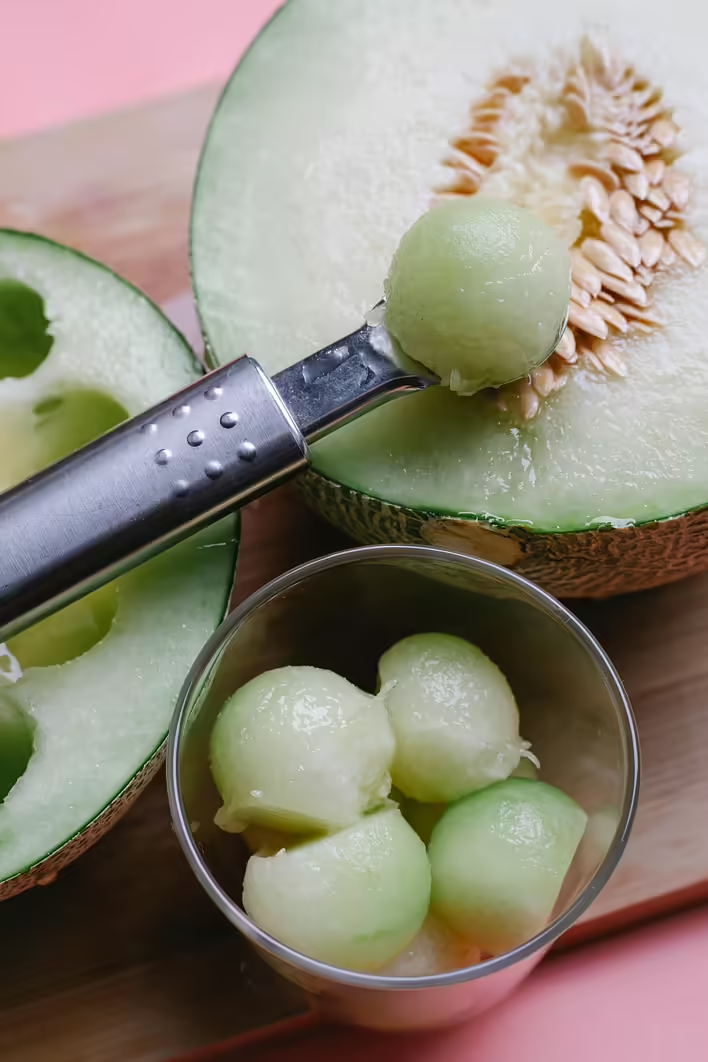
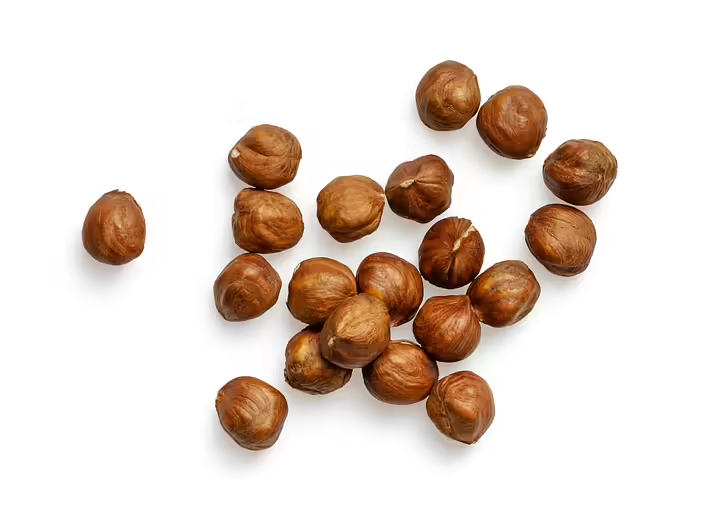
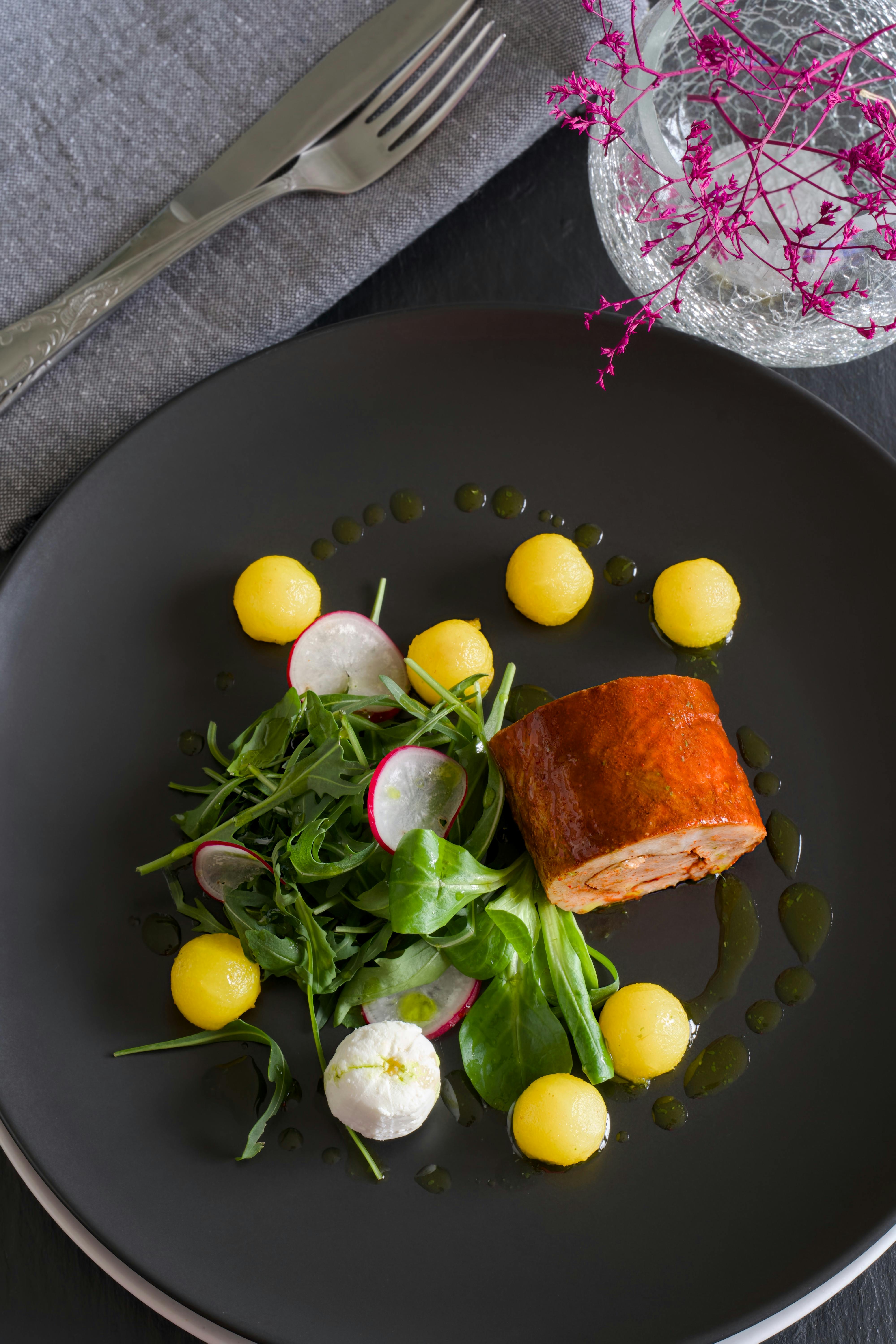
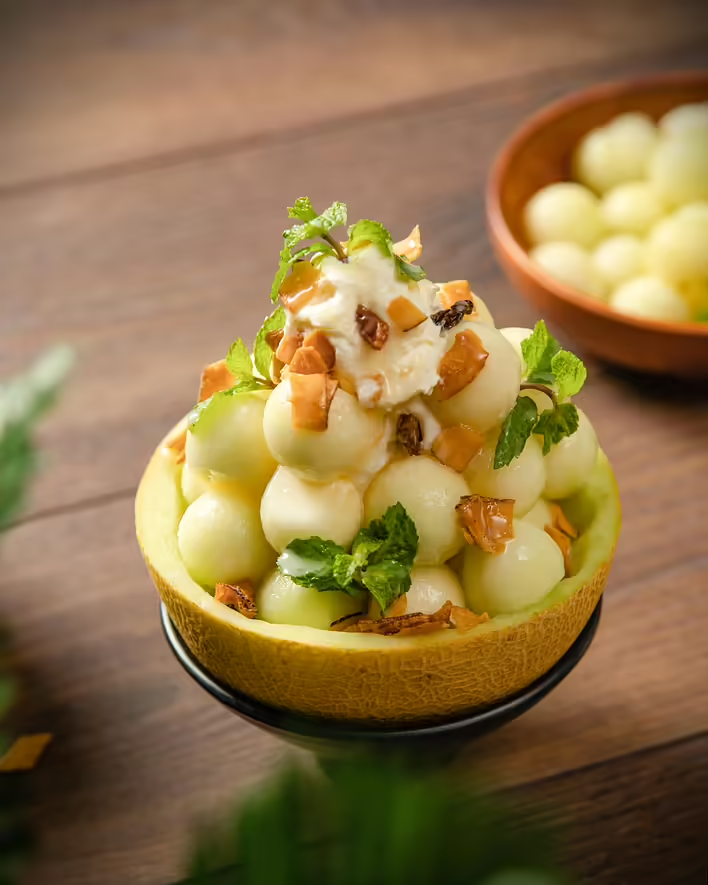
If you have ever encountered small perfect balls made of potatoes, carrots, or melons in a restaurant, it was most likely a noisette cut. The French word noisette translates to “hazel” or “hazelnut” – and the shape of the vegetables after such processing indeed resembles a hazelnut.
Origin and Philosophy of the Technique
The noisette cutting technique has French origins and belongs to the classic methods of haute cuisine. It was used as early as the 19th century by chefs in aristocratic estates to give dishes aesthetic sophistication and precision. In classic culinary schools in France, noisette is a mandatory skill.
But noisette is not just about beauty. This shape ensures even cooking: the balls are uniform in size, so they bake or boil evenly and look impressive on the plate.
What Tool is Used?
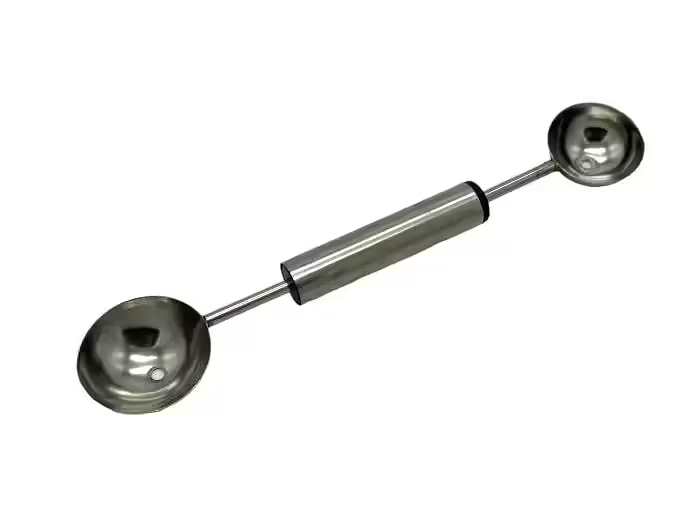
The main tool is a melon baller or a ball-forming spoon. It is often referred to as a "noisette spoon," or simply "noisette." Typically, it has a semi-circular shape and a pointed edge for easy cutting.
Some spoons have holes to easily release the balls, especially from juicy vegetables and fruits.
Where is Noisette Used?
In gastronomy:
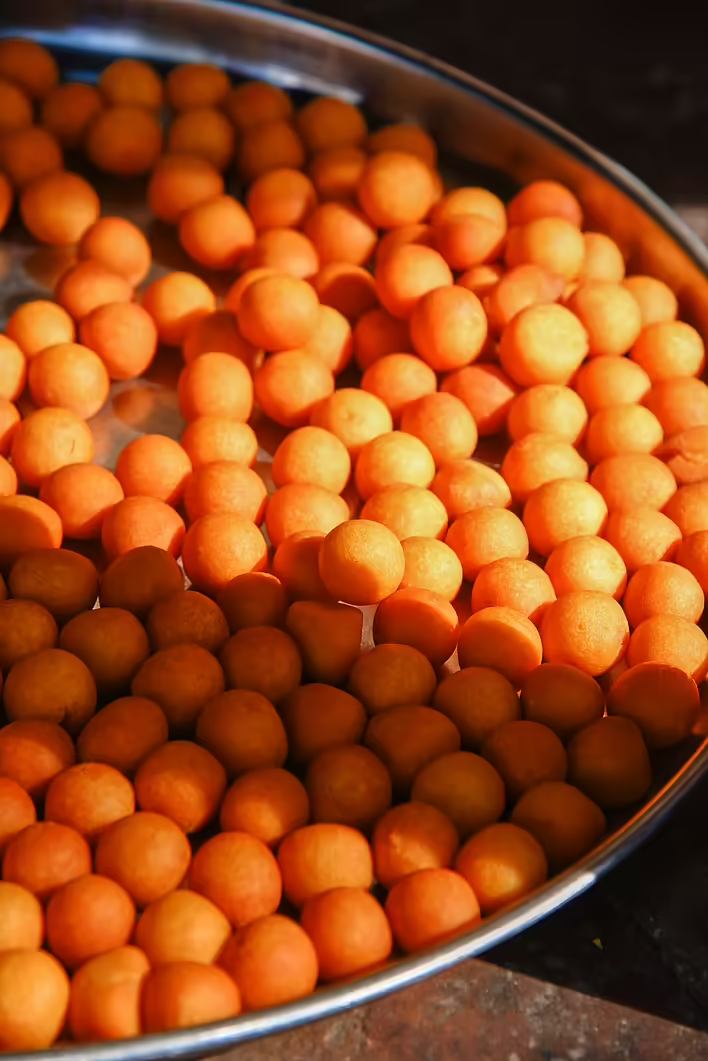
Garnishes: the classic garnish of pommes noisettes – fried or baked potato balls.
Decor: carrot, beet, zucchini, or radish balls – for decorating salads or appetizers
Fruits in Desserts: melon, watermelon, mango balls are often used in fruit salads or as a plating art element
Molecular Cuisine: the ball shape is suitable for playful dish concepts
In Home Cooking:
For children's dishes – vegetables in the shape of balls look fun and are better perceived.
For buffets – it is aesthetically pleasing and convenient to serve miniature portions of vegetables or fruits in the shape of balls on skewers or spoons.
Dishes Where Noisette Makes Sense
Pommes noisettes – a classic: potato balls that are deep-fried or baked to a golden crust.
Fruit balls with sorbet – a dessert mix at summer banquets
Melon and prosciutto salad – very Italian-Mediterranean aesthetic
Vegetable assortment for vegetable broth — uniform ball shapes ensure even cooking
Puréed soups with a garnish of balls — a beautiful combination of textures.
Is It Worth Trying at Home?
Yes! The noisette cut is not as difficult as it seems, but it adds a wow effect even to simple dishes. Especially if you love food styling or are cooking for holidays.
Just take a potato, melon, or cucumber – and try to make a few balls. In just a few minutes, you will have the effect: "Oh, this looks like from a restaurant."
The noisette technique is like culinary jewelry work. It does not change the taste of the product but emphasizes attention to detail. Sometimes it is these little things that create a wow effect even in an ordinary garnish.