This content has been automatically translated from Ukrainian.
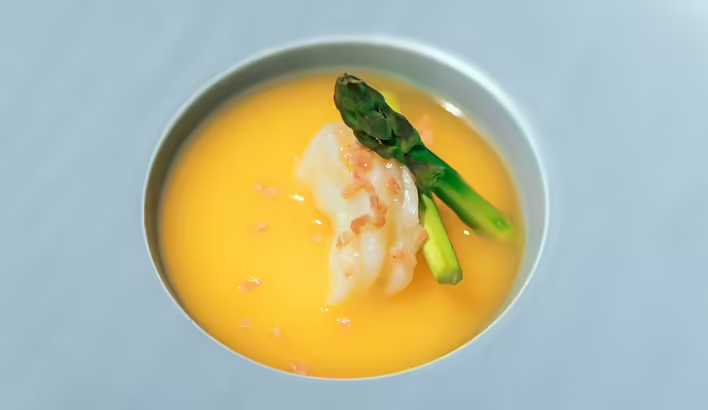
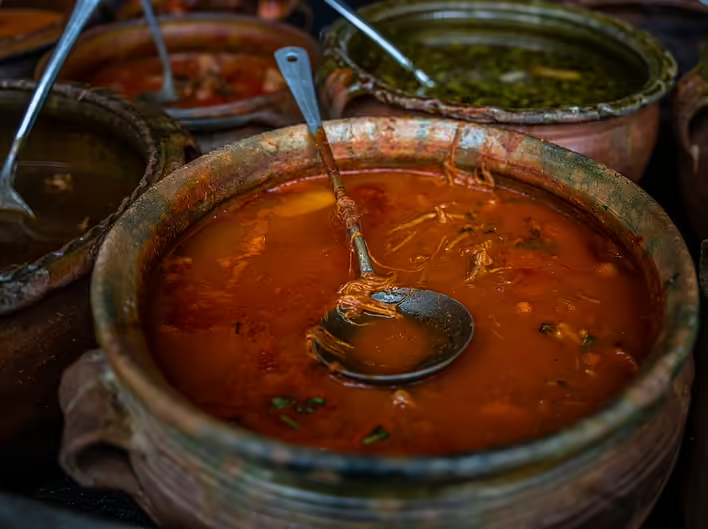
In previous posts, we explored the main four sauces mères, grandes sauces, or classic “mother” sauces of French cuisine: béchamel, velouté, espagnole, and hollandaise. Now it’s time to introduce the final representative of the family – tomato sauce (sauce tomate). It is made from tomatoes (thank you, Captain Obvious) and serves as a starting point for dozens of other sauces, or petites sauces. Its value lies in its rich flavor, balance of acidity and sweetness, as well as its versatility, allowing it to pair with meat, fish, vegetables, and pasta.
History and Place in Culinary Arts
Tomatoes appeared in Europe only in the 16th century, as they were brought from South America only after Columbus's expeditions. However, the recognition of these members of the nightshade family in culinary arts came much later. In French gastronomy, tomato sauce was established only in the 19th century when Auguste Escoffier included it in the famous “great five.” Since then, it has become the basis for countless classic dishes and sauce variations.
The sauce described by Escoffier is made from fresh, blanched, and crushed tomatoes, fried pork belly (bacon), mirepoix of carrots, onions, and thyme, with the addition of light meat broth and roux for thickening.
However, it is important to give historical justice and mention Italian cuisine, as it is quite hard to imagine it without tomato sauce. The first recipe for it was published under the name “Spanish Tomato Sauce” in the work of Italian chef Antonio Latini in Lo Scalco alla Moderna (“The Modern Steward”), published in two volumes in 1692 and 1694 respectively.

It was only in the 18th century that tomato sauce began its expansion to the south of France, starting from Provence. And it was the Provençals who migrated northward that began to spread tomatoes. But let’s return to Italy. Historical sources tell us that the first mention of using tomato sauce with pasta appears in 1790 in the cookbook of Roman chef Francesco Leonardi L'Apicio moderno.
Classic Ingredients and Preparation
Traditionally, tomato sauce is prepared as follows:
- for the base, chopped onions, carrots, and sometimes celery (mirepoix) are sautéed in butter or olive oil
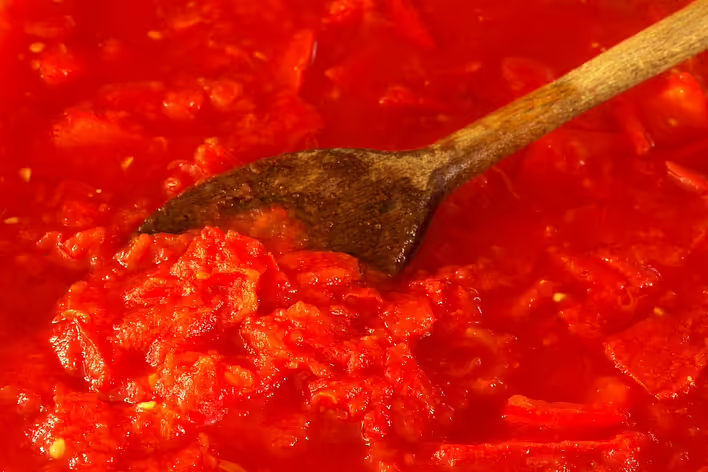
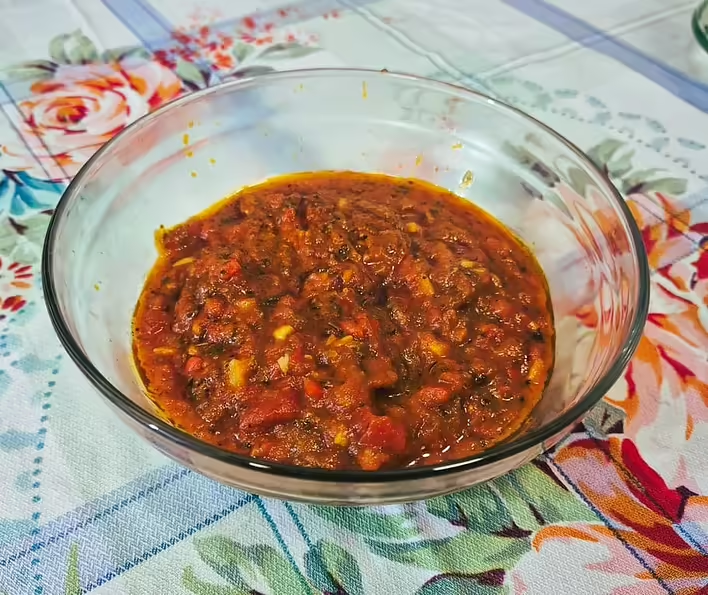
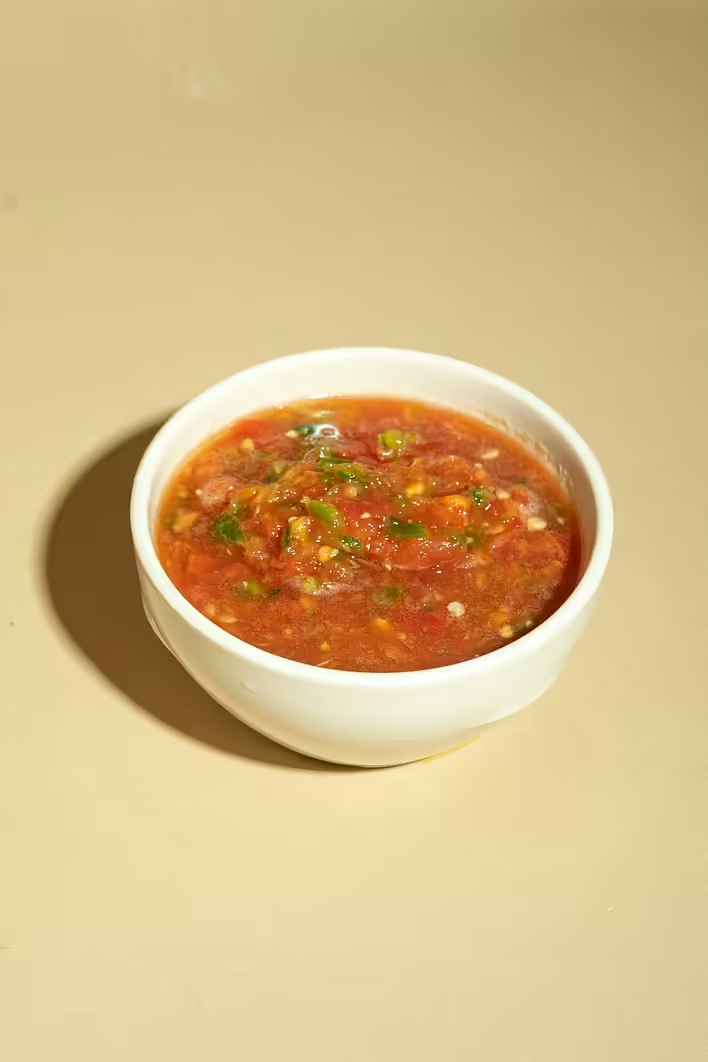
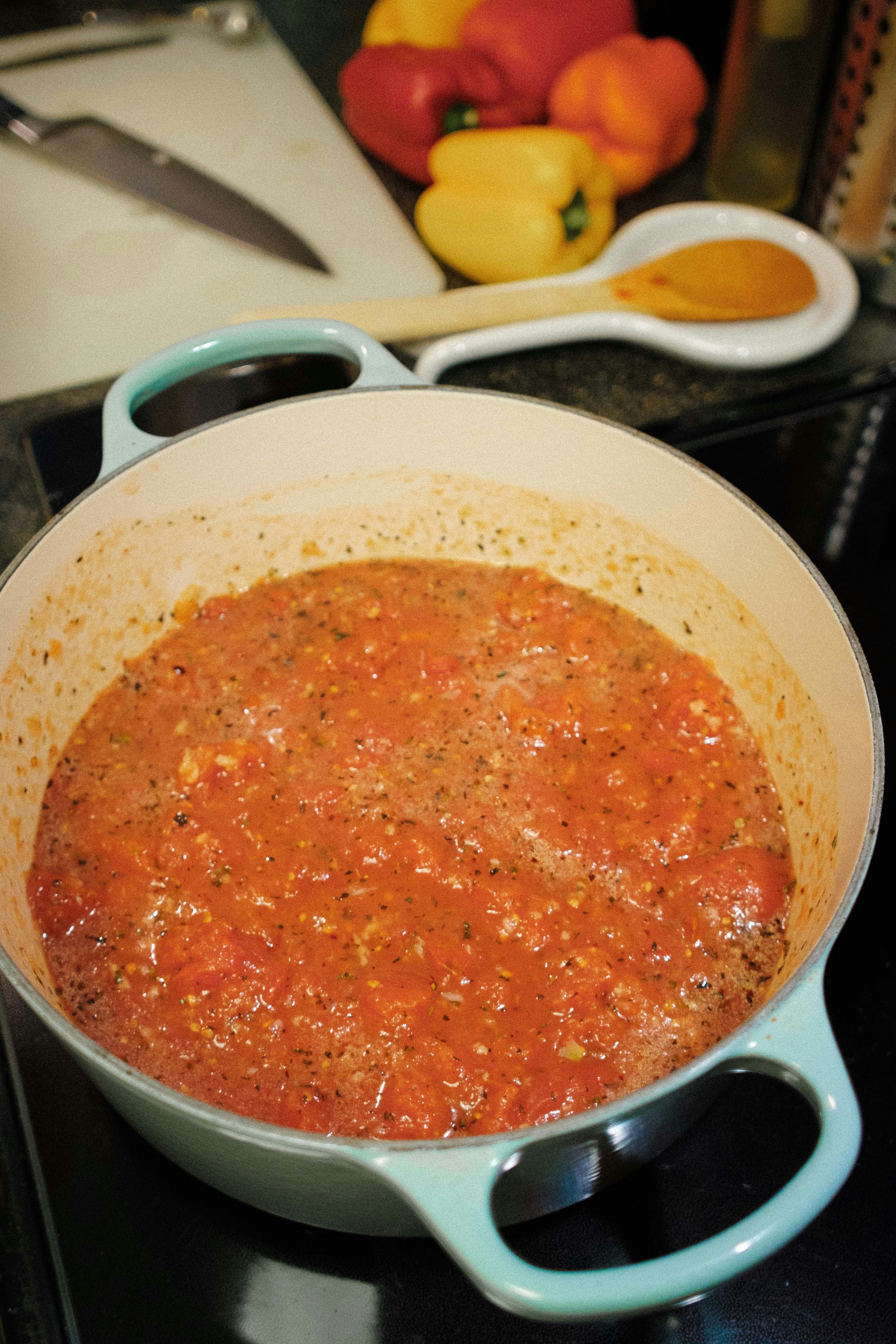
- tomatoes should be fresh or canned, pureed to a smooth consistency
- traditionally, the sauce is thickened with roux (a mixture of flour and butter), but modern versions often do without it
- for flavor accents, bacon, ham, garlic, bay leaves, and thyme are used
- after simmering the ingredients, the sauce is strained and brought to the desired thickness. If it turns out too thick, it can be thinned with light meat broth.
As a result, a thick and rich sauce with a deep aroma is produced. It can serve as a base or a finishing touch in many dishes.
Derived Sauces
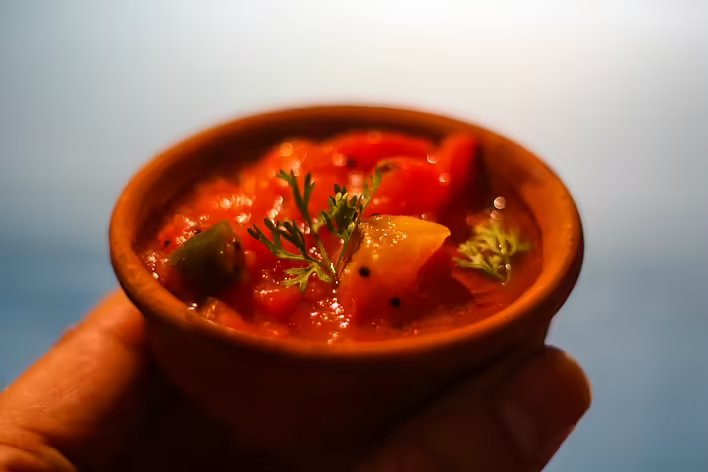
Thanks to its versatility, tomato sauce has many “descendants.” Using it as a base, you can prepare many new sauces, including:
-
marinara: a light sauce with olive oil, garlic, and basil
- Creole sauce: with onions, peppers, celery, and spicy seasonings
- Neapolitan: a classic of Italian cuisine based on tomatoes, olive oil, and herbs (but the strangest thing is that the Neapolitans themselves are surprised when they hear “Neapolitan sauce,” as they simply call it tomato sauce. The name “Neapolitan” was most likely given by Italian migrants who carried their culinary culture to new countries).
Where It Is Used
Tomato sauce is a true universal ingredient. It is used as a base for pasta, lasagna, in meat and poultry dishes (beef stew, chicken in sauce), in fish dishes (for example, cod in tomato sauce), as a base for pizza, in combination with vegetables (for example, in ratatouille or stuffed peppers)... In other words, it can be confidently stated that its strength lies in simplicity, accessibility, and the ability to change the character of a dish from delicate to spicy. It is a true culinary “constructor” that makes the kitchen more diverse and interesting. Cook for your pleasure!
Like it?React
🧵
This post doesn't have any additions from the author yet.