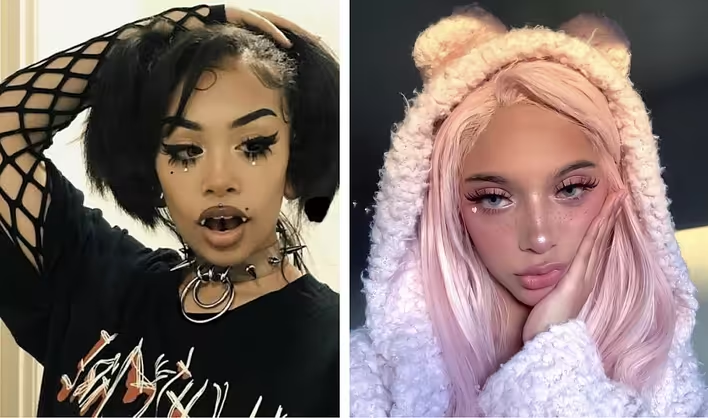
This content has been automatically translated from Ukrainian.
Modern youth fashion is increasingly born not on the runways, but in social media. It is there that dozens of new aesthetics have emerged over the past few years, quickly becoming popular worldwide. Among them, e-girl and alt girl are particularly often mentioned.
These two concepts are frequently confused, and this is quite understandable. They became popular almost simultaneously, actively developed thanks to TikTok, and often use similar elements of clothing, makeup, and accessories.
However, despite their outward similarities, they are different internet aesthetics, each with its own history, characteristic features, and sources of inspiration.
Who is an e-girl
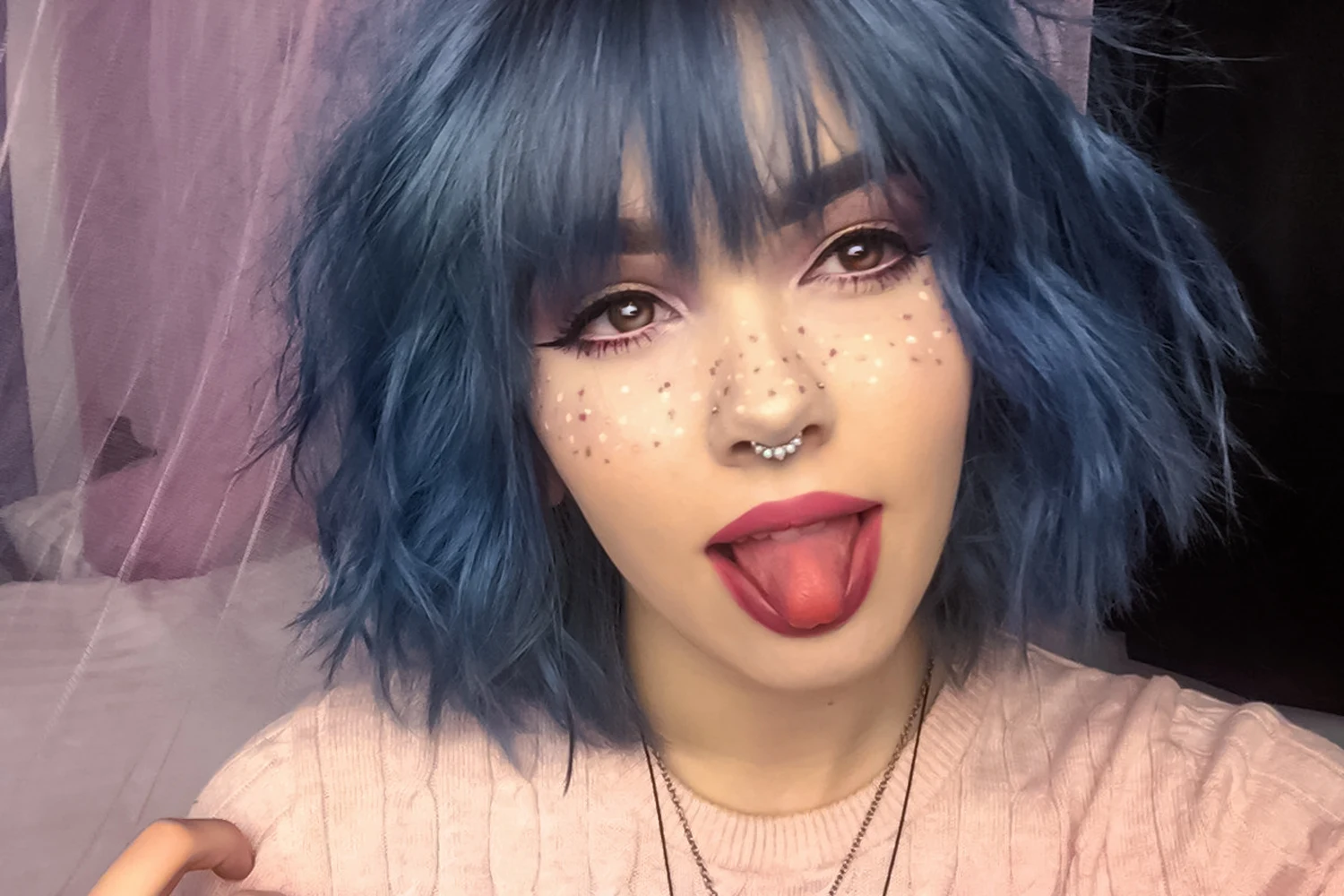
The term e-girl comes from the English letter e, which is an abbreviation of the word electronic and is often used in words related to the internet or digital environments.
Initially, the word e-girl had nothing to do with fashion. In the early 2010s, it was sometimes used to refer to girls who spent a lot of time in online games, social networks, or on streaming platforms.
The modern meaning of this term only emerged in the late 2010s. It was then that a well-recognized image of the e-girl was formed on TikTok, which quickly went viral.
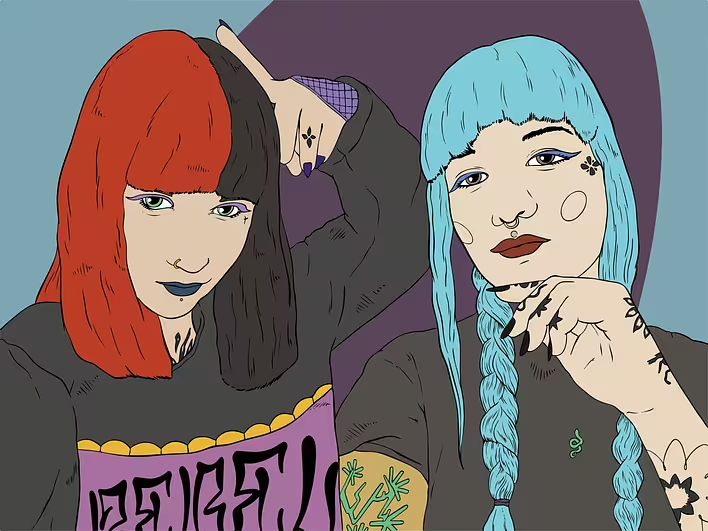
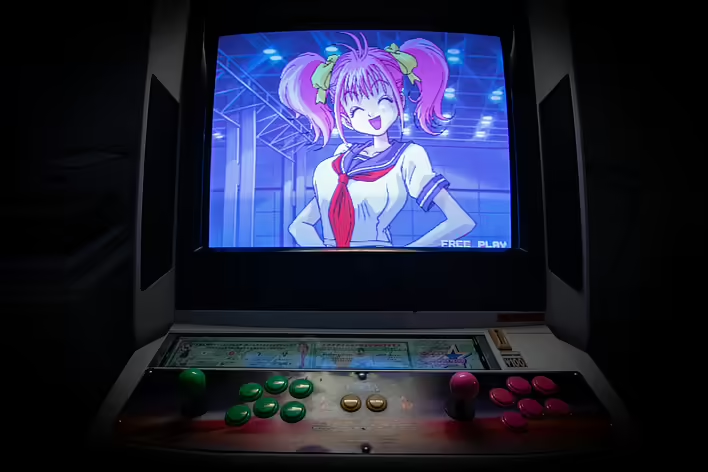
Its characteristic features include pink blush on the cheeks and nose, long eyeliner, small drawn hearts or stars under the eyes, dyed hair, plaid skirts, striped long sleeves, chains, and a large number of accessories.
This image was significantly influenced by Japanese pop culture, anime, K-pop, streamer culture, and early 2000s fashion.
How the alt girl appeared
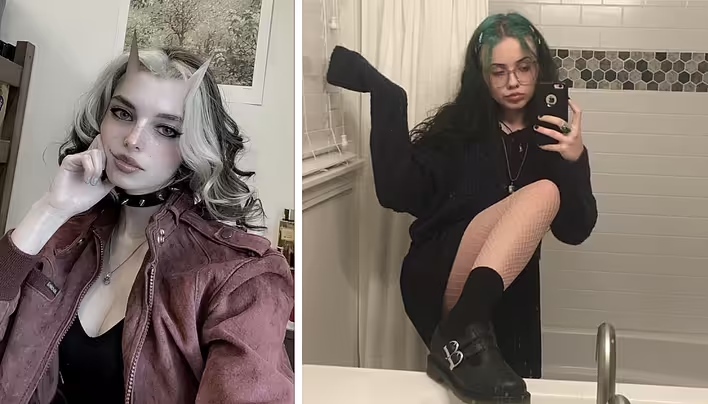
The alt girl style became popular around the same time but developed in a somewhat different way.
As we mentioned in a separate article, alt girl is not a separate subculture, but a modern internet aesthetic that combines elements of punk, grunge, goth, emo, skater fashion, Y2K, and many other directions.
That is why this style does not have a single canonical image.
Some draw inspiration from grunge, others from gothic fashion, while others add elements of punk or early 2000s aesthetics. This is one of the main features of the alt girl — the freedom to experiment and combine various sources of inspiration.
Why they are constantly confused
At first glance, e-girls and alt girls can indeed look very similar.
In both cases, you can often see dyed hair, chunky shoes, baggy clothing, chains, chokers, piercings, and expressive makeup.
Moreover, both directions became popular thanks to the same platforms — primarily TikTok, Instagram, and Pinterest.
It is not surprising that people who are just beginning to explore modern youth fashion often do not see the difference between them.
Clothing and makeup: what is the difference
The most noticeable differences between e-girl and alt girl manifest in their appearance.
The e-girl image is usually more recognizable and stylized. It is characterized by pink blush on the cheeks and nose, graphic eyeliner, small hearts or stars under the eyes, plaid skirts, striped long sleeves, crop tops, chunky chains, and a large number of accessories. All this creates a bright image that reflects the influence of anime, K-pop, streamer culture, and social media.
In contrast, the alt girl has significantly fewer strict rules.
Her wardrobe can combine baggy jeans, oversized hoodies, plaid shirts, leather jackets, mesh clothing, chunky boots or sneakers, metal jewelry, and vintage items. Makeup can also vary greatly — from almost imperceptible to bold, with dark accents on the eyes.
The main difference lies not in individual items, but in the approach to combining them. While the e-girl has a fairly recognizable visual image, the alt girl leaves much more room for individuality.
Do their musical preferences differ?
Music also helps to understand the difference between these aesthetics, although there are no strict rules here.
The e-girl image is often associated with modern pop, K-pop, electronic music, hyperpop, and artists who became popular thanks to TikTok.
For alt girl, alternative rock, indie, shoegaze, grunge, post-punk, or dream pop are more frequently mentioned. That is why thematic playlists often feature Deftones, Mitski, Radiohead, Slowdive, Bring Me the Horizon, Paramore, or The Neighbourhood.
However, these are just common associations. In reality, people's musical preferences are so diverse that it is almost impossible to determine which aesthetic they belong to based solely on a playlist.
What unites e-girls and alt girls
Despite all the differences, there is much in common between these directions.
Both primarily formed in the digital environment and gained popularity through short videos, photographs, and social media algorithms.
They are characterized by a desire to experiment with appearance, not being afraid of bold makeup, unusual hairstyles, or unconventional clothing combinations.
Moreover, neither e-girls nor alt girls have strict rules. Each person can add their own details to their image, making it almost impossible to find two absolutely identical people even within the same direction.
Why these styles are gradually mixing
If a few years ago the differences between them were quite noticeable, today this boundary is gradually blurring.
Social media constantly mixes different fashion directions. People are inspired by the photos, videos, and images of other creators, adding their own ideas and combining elements of various aesthetics.
That is why it is becoming increasingly difficult to draw a clear line between alt girl, e-girl, Y2K, grunge, coquette, or other popular directions.
Many modern images combine several aesthetics at once, and this has long become a common phenomenon.
Is it necessary to choose only one style?
Not at all.
This is one of the main features of modern internet culture.
If previously youth subcultures had quite clear boundaries and rules, today most people do not strive to fully identify themselves with just one direction.
Combining elements of alt girl, e-girl, Y2K, grunge, or even classic style in one wardrobe has become quite normal.
For many, this is no longer a way to declare belonging to a certain community, but an opportunity to experiment, change, and gradually find their own style.
Two aesthetics that changed social media fashion
Despite numerous debates online, e-girl and alt girl should not be perceived as opposites.
They formed around the same period, developed under the influence of the same platforms, and often borrowed ideas from each other.
If the e-girl became recognizable due to her bright and cohesive image, the alt girl offered much more freedom for creative experiments and the combination of different directions.
Perhaps that is why today the boundary between them is increasingly blurred. Modern youth fashion no longer requires strict adherence to one style. On the contrary, it encourages searching for one's own combination of ideas, inspiration, and aesthetics, creating a unique image that best reflects a person's character.
Like it?React
🧵
This post doesn't have any additions from the author yet.