This content has been automatically translated from Ukrainian.
Bakadere (バカデレ, Bakadere) is one of the unofficial character archetypes in anime, manga, and visual novels. This term refers to heroes who are distinguished by their kind heart, openness, and sincerity, but at the same time often behave too naively, frivolously, or imprudently.
Unlike most other dere archetypes, bakadere is not necessarily defined by the way they express romantic feelings. This type of character is primarily characterized by a combination of friendliness, emotionality, and a certain simplicity. Because of this, the term is most often used by anime fans rather than Japanese authors or popular culture researchers.
Bakadere are easily recognizable by their straightforwardness. They may misunderstand obvious things, get into funny situations, or make strange decisions, but they almost never do so with malicious intent. On the contrary, their sincerity, optimism, and willingness to help others often evoke sympathy from both the characters in the work and the viewers.
Origin of the Name
The name bakadere is formed from two Japanese words:
- baka (バカ / 馬鹿) — "fool," "simpleton," "unintelligent," "reckless," or "naive";
- dere (デレ) — a state of being in love, tenderness, or open expression of affection.
Thus, bakadere can be roughly translated as "naive and kind character" or "simple-hearted hero who openly expresses their feelings".
It is worth noting that the word baka in Japanese does not always mean a person with low intelligence. It is often used to refer to those who behave recklessly, frivolously, or too trustingly. That is why most bakadere are not "foolish" in the literal sense. They are rather simple-hearted, impulsive, and view the world with childlike straightforwardness.
Unlike tsundere, kudere, or dandere, where the first part of the name describes a certain model of behavior regarding romantic feelings, in the word bakadere, it characterizes a personality trait of the character. That is why this archetype is often considered less formal and is not always included in the classic classification of dere types.
History of the Archetype's Emergence
Unlike tsundere, dandere, or kudere, bakadere is not among the classic dere archetypes that formed in the Japanese visual novel and romantic anime industry. This term appeared much later in fan circles as an attempt to describe characters that were difficult to categorize into existing categories.
The word bakadere gained popularity in the second half of the 2000s when anime fans began actively systematizing various types of characters. While tsundere described heroes who hide their feelings behind rudeness, and kudere described emotionally restrained characters, there was no separate name for kind, open, and very naive heroes. It was then that the term bakadere began to be used.
At the same time, it is important to understand that bakadere is not an official category used by Japanese studios or manga authors when creating characters. This word is most often found on fan wikis, thematic forums, and in discussions among anime fans. That is why the boundaries of the archetype remain quite conditional: different sources may classify the same hero as bakadere, genki, or even deredere.
The formation of this archetype has been significantly influenced by the popular image of the "good simpleton" in Japanese culture — a person who may not be very clever but is always sincere, honest, and ready to help others. Such characters appeared in manga and anime long before the term bakadere itself emerged, but they received a separate name only after the classification of dere archetypes became popular among fans.
That is why today bakadere can be considered a fan extension of the classic dere archetype system. Although this term does not have the same established status as tsundere or yandere, it is widely used to describe characters whose sincerity, optimism, and simplicity are the main traits of their character.
Main Traits of Bakadere
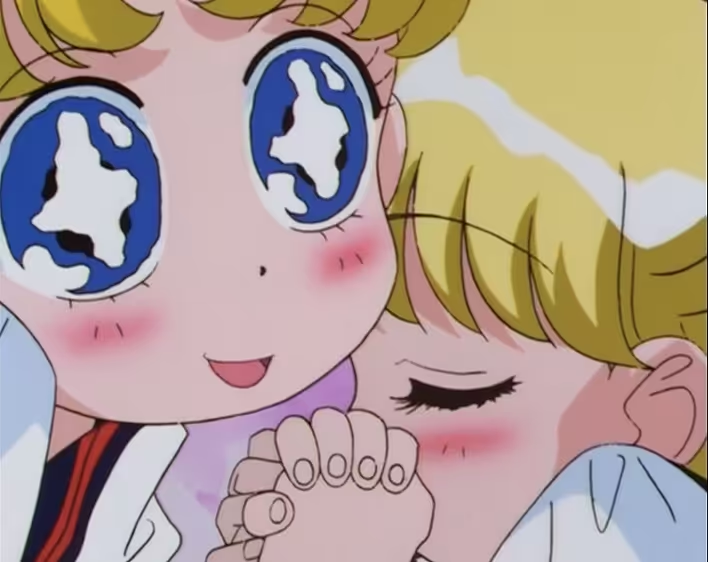
Bakadere are easily recognizable by their straightforwardness and friendly attitude towards their surroundings. They rarely act with malicious intent but often find themselves in funny situations due to their own inattentiveness, impulsiveness, or excessive trust. It is this simplicity that makes them so recognizable.
The most characteristic traits of bakadere are:
- Naivety. Such characters tend to trust people even when there is no substantial reason for it. Because of this, they can be taken advantage of by more cunning heroes.
- Simple-heartedness. Bakadere usually say what they think, without trying to hide their emotions or manipulate others.
- Impulsiveness. They often act without thinking about the consequences and then try to fix the situation.
- Optimism. Even after failures, bakadere rarely fall into despair. They quickly recover and continue to move forward.
- Friendliness. Despite their clumsiness, such characters sincerely strive to help others and usually easily find friends.
- Comedic nature. Bakadere often become a source of humor in the plot. Their unexpected actions, literal interpretations of words, or strange conclusions often create funny scenes.
At the same time, it would be a mistake to think that bakadere are simply "foolish characters." Many representatives of this archetype handle complex tasks well, possess outstanding abilities, or have significant life experience. Their "foolishness" usually manifests only in specific situations or relates to everyday life.
Moreover, not all bakadere are equally naive. Some may be very energetic and loud, while others are calm and dreamy. The common trait remains that they view the world much more simply than most other characters and rarely complicate their lives with unnecessary worries.
It is precisely because of this sincerity that bakadere often become heroes who support others even in the toughest moments. They may not always find the right words or the best solution, but their help almost always comes from a pure heart.
How Bakadere Differs from Other Dere Archetypes
Bakadere are often confused with other archetypes due to their friendliness and openness. However, the main feature of this type of character lies not in how they express their feelings, but in their simplicity, naivety, and tendency to act without excessive contemplation.
Bakadere are most often compared to deredere. Both archetypes are characterized by openness, sincerity, and a good attitude towards others. However, while deredere primarily describes a character who openly demonstrates romantic feelings, bakadere is a hero whose naivety and frivolity are the main traits of their character. They may be in love, but this is by no means obligatory.
With dandere, the difference is even more noticeable. Dandere are quiet, shy, and often afraid to express their thoughts. Bakadere, on the other hand, usually say everything that comes to their mind, even if it puts them in an awkward position.
Sometimes bakadere are mistakenly referred to as genki characters. This is understandable, as many representatives of both types are cheerful, active, and full of energy. However, genki is an archetype that primarily describes inexhaustible enthusiasm and a positive mood, while bakadere is defined by their simplicity and naivety. A character can be genki but not be bakadere at all, and vice versa.
Another important distinction is that bakadere are not a classic dere archetype. While tsundere, kudere, dandere, or yandere describe different ways of expressing romantic feelings, bakadere largely characterizes personality traits. That is why this term is more often used in fan circles as a convenient description of a certain type of hero.
This feature makes bakadere unique. It is an archetype of a character who conquers not with mystery, coldness, or inner conflict, but with their sincerity, straightforwardness, and ability to view the world more simply than others.
Most Famous Examples of Bakadere Characters
Since bakadere is not an officially established archetype, lists of its representatives may vary depending on the source. Therefore, below are characters that are most often classified as this type due to their naivety, simplicity, and friendly nature.
Usagi Tsukino (Sailor Moon)
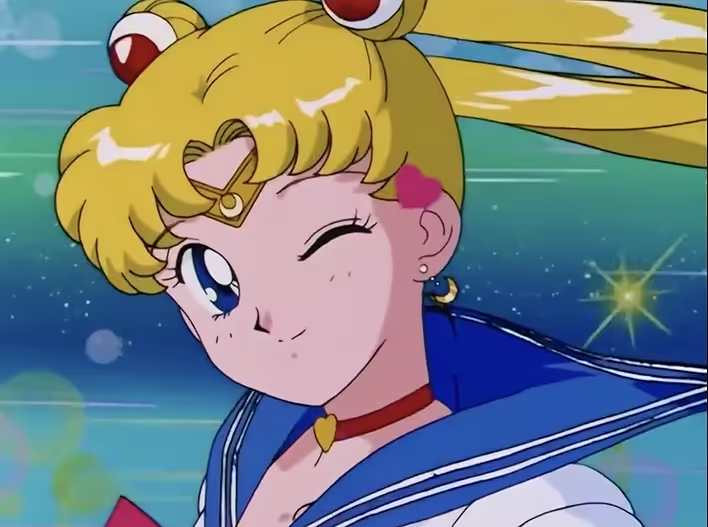
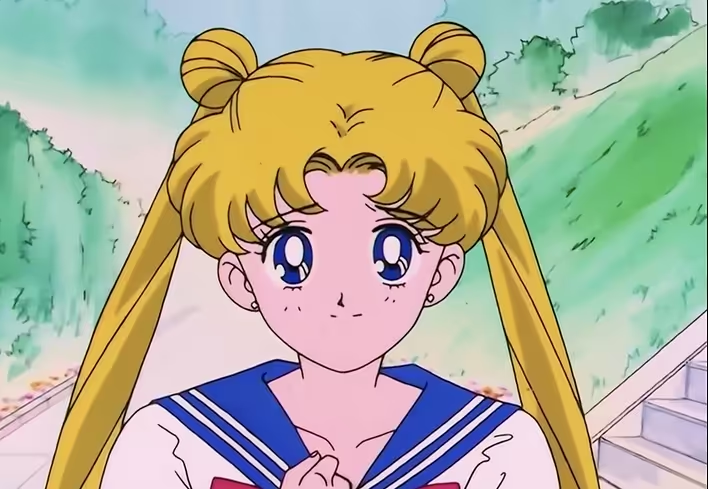
Usagi is one of the most famous examples of bakadere. At the beginning of the story, she is lazy, not very diligent in her studies, often panics over trivial matters, and frequently behaves childishly. At the same time, Usagi is extremely kind, genuinely cares for her friends, and is always ready to risk herself for others. It is this combination of naivety and a big heart that has made her a classic example of this archetype.
Son Goku (Dragon Ball)
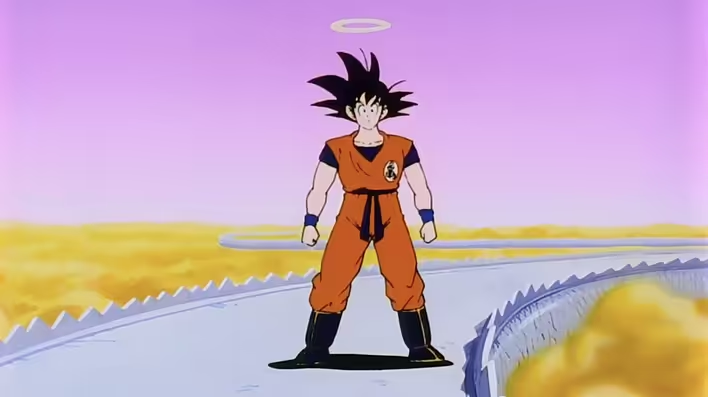

Despite his incredible strength, Goku often behaves surprisingly simply. He does not always understand social norms, can take his interlocutors' words literally, and views the world with childlike straightforwardness. However, his sincerity, honesty, and friendliness are an integral part of his character, which is why fans often refer to him as bakadere.
Naruto Uzumaki (Naruto)
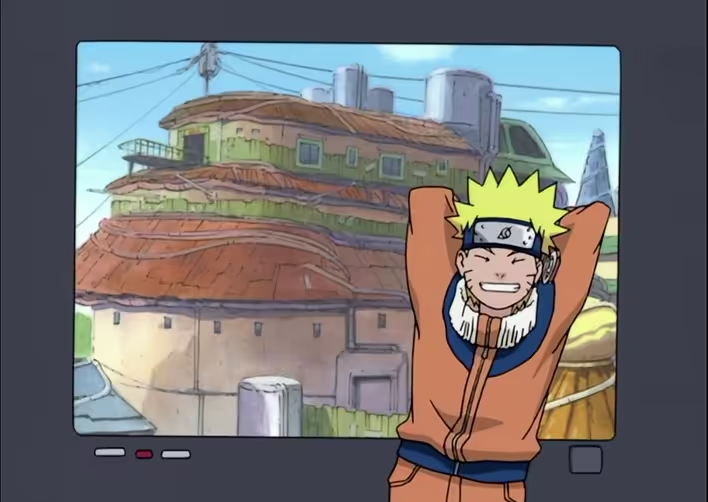

At the beginning of the series, Naruto is impulsive, noisy, and often makes thoughtless decisions. Due to his straightforwardness, he regularly finds himself in awkward or funny situations. At the same time, his optimism, openness, and genuine desire to help others fit well with the image of bakadere, although as the plot develops, the character becomes significantly more mature.
One Punch Man (Saitama) (One-Punch Man)

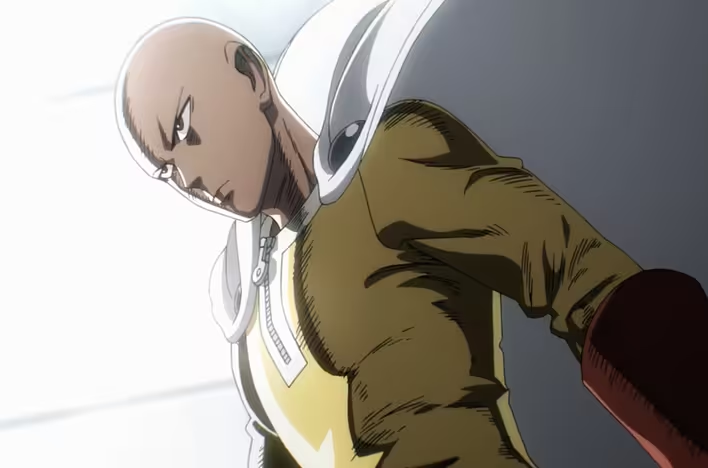
Saitama is not a classic bakadere, but he is sometimes classified as this archetype due to his simple attitude towards life, naivety in everyday matters, and complete lack of arrogance. Despite his incredible strength, he often behaves like an ordinary person who is more concerned about discounts at the store than his own fame.
Mina Ashido (My Hero Academia)


Mina is characterized by cheerfulness, openness, and a somewhat frivolous attitude towards life. She quickly connects with people, is not afraid to look silly, and often acts impulsively. Although she is not always unequivocally classified as bakadere, this character well demonstrates many characteristic traits of the archetype.
Other Dere Archetypes
Bakadere is just one of many archetypes that anime fans use to describe character behavior. If you are interested in this topic, also take note of other dere archetypes:
- Tsundere — hide their feelings behind sharpness or feigned indifference.
- Deredere — openly demonstrate love, care, and affection.
- Dandere — shy and silent, open up only to close people.
- Kudere — calm, cool-headed, and restrained in expressing emotions.
- Yandere — can become dangerously obsessed due to excessive love.
- Kamidere — behave as if they are above others.
- Himedere — seek to be treated like a princess or prince.
- Maidere — an unconventional type of character that does not fit into classic dere categories.
- Oujidere — characters who strive to meet the image of the ideal prince.
Like it?React
🧵
This post doesn't have any additions from the author yet.