All original content is created in Ukrainian. Not all content has been translated yet. Some posts may only be available in Ukrainian.Learn more

Why are the living given an odd number of flowers, and the dead — an even number

Post cover: Why are the living given an odd number of flowers, and the dead — an even number
This content has been automatically translated from Ukrainian.
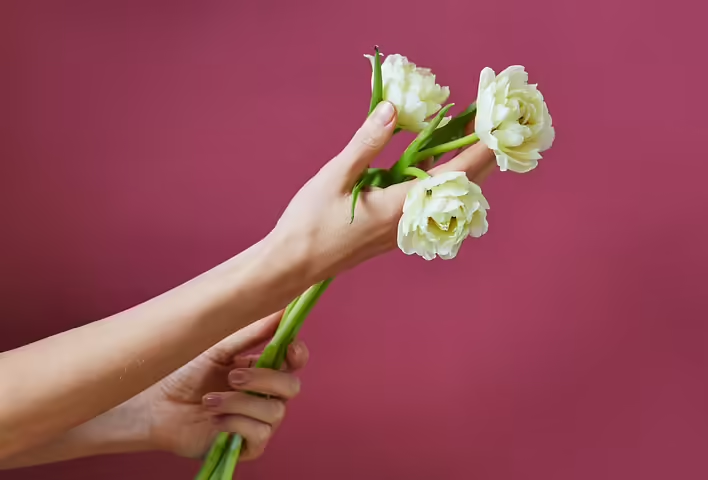
The tradition of counting flowers in a bouquet has ancient symbolic roots. It is related to ideas about life, death and the harmony of numbers that were formed in pre-Christian times. An odd number has long been considered “living” — as not bisecting, and therefore symbolizes movement, development, and prolongation of life. Even, on the contrary, was perceived as the end, peace and symbolic “completeness of the circle”, that is, the end. That is why an odd number of flowers became a sign of wishing for life, and an even number of flowers honored the dead.
karolina-grabowska-S9Bdv4zokbE-unsplash.jpg
This tradition is most widespread in the countries of Eastern Europe, in particular in Ukraine, Belarus, Latvia, Lithuania, Poland and partly in Georgia. In these cultures, an even number is associated with burials or memorial rites. Therefore, for example, a bouquet of two or four flowers is not customary to give for a birthday or wedding —, this is considered a bad omen.
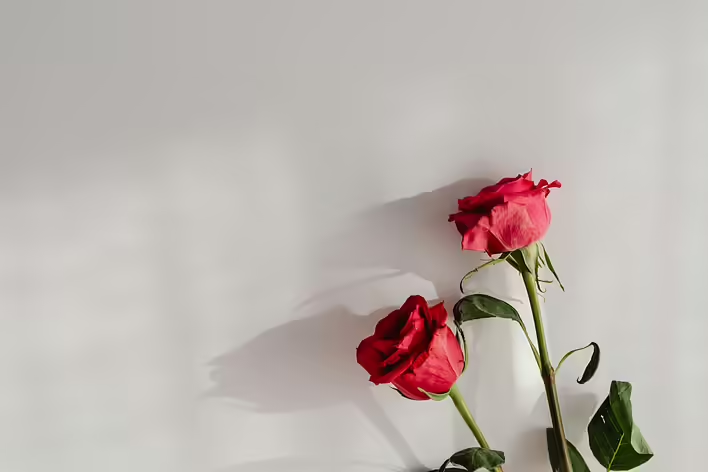
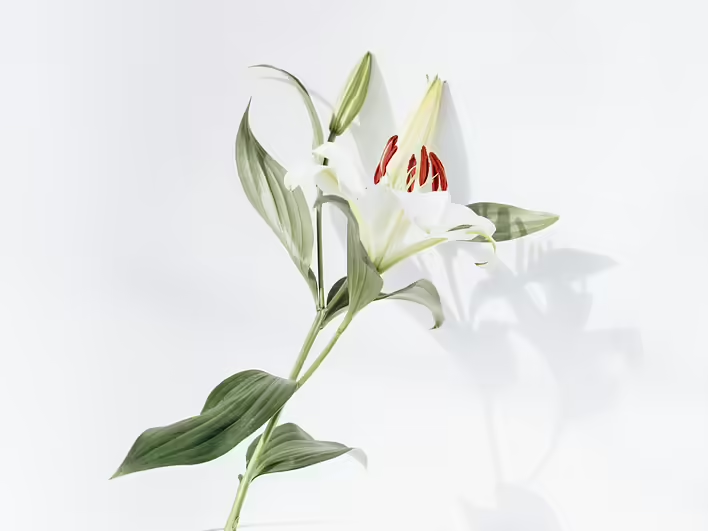
In Western Europe, on the contrary, there are no such superstitions. There, the number of flowers in a bouquet has no symbolic meaning, and as many are given as are considered beautiful or appropriate. The French, Italians or British pay more attention to the color and type of plants: red roses mean love, white lilies — purity, and yellow tulips — joy and friendship.
evie-s-KrFvQ0J5TPg-unsplash.jpg
It is interesting that in Japan they also attach great importance to the symbolism of numbers: there they avoid giving four flowers, because the word “four” sounds similar to the word “death”. A similar taboo exists in China, where even the packaging of gifts with four items can be perceived as a hint of misfortune.
Thus, the division into “is odd for the living, even for the dead” — is a cultural heritage that combines ancient beliefs and elements of symbolic thinking. And while fewer and fewer people in today's world are thinking about the number of flowers, tradition retains its power — as a manifestation of respect, tact and cultural memory.

This post doesn't have any additions from the author yet.

What is a logo: meaning, history and role in the modern world
02 Oct 10:55

What is a logo: meaning, history and role in the modern world

Пу-пу-пу
Пу-пу-пу@schrute
What is identity: essence, elements and role for the brand
02 Oct 11:10

What is identity: essence, elements and role for the brand

Пу-пу-пу
Пу-пу-пу@schrute
What is branding: a strategy for creating a strong image
02 Oct 11:28

What is branding: a strategy for creating a strong image

Пу-пу-пу
Пу-пу-пу@schrute
What does “mean to drink on brudershaft”
07 Oct 14:15

What does “mean to drink on brudershaft”

Пу-пу-пу
Пу-пу-пу@schrute
“Let's be!” and other toasts of the world: what they say when they raise their glasses
07 Oct 14:20

“Let's be!” and other toasts of the world: what they say when they raise their glasses

Пу-пу-пу
Пу-пу-пу@schrute
Why do restaurants leave tips — and where did it come from
07 Oct 14:39

Why do restaurants leave tips — and where did it come from

Пу-пу-пу
Пу-пу-пу@schrute
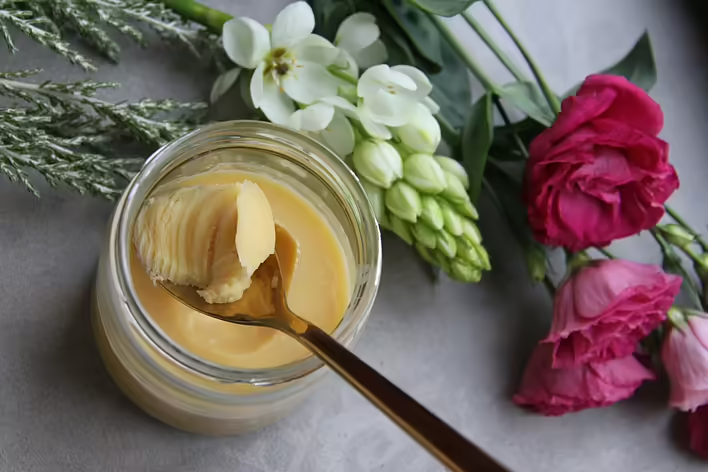
What is the difference between ghee and ghee?
08 Oct 16:14

What is the difference between ghee and ghee?

Пу-пу-пу
Пу-пу-пу@schrute
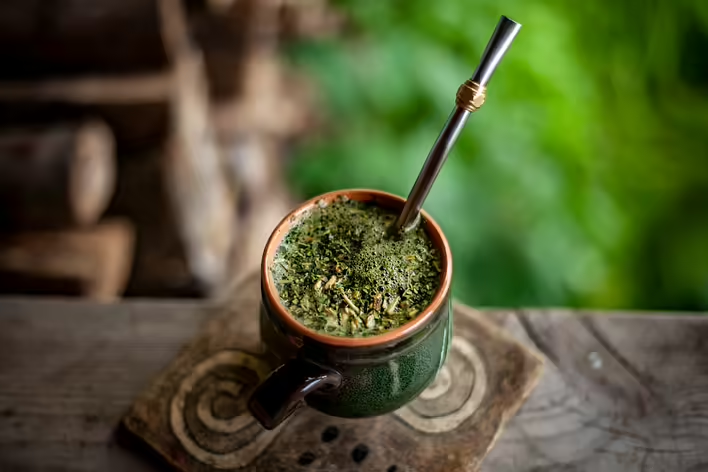
Mate — green energy of South America
13 Oct 12:17

Mate — green energy of South America

Пу-пу-пу
Пу-пу-пу@schrute
Spike on clay feet: what does this expression mean and where did it come from
13 Oct 12:29

Spike on clay feet: what does this expression mean and where did it come from

Пу-пу-пу
Пу-пу-пу@schrute
Water nut — is a mysterious fruit from Ukrainian reservoirs
15 Oct 11:12

Water nut — is a mysterious fruit from Ukrainian reservoirs

Пу-пу-пу
Пу-пу-пу@schrute
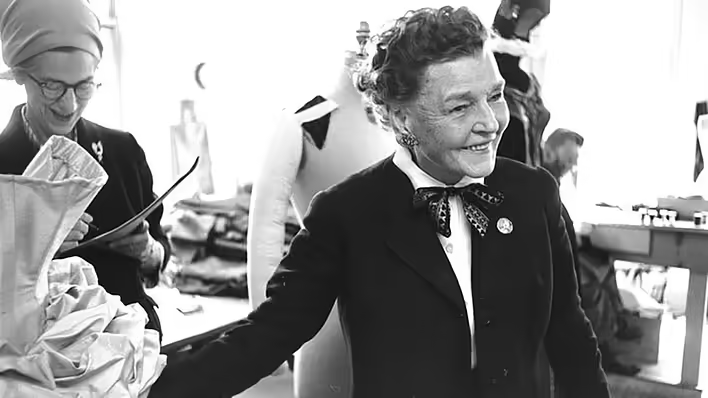
Varvara Karynska — is a Ukrainian who has changed the appearance of ballet in the world
15 Oct 11:24

Varvara Karynska — is a Ukrainian who has changed the appearance of ballet in the world

Пу-пу-пу
Пу-пу-пу@schrute
Seishi — standing waves in lakes and seas
15 Oct 11:38

Seishi — standing waves in lakes and seas

Пу-пу-пу
Пу-пу-пу@schrute