This content has been automatically translated from Ukrainian.
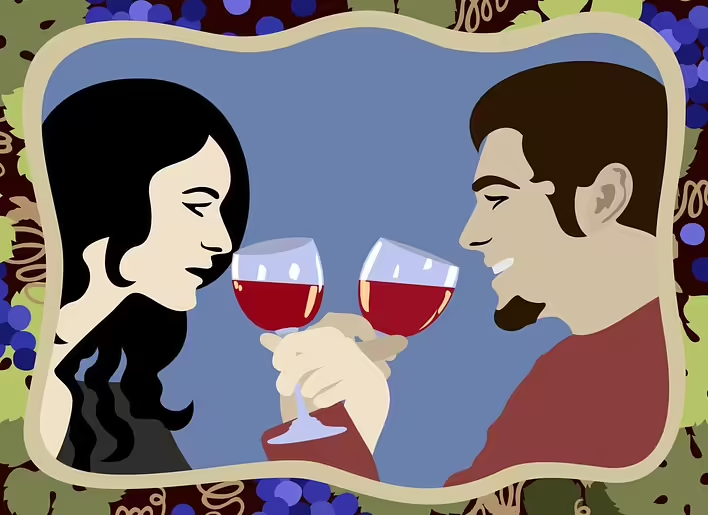
The phrase “to drink to brotherhood” is known to most as an ancient gesture of friendship or affection, when two people — usually a man and a woman (in modern interpretation) — cross their arms, drink from their glasses, and then switch to a more informal address. However, behind this simple ritual lies an interesting history and symbolism that dates back several centuries.
The word “brotherhood” comes from the German Brüderschaft, which literally means “brotherhood.” In medieval Germany, this term had a direct meaning — the establishment of a “brotherhood agreement” between two people. Such a ritual was accompanied by the shared drinking of wine or beer, and sometimes a kiss on the cheek, which symbolized mutual trust. Over time, the ritual became less formal, but retained the spirit of equality: to drink “to brotherhood” meant to become closer, to abolish formalities, and to address each other informally.
In Ukraine, this custom took root in the 18th–19th centuries under the influence of German culture. It became an integral part of table etiquette, especially among military personnel, students, and urban environments. Hence the tradition arose — to raise glasses, intertwine arms, drink, and then kiss — as a sign of new acquaintance or the beginning of friendship.
Analogues of this custom exist in other countries as well. For example, in France, there is the expression “boire à la fraternité” (“to drink to brotherhood”), and in the English-speaking world, one can hear “drink to friendship” or “cheers to new friends”. However, it is the German brotherhood with its characteristic ritual of intertwined arms that remains the most recognizable and colorful variant.
Today, the phrase “to drink to brotherhood” is used not only literally. It often has a figurative meaning — “to become closer,” “to shed formality,” or “to find common ground.” And although modern manners do not always involve the ritual itself, its symbolism of friendship and trust remains alive.
Like it?React
🧵
This post doesn't have any additions from the author yet.