This content has been automatically translated from Ukrainian.
What the word "BookTok" means
BookTok is the book section of TikTok, where users talk about what they've read, recommend works, discuss characters, and share reading impressions. The name is derived from the English words book and TikTok. In English-speaking environments, it is written as BookTok, and thematic videos are usually tagged with the hashtag #BookTok.
BookTok is not a separate feature or an official section of the app. It is a community that has formed around book content. Its participants are called BookTokers or book TikTokers.
The term itself is hard to classify as slang in the usual sense. It is rather an informal name for an online community and the cultural phenomenon associated with it. At the same time, the word has long transcended TikTok: phrases like "book from BookTok," "BookTok recommendation," or "popular on BookTok" can be found in other social networks, bookstores, and publishing announcements.
How BookTok originated
Book videos had appeared on TikTok before, but a separate community began to actively form around 2019–2020. It grew particularly quickly during the COVID-19 pandemic when people spent more time at home, sought new activities, and communicated online more often.
Unlike traditional literary criticism, the first BookTok content was almost unrecognizable as detailed reviews. Users filmed emotional reactions, showcased favorite quotes, joked about characters, and created short lists like "books that will leave you reeling."
There is no single founder or universally recognized author of the name in BookTok. The community arose organically: various users began to use a common hashtag, find each other, and create their own formats for book videos.
What is published on BookTok
BookTok is not limited to reviews. You can find genre or mood recommendations, reading journals, unboxings of books, home library tours, jokes about reading, and discussions of adaptations.
Videos built not around the plot but around the impression a book leaves have become particularly popular. For example:
- "a novel that will make you cry";
- "a book with a cozy autumn atmosphere";
- "fantasy with a complex world and morally ambiguous characters";
- "a story with the trope 'enemies to lovers'";
- "a detective where you can't guess the murderer."
It is in BookTok that the promotion of books through tropes—recognizable plot patterns and types of relationships between characters—has particularly flourished. The viewer may learn almost nothing about the plot itself but can note that the work features slow burn, found family, fake dating, or enemies to lovers. For part of the audience, this is enough to spark interest in the book.
Why BookTok sells books so well
TikTok is built on short videos, quick reactions, and a personalized recommendation algorithm. To see a book video, you don't necessarily have to follow its creator. If a video grabs attention, the platform can show it to a large number of people and then suggest similar content to them.
Emotionality also plays an important role. BookTokers often do not analyze the composition or style of the author but convey their own impressions: they cry after the ending, are outraged by the characters' actions, or show a book with the words "after this story, I will never be the same." Such reactions provoke curiosity and a desire to personally find out what impressed the reader so much.
As a result, the same title begins to regularly appear in users' feeds. A mass recommendation effect arises: it seems that everyone is reading and discussing this book.
The influence of the community has long transcended social media. According to a study by the Publishers Association conducted among over two thousand Britons aged 16 to 25, 59% of respondents stated that BookTok or book bloggers helped them discover a love for reading.
How old books become bestsellers again
One of the features of BookTok is that it promotes not only new releases. The algorithm does not consider the publication date, so a novel published five, ten, or even more years ago can go viral.
Thus, a new wave of popularity has come to The Song of Achilles by Madeline Miller, They Both Die at the End by Adam Silvera, and the novels of Colleen Hoover. Sarah J. Maas's books have also become an inseparable part of BookTok culture, even though some of them were published long before TikTok's rapid growth.
Such comebacks have changed publishers' perceptions of book marketing. Previously, the main advertising campaign usually took place in the first months after a work's release. Now, a book can unexpectedly get a second life thanks to one video or a new trend. The Canadian analytics organization BookNet Canada recorded a significant increase in sales of backlist books, that is, publications that were released recently but are no longer considered new, after their promotion on BookTok.
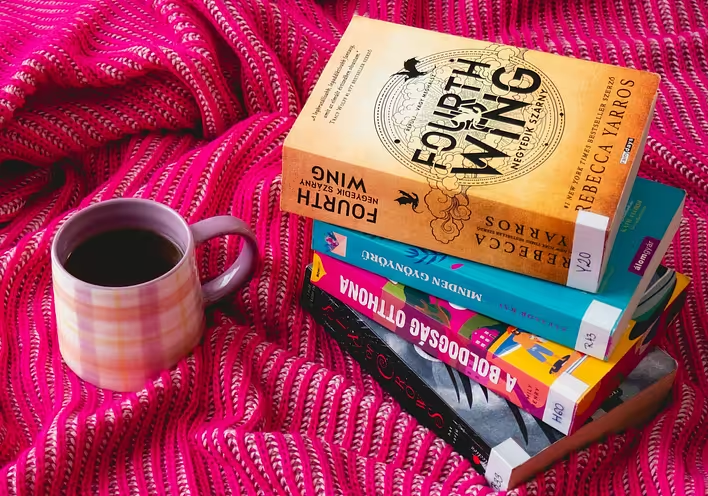
Bookstores have started creating separate shelves and collections labeled "popular on BookTok," while publishers collaborate with BookTokers, reissue viral novels, and mention their popularity on TikTok on the covers.
What genres are the most popular on BookTok
BookTok covers almost all varieties of literature, but the most notable genres remain romance, fantasy, romantiсe, young adult literature, thrillers, and so-called dark romance. These genres are easy to present through emotions, atmosphere, character types, and popular tropes.
This does not mean that there is no classic literature, non-fiction, poetry, or complex literary prose on BookTok. Separate communities also form around them; however, mass trends more often arise around dynamic stories with a clear romantic line and strong emotional conflicts.
The algorithms gradually create a personalized BookTok for each user. Some users see predominantly fantasy, others see detectives, classics, or works by Ukrainian authors. Therefore, the perception of the entire community can vary significantly depending on the personal feed.
What "BookTok book" means
BookTok book usually refers to a work that has become popular due to recommendations on TikTok or regularly appears in book videos. It is not a separate genre or an official publishing category.
At the same time, the phrase can carry an additional connotation. Sometimes it describes novels built around popular tropes, vivid romantic lines, dramatic twists, and scenes that can easily be turned into viral content. In this sense, the term can sound either neutral or somewhat derogatory—depending on a person's attitude toward mass literature.
The mere fact of popularity on TikTok says nothing about the quality of the work. Among BookTok hits, there are very different books: from light genre romances to complex stories that received positive reviews and literary awards long before the platform appeared.
What BookTok is criticized for
The main complaint against the community is the monotony of recommendations. Several dozen titles can circulate in videos for months, leaving less space for lesser-known authors. The algorithm amplifies what already generates a lot of reactions, so popular books often become even more popular.
The simplified way of discussing literature is also criticized. Instead of focusing on the nuances of language, themes, or structure, attention often centers on tropes, character appeal, and emotional intensity. As a result, very different books can be promoted with almost identical phrases.
Moreover, not every recommendation is independent. Publishers collaborate with popular video creators, send them books, and commission advertisements. If such partnerships are not properly disclosed, it can be difficult for viewers to distinguish genuine advice from promotional campaigns.
However, reducing BookTok to mere advertising or superficial trends would be unfair. It has returned a distinct social dimension to reading: books have once again become a reason for mass discussions, jokes, debates, and shared experiences. For many people, a short video in their feed has become the first step to a bookstore, library, or their own reading blog.
Like it?React
🧵
This post doesn't have any additions from the author yet.