This content has been automatically translated from Ukrainian.
Kamidere (Japanese: 神デレ, Kamidere) is an archetype of a character in anime, manga, light novels, and video games, characterized by an extraordinarily high self-esteem, absolute confidence in their own correctness, and the belief that they stand significantly above others. Such heroes behave as if they have the right to control the fates of others, set rules, or decide what is right and what is not.
The name comes from two Japanese words: kami (神) — "god," "deity," and deredere (デレデレ) — a suffix used to denote different types of characters in the fan classification of anime characters.
Despite this, the word kamidere does not mean that the character is necessarily a god in the literal sense. Most often, it refers to a hero who acts as if they are a god or sincerely believes in their own exceptionalism and right to govern others. This is why, in many cases, kamidere become charismatic antagonists, uncompromising leaders, or characters who aspire to create a "perfect world" according to their own rules.
At the same time, it is important to understand that the term kamidere does not have as clear and established a meaning as, for example, tsundere or yandere. In different fan communities, it can be interpreted differently. The most common definition is that kamidere is a character with a so-called "god complex" or behavior reminiscent of a deity. However, in certain classifications of dere archetypes, this term is applied only to divine characters who gradually reveal their feelings. That is why different sources may present various lists of examples.
In modern anime culture, the first meaning is used much more frequently, so it is usually what is meant when talking about the kamidere archetype.
Origin of the Term
The term kamidere appeared much later than the most well-known dere archetypes, such as tsundere or yandere. It emerged in the fan community as an attempt to describe characters that were already difficult to categorize into traditional categories.
Like other similar names, the word consists of two parts: kami ("god") and -dere. If in early archetypes the suffix -dere primarily described the romantic behavior of the character, in kamidere it rather emphasizes the character's nature and worldview.
Over time, the term began to be used for characters who not only demonstrate self-confidence but sincerely believe themselves to be beings with a natural right to govern others. This is why kamidere are often found among rulers, brilliant strategists, charismatic cult leaders, powerful wizards, or main antagonists.
Despite their popularity among anime fans, kamidere do not belong to classic archetypes that have a generally accepted definition. Its boundaries remain quite conditional, and therefore different fan resources sometimes classify the same characters differently.
Main Features of Kamidere
Not every arrogant or self-confident character is a kamidere. High self-esteem alone does not make a hero a representative of this archetype. Kamidere is primarily distinguished by the fact that their worldview is built on the conviction that they stand above others and therefore have the right to decide how other people should live.
This trait is the basis of most characters classified as this archetype.
Absolute Confidence in Their Own Rightness
Kamidere almost never doubts their decisions. Even if their actions lead to tragedies, they continue to consider themselves right.
For such a character, their own opinion becomes the only correct view of the world. They are not just convinced of their own correctness — they genuinely do not understand why someone might think differently.
This is why arguments with kamidere rarely make sense. If they do change their position, it is usually only after events that completely destroy their perception of the world.
A Desire to Control Others
One of the most characteristic traits of the archetype is the desire to control people.
Kamidere do not necessarily seek power for wealth or fame. Often, they are convinced that their vision of the world is the only correct one, and therefore others must submit.
Because of this, among representatives of the archetype, one often finds:
- rulers;
- commanders;
- leaders of organizations;
- cult leaders;
- powerful sorcerers or deities.
Even if such a character does not have formal power, they still behave as if they have a natural right to give orders.
A Sense of Superiority
Unlike himedere, who wants to be treated like a princess, kamidere often do not perceive others as equals at all.
In extreme cases, they may regard people merely as tools to achieve their own goals.
This is why many kamidere feel little to no guilt when sacrificing others' lives for their plans.
However, this is not a mandatory trait. Some characters sincerely strive to make the world better; they just believe that only they know how to achieve it.
Charisma
Despite their arrogance, kamidere rarely appear ridiculous or caricatured.
On the contrary, many of them possess strong charisma, are articulate, and can inspire others. This is why they often become leaders whom hundreds or even thousands of people willingly follow.
Interestingly, their authority is not always based on fear. Sometimes, followers genuinely believe in their ideals and see them as exceptional individuals.
Grand Ideas and Great Ambitions
Kamidere rarely settle for small goals.
Their plans almost always extend far beyond personal interests. They aspire to change the state, humanity, the world, or even the very laws of existence.
This is why among such characters, many dream of creating a "perfect society," establishing absolute order, or building a new world according to their own notions of justice.
This does not mean that all kamidere are villains. Their intentions can be both noble and destructive. What matters is not the goal but the conviction that only they have the right to determine what the world should be like.
Why Kamidere Are Not Just Arrogant Characters?
This is where the boundary often ignored in fan discussions lies.
Any self-confident hero may consider themselves the best athlete, magician, or warrior. But that alone does not make them a kamidere.
Kamidere is distinguished by the scale of their own ambitions. They are not just confident in their superiority — they place themselves above society, laws, moral norms, or even nature itself. Such a character behaves as if they have the right to determine the fates of other people and sometimes even rewrite the rules of the world.
This is why the archetype is often associated with the so-called "god complex." At the same time, it is not a psychological diagnosis but a literary device that helps create a vivid and charismatic hero or antagonist.
How Kamidere Differs from Other Archetypes?
Due to their high self-esteem and authoritative behavior, kamidere are often confused with several other archetypes. In reality, there are significant differences between them, and understanding these nuances helps better appreciate the character's nature.
Kamidere and Himedere
At first glance, these archetypes may seem similar: both himedere and kamidere enjoy controlling others, are confident in their exceptionalism, and do not hide their high self-esteem.
However, their motives are different.
Himedere wants to be treated like a princess. She expects attention, respect, compliments, and a willingness to fulfill her desires. Her arrogance usually has a personal nature and relates to how those around her treat her.
Kamidere thinks on a much larger scale. They do not merely seek admiration or respect — they are convinced that they have the right to set rules for others. If himedere wants to be the center of attention, kamidere wants to be the center of the world.
This is why himedere are more often found among romantic or comedic characters, while kamidere frequently become main antagonists or charismatic leaders.
Kamidere and Tsundere
Despite the shared suffix -dere, these archetypes are almost unrelated.
Tsundere defines a way of expressing feelings. Such a character hides affection behind cold or harsh behavior but gradually opens up to a close person over time.
Kamidere, on the other hand, describes not a romantic behavior model but a worldview. Their character may not have any romantic component at all.
Because of this, a character can be both tsundere and kamidere, although such combinations are rare.
Kamidere and Ojou-sama
Another common mistake is to equate kamidere with the image of ojou-sama.
Ojou-sama is primarily a character from a very wealthy, influential, or aristocratic family. This image was formed in classic Japanese works and is not a separate dere archetype.
Kamidere, however, is defined not by their origin but by their belief in their own superiority.
A wealthy heiress can be modest and polite, while an ordinary schoolboy can behave as if he has the right to determine the fate of humanity.
Kamidere and Megalomaniac
This comparison is encountered much less frequently, but it most accurately explains the nature of the archetype.
Megalomania is the desire for unlimited power or an exaggerated sense of one's own significance. This is why many kamidere exhibit traits reminiscent of megalomaniacs.
However, the archetype is not limited to this. In artistic works, kamidere can be a noble ruler, a strict mentor, or even a positive hero. What defines them is not the moral evaluation of the character but their conviction that they have a special right to lead others.
Why is the Kamidere Image So Popular?
The kamidere archetype has existed long before the word kamidere itself. Long before the emergence of modern anime, characters existed in mythology, literature, and theater who proclaimed themselves chosen, divine, or the only ones capable of saving the world.
Japanese pop culture inherited this image and gave it a new resonance. In many works, kamidere becomes not just a powerful character but a person who sets a global goal: to end wars, build a perfect society, cleanse the world of evil, or establish absolute order.
This is why such heroes often evoke conflicting feelings. Their methods may be brutal, but their motives often seem logical or even noble. The viewer is forced to ponder not only whether the character is right but also whether anyone has the right to unilaterally decide the fate of others.
This moral ambiguity is what makes kamidere one of the most interesting archetypes of modern Japanese culture. Unlike many typical villains, their conflicts rarely boil down to a battle between good and evil — much more often, they become a clash of different notions of justice, freedom, and responsibility.
The Most Famous Examples of Kamidere in Anime
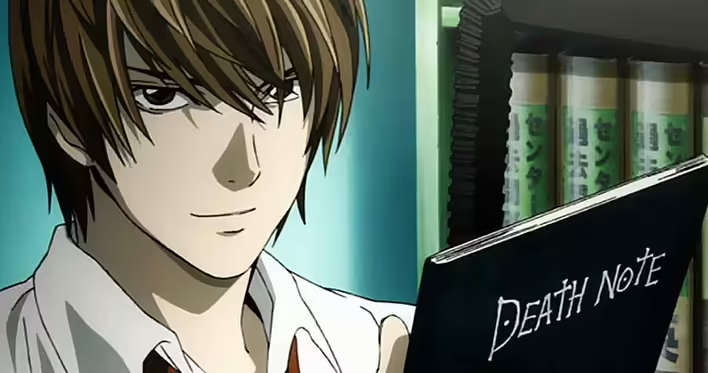
Light Yagami — Death Note
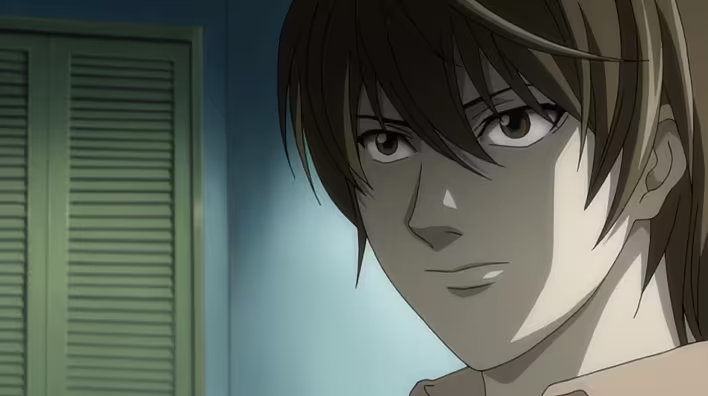
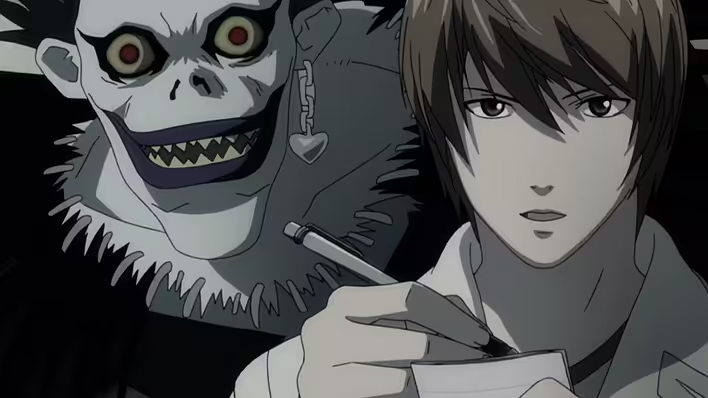
Light Yagami is one of the most famous examples of a character that fans call kamidere.
Initially, he seeks to cleanse the world of crime using a supernatural notebook known as "Death Note." However, over time, his convictions change: Light begins to see himself as the only person capable of determining who deserves to live and who deserves to die.
It is telling that he openly calls himself the god of the new world. This confidence in his right to judge humanity makes him one of the brightest representatives of the kamidere archetype.
Satsuki Kiryuin — Kill la Kill
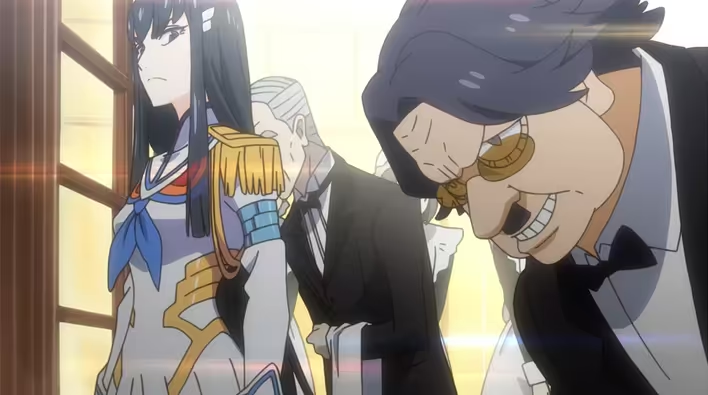
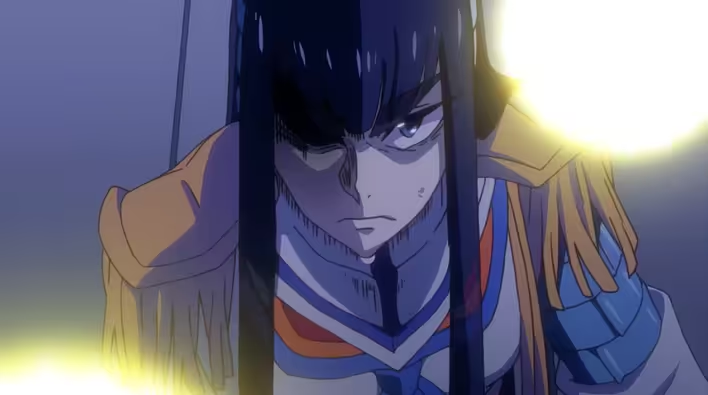
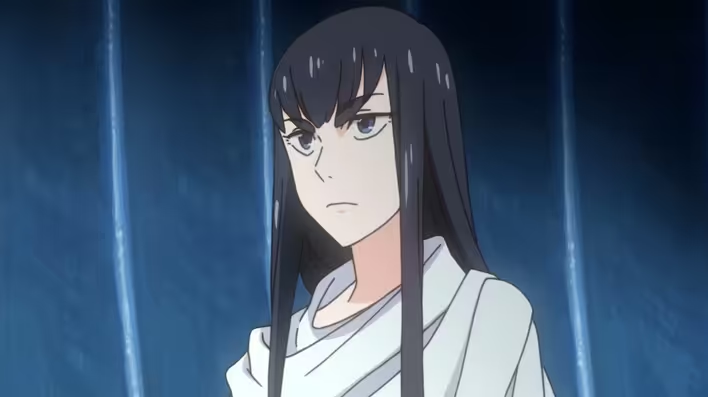
Satsuki is often mentioned as a character that combines traits of kamidere and charismatic leader.
She rules the Honnouji Academy with absolute confidence, demands unquestionable discipline, and behaves as if her decisions cannot be questioned.
At the same time, Satsuki is not a typical villain. Unlike many other characters of this archetype, her actions are not driven by a thirst for personal glory but by a desire to achieve a great goal. This is why she is often referred to as an example of a "noble" kamidere.
Dio Brando — JoJo's Bizarre Adventure
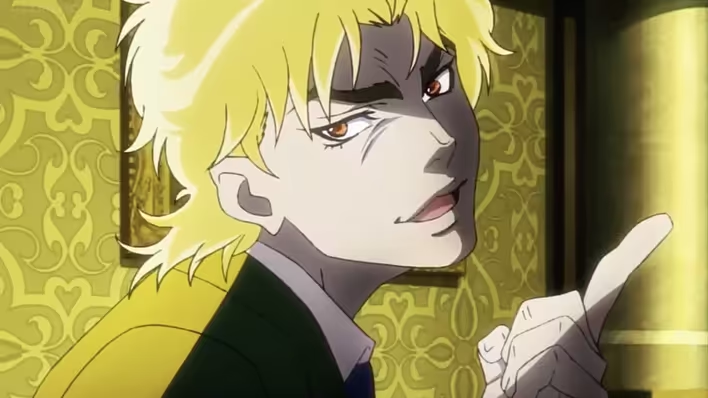
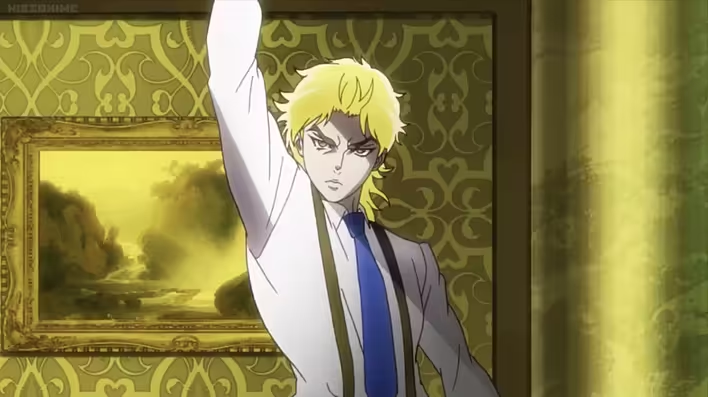
Dio Brando gradually transforms into a character who literally seeks to rise above humanity.
His thirst for power is not limited to wealth or immortality. He seeks absolute superiority over all others, placing his own desires above any moral principles.
This combination of limitless ambition, charisma, and conviction in his own exceptionalism makes Dio one of the most well-known examples of kamidere.
Enel — One Piece
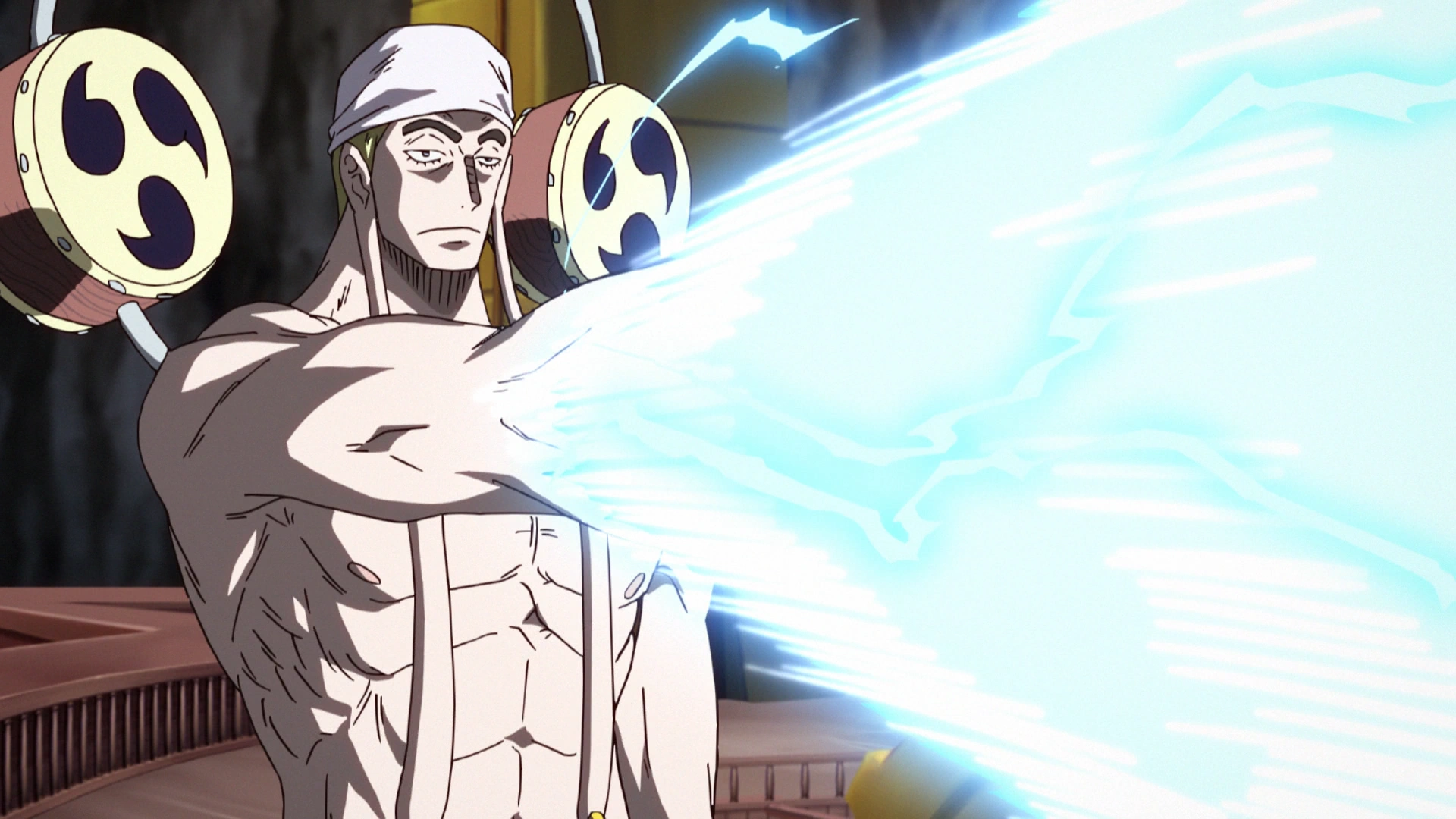
Among the characters of One Piece, Enel best fits this archetype.
He not only possesses immense power — Enel literally considers himself a god and is convinced that all others should submit to him. His attitude towards people as lower beings and his readiness to punish anyone who does not acknowledge his authority fully correspond to the image of kamidere.
Unlike many other examples, in this case, the theme of divinity is part of the plot itself, not just a character trait.
Characters Often Mistakenly Called Kamidere
Due to the unclear boundaries of the archetype, heroes who actually belong to other types or only partially share similar traits are often classified as kamidere.
Erina Nakiri (Food Wars!)
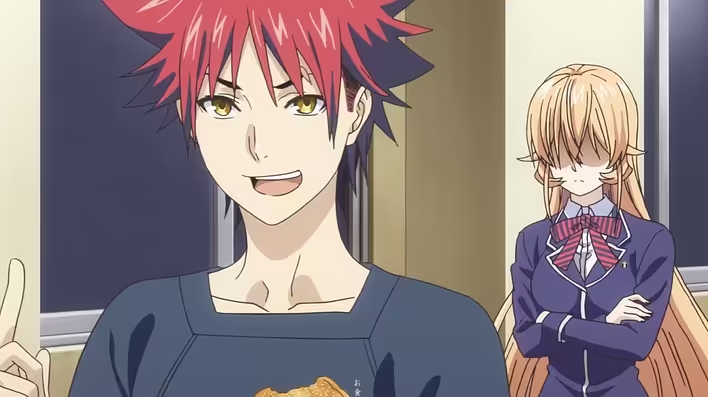
Despite her high self-esteem and condescending behavior, Erina does not seek to control the world and does not consider herself a being above others. Her character is much closer to himedere, as she expects respect and special treatment but does not claim the role of the ultimate judge of humanity.
Louise de la Vallière (The Familiar of Zero)

Louise is a classic example of a character that combines traits of tsundere and himedere. Her authoritative behavior primarily pertains to her personal relationship with Saito, rather than a desire to establish her own order for the entire world.
Lelouch Lamperouge (Code Geass)
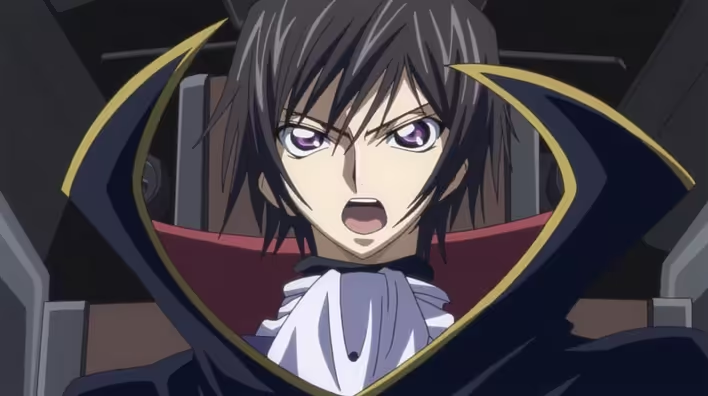
Lelouch sometimes appears on lists of kamidere due to his grand plans. However, most fans do not consider him a classic representative of this archetype.
He uses power as a tool to achieve a specific goal, not because he sees himself as a deity or a being inherently above others. Furthermore, Lelouch constantly doubts his own decisions and repeatedly reconsiders his actions, which is atypical for kamidere.
Can a Character Combine Several Archetypes?
Yes. Like most dere archetypes, kamidere is not a rigid category. The same character can simultaneously exhibit traits of several character types.
For example, a hero may be kamidere due to their conviction in their own exceptionalism while also displaying signs of tsundere in romantic relationships or resembling himedere in their love for admiration and special treatment.
This is why in different fan communities, individual characters may be classified differently. The boundaries between archetypes remain conditional, and the final interpretation often depends on which character traits the author reveals the most.
Is It Necessary for Kamidere to Be a Villain?
No. Although there are indeed many antagonists among representatives of this archetype, kamidere itself does not define the character's role in the plot.
The main trait is not morality but worldview. Such a hero can be both a cruel tyrant and a noble ruler who sincerely strives to protect people. The difference lies only in the fact that kamidere are almost always convinced that they know best how to act.
This is why even positive characters of this type often come into conflict with allies, as they are used to taking responsibility for decisions without asking for others' opinions.
Other Dere Archetypes
The world of anime and manga includes dozens of dere archetypes — typical behavior models of characters that help quickly understand their nature and attitude towards others. Here are some of the most well-known:
- Tsundere (Tsundere) — characters who hide affection behind cold, harsh, or even aggressive behavior but gradually reveal their true feelings.
- Yandere (Yandere) — heroes whose strong love or obsession can lead to jealousy, violence, or dangerous actions.
- Dandere (Dandere) — quiet, shy, and reserved characters who only open up around people they trust.
- Kuudere (Kuudere) — reserved and outwardly cold heroes who rarely show emotions but gradually reveal their caring side.
- Deredere (Deredere) — friendly, open, and sincere characters who do not hide their feelings and usually have a positive attitude towards their surroundings.
- Himedere (Himedere) — heroines who behave as if they are real princesses and expect special treatment from others.
- Oujidere (Oujidere) — characters who strive to meet the image of the ideal prince.
- Mayadere (Mayadere) — heroes who initially act as opponents of the main character but later fall in love with them or switch to their side.
- Bakadere (Bakadere) — kind, sincere, but very naive or comically clumsy characters who often find themselves in absurd situations.
Like it?React
🧵
This post doesn't have any additions from the author yet.