Table of contentsClick link to navigate to the desired location
This content has been automatically translated from Ukrainian.
Have you ever found yourself in a situation where you need to make a decision, but it's impossible to do so because of the thought: "What if there's something better?" If so, you have probably encountered FOBO – Fear of Better Options.
This term entered the modern lexicon thanks to author and entrepreneur Patrick McGinnis. He introduced and popularized the concept of FOBO, explaining how information overload and the vast number of choices in the modern world affect our thinking and behavior.
What is FOBO and how does it work?
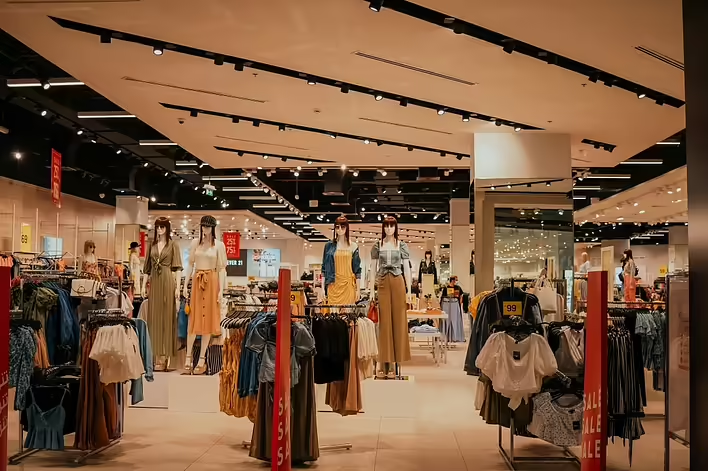
FOBO arises when a person is so afraid of missing the opportunity to make the perfect choice that they postpone making a decision or even avoid it altogether. This manifests in everyday situations:
- In a store: standing between two brands of coffee, because both seem good, but what if there’s an even better one?
- On social media: browsing dozens of reviews before ordering from a restaurant or buying a gadget.
- At work: struggling to choose among several projects or proposals.
This fear is fueled by our need for perfection and the fear of losing something significant. Paradoxically, FOBO can lead to more stress than the choice itself, as prolonged deliberation drains our resources.
FOBO vs FOMO: what’s the difference?
FOBO is often confused with FOMO (Fear of Missing Out – the fear of missing something interesting). But there is an important distinction between them:
- FOMO occurs when it seems that others are doing something better, more interesting, or more useful than you.
- FOBO is focused on you: you are afraid to make a decision that may not be the best.
Imagine you are invited to two parties at the same time. With FOMO, you will worry about missing out on the better one if you choose the first. But with FOBO, you won’t go to either, as you can’t decide which party is better.
Why is FOBO so common?

The modern world offers us countless opportunities and access to an endless stream of information. The internet and social media have made choices both easier and more complicated. Here are a few reasons why FOBO is so relevant:
- Information overload. The number of options sometimes seems endless.
- Social comparisons. We see how others make the "perfect choice" and fear making a mistake.
- Perfectionism. The desire to get the best of everything often prevents us from enjoying what we have.
How to overcome FOBO?

- Set deadlines. Time constraints on thinking force quicker decision-making.
- Define priorities. Understand what is truly important to you. For example, when choosing a restaurant, what matters more: the atmosphere or the taste of the dishes?
- Accept a satisfactory outcome. There is no perfect choice. Learn to be content with good enough.
- Trust your intuition. Research shows that first impressions are often correct.
- Simplify your options. If you have 10 options, narrow them down to the three most suitable and choose among them.
Why is it important to understand FOBO?
FOBO not only hinders small decisions, it affects significant choices: selecting a partner, career, or even a place to live. By overcoming this fear, you can not only simplify your life but also gain more satisfaction from the decisions you make.
Remember: it’s better to make a good choice today than to waste time searching for the perfect one tomorrow.
This post doesn't have any additions from the author yet.