Dandelions appear everywhere in spring — in meadows, yards, and along roads. Most people perceive them as a common weed or at most as an element of children's games with fluffy "parachutes." But in reality, this humble plant has an ancient culinary history. In different countries, it is not just gathered but purposefully used in dishes — from salads to beverages.
Dandelion is an example of how wild plants can become an integral part of the kitchen. It combines simplicity, accessibility, and a rich flavor that unfolds differently depending on the cooking method. That is why today, in the wave of interest in local and seasonal products, it is making a comeback on menus — both home and restaurant.
To better understand why this plant has become so versatile in cooking, it is worth starting with its characteristics.
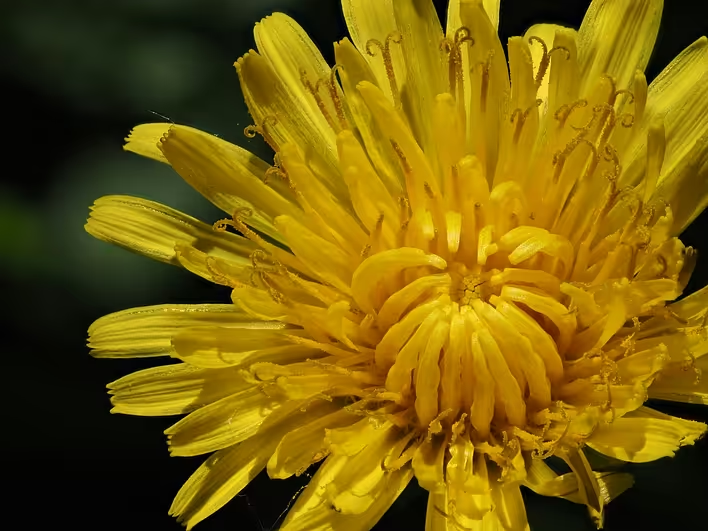
Common dandelion is a perennial herbaceous plant easily recognized by its bright yellow flowers and fluffy white seed balls. It grows almost all over the world — from Europe to Asia and North America, often perceived as a weed, although it actually has valuable nutritional and medicinal properties.
All parts of the dandelion are edible: leaves, flowers, and even roots. The leaves have a slight bitterness reminiscent of arugula, the flowers have a soft sweet aroma, and the roots, after roasting, acquire a deep, almost coffee-like flavor. This allows the plant to open up a wide space for culinary experiments.
Moreover, dandelion is rich in vitamins A, C, and K and contains natural bitter compounds that stimulate digestion. It is this combination of taste and health benefits that has made it popular in various gastronomic traditions.
And although it grows practically everywhere, the ways it is used vary significantly depending on the country.
Dandelion in World Cuisines
In different corners of the world, dandelion has been discovered in its own way — somewhere as an accessible seasonal green, somewhere as a base for beverages or desserts.
France: salads and "peasant classics"
In France, dandelion is known as pissenlit and has long been part of traditional cuisine. The most popular dish is a salad of young dandelion leaves with bacon, poached egg, and mustard dressing. Its natural bitterness perfectly balances the richness of the meat and the tenderness of the egg.
Such recipes come from peasant cuisine, where seasonal wild plants were especially valued.
Italy: greens for pasta and side dishes
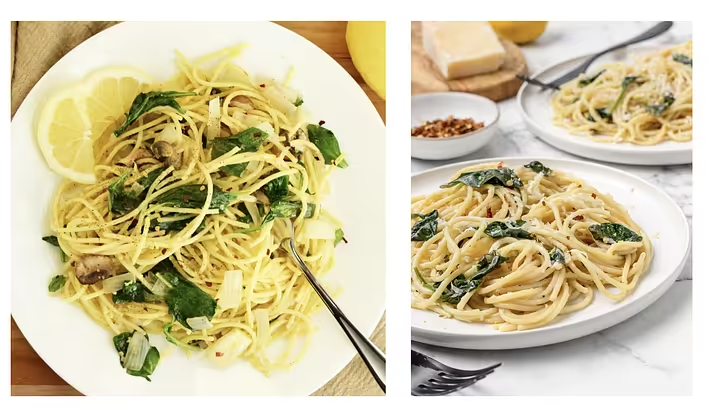
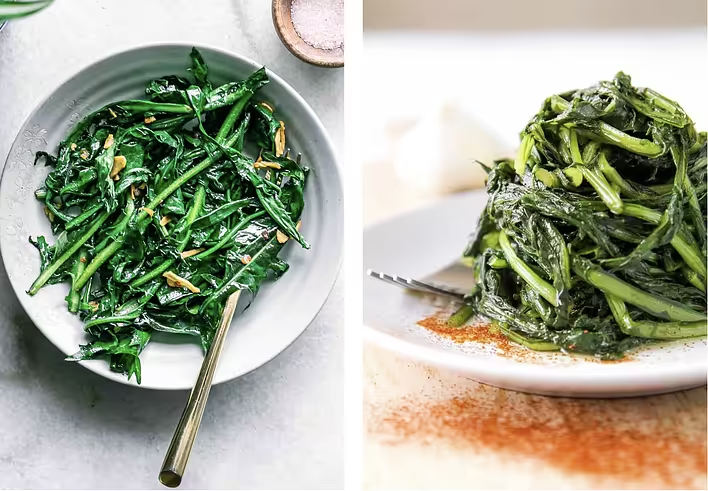
In Italy, dandelion is called tarassaco, and here it more often appears in hot dishes. The leaves are sautéed with olive oil, garlic, and chili pepper, served as a side dish or mixed with pasta.
Additionally, dandelion pairs well with soft cheeses, so it is added to fillings for pies and ravioli — another example of how a simple plant integrates into more complex dishes.
Germany and Central Europe: syrups and "honey"
In Germany and neighboring countries, dandelion has taken on a completely different culinary form. Here, syrup is made from the flowers, often referred to as "dandelion honey." Its golden color and delicate aroma make it a popular addition to tea, desserts, and baked goods.
This approach demonstrates how even a familiar plant can transform into something unexpected — almost a delicacy.
Japan: dandelion as a vegetable
In Japan, dandelion (tanpopo) is perceived as a full-fledged seasonal ingredient. Young leaves are blanched to soften the bitterness and then served with soy sauce or sesame dressing.
It is also included in light soups and spring dishes, where special attention is paid to the natural flavor of the ingredients and their seasonality.
Ukraine: from jam to wine
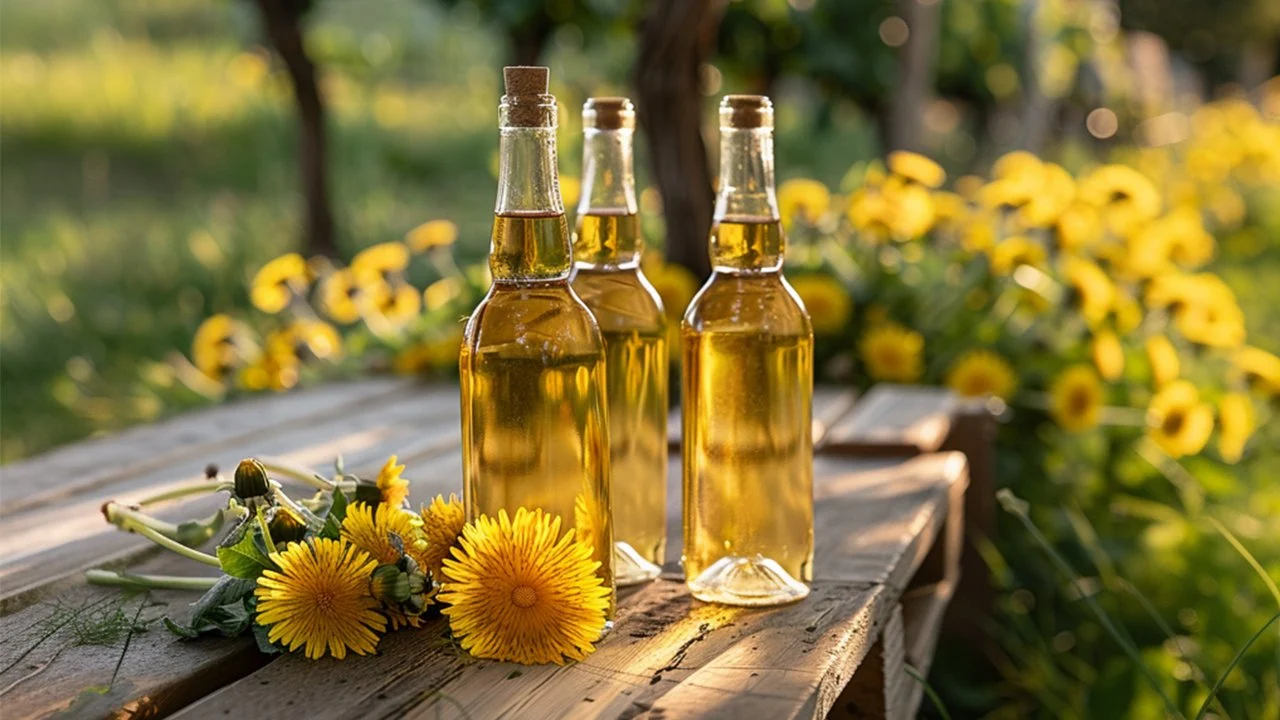
In Ukrainian cuisine, dandelion has its own well-recognized tradition. Here, it is most often used to make jam, which resembles honey in aroma and color, as well as homemade wine.
At the same time, young leaves are added to simple spring salads — just as generations have done before. This once again emphasizes the versatility of the plant: from everyday food to festive preparations.
кульбабове вино
What to cook with dandelion: main ideas
As seen from the examples of different cuisines, dandelion can be both the basis of a dish and just an accent. Its flavor easily adapts to various culinary styles, which explains such a variety of recipes.
Most often, it is used to make:
salads with fresh leaves;
syrups and jams from flowers;
tea and infusions;
a drink from roasted roots that resembles coffee;
sautéed greens as a side dish;
homemade wine.
Thus, one plant can encompass several culinary categories at once — from beverages to full-fledged dishes.