This content has been automatically translated from Ukrainian.
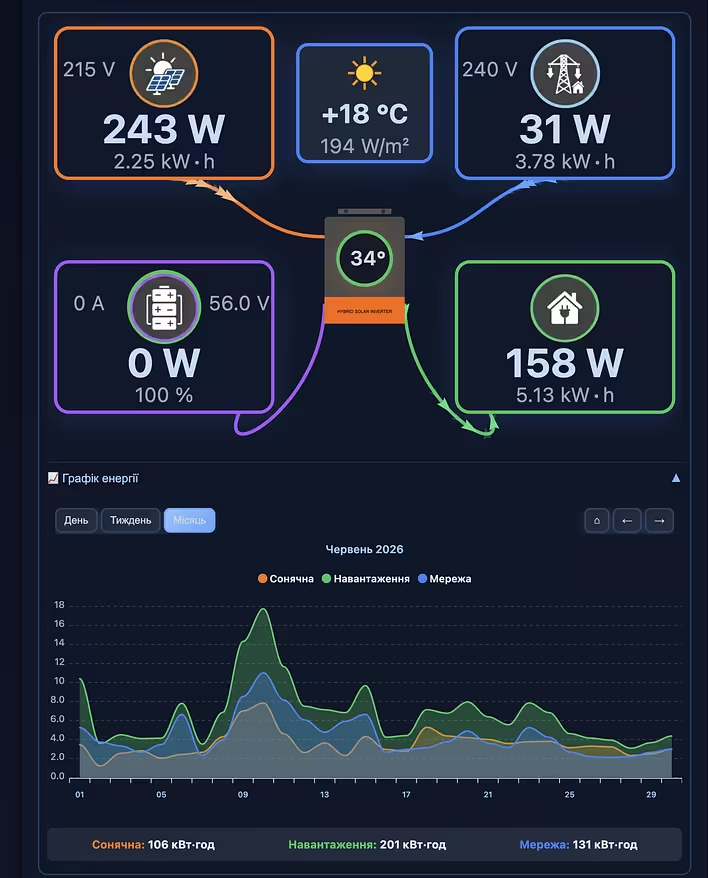
This blog automatically publishes daily reports on the operation of my solar power station, but I summarize the monthly results in a separate post. This way, the overall picture is clearer, and different months can be compared with each other. Previous report for June 2026.
System Configuration
- Panels: 6 × Longi TWMNH-66HD640 (N-type bifacial, double glass, 640 W)
- Total array power: 3.84 kW
- Installation: vertical, strictly facing south.
Overall Statistics for July
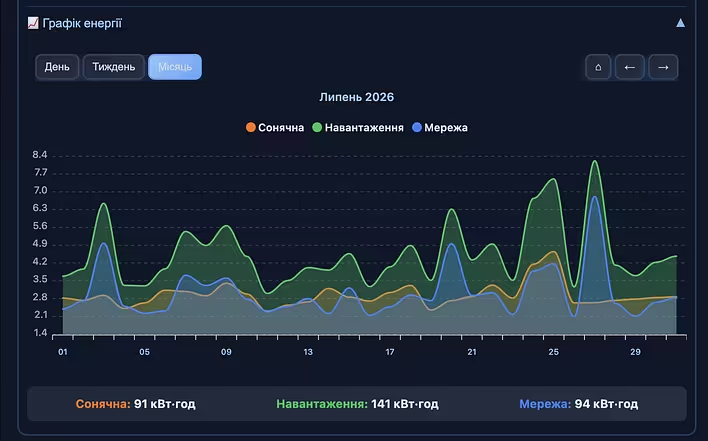
- ☀️ Solar generation: 91 kWh
- 🏠 Household consumption (Load): 141 kWh
- ⚡ Taken from the grid: 94 kWh
- 💰 Electricity bill: 438 UAH
Logger - solcloudy.
Comparison with June
At first glance, it seems that the station performed worse.
Household consumption decreased by almost 30%. The main reason is that in June, a powerful electric heater was continuously running for several days, drying the damp basement. In July, this load was no longer present.
Autonomy Increased
If we subtract the electricity taken from the grid from the total consumption:
141 − 94 = 47 kWh
Thus, approximately 47 kWh was provided by the house independently.
This accounts for 33.3% of total consumption.
At first glance, this is slightly less than June's 35%, but there is an important nuance here.
In June, a significant portion of solar energy went to power the powerful heater, which was specifically turned on during the day. This allowed for maximum loading of the panels and showed high generation figures.
In July, there was no such large daytime consumer. The station operated in a more typical mode for an ordinary private house.
Where Did the Rest of the Solar Kilowatts Go?
At first glance, it may seem strange that the station produced 91 kWh in July, but the house used only 47 kWh of that energy (141 - 94).
So where did the remaining 44 kWh go?
In fact, they did not disappear. This energy went to the technical support of the system itself:
- round-the-clock own consumption of the inverter (approximately 30–40 W continuously);
- losses during charging and discharging of the battery;
- losses in converting direct current to alternating current and vice versa.
Interestingly, this almost perfectly coincides with last month's results.
In June:
- generation: 105.92 kWh;
- directly supplied to the house: 69.75 kWh;
- technical expenses of the system: 36.17 kWh.
In July:
- generation: 91 kWh;
- directly supplied to the house: 47 kWh;
- technical expenses of the system: 44 kWh.
The difference is only about 8 kWh between the two months, even though the generation and load were completely different.
This confirms that a significant portion of these expenses is practically constant base consumption of the hybrid system. The inverter itself operates 24 hours a day regardless of whether the panels produce 8 kWh in a day or only 2 kWh. Therefore, for small home solar power stations, the own consumption of equipment is quite a significant item in the energy balance, especially when solar generation is low.
What the Bill Shows
It is nice to see not only the numbers in monitoring but also the result in the bill.
For July, the electricity bill amounted to 438 UAH.
For a house that is constantly used, this is a very good result, especially considering that the panels are installed vertically and do not have an optimal summer tilt angle.
Vertical installation loses to the classic inclined one in summer, but works better in winter when the sun is low on the horizon and also almost does not accumulate snow.
July turned out to be less productive in terms of electricity generation but significantly more realistic for assessing the everyday operation of the system.
Without additional artificial loads, the solar power station continues to cover about a third of all the house's needs, and the electricity bill remains very moderate.
The greatest interest lies in autumn and especially winter. It will be then that it will become clear how effective the vertical installation of the panels will be and whether the calculations that in winter it partially compensates for the short daylight hours with a better angle of solar rays will come true.
But the upcoming blackouts are not so ghostly. So I bought another charging station. I will write separately about it.
Like it?React
🧵
This post doesn't have any additions from the author yet.