This content has been automatically translated from Ukrainian.
Georges-Eugène Haussmann (1809–1891, Paris) known as Baron Haussmann — a French statesman, prefect of the Seine department (1853–1870), senator (1857), member of the Academy of Fine Arts, urban planner.
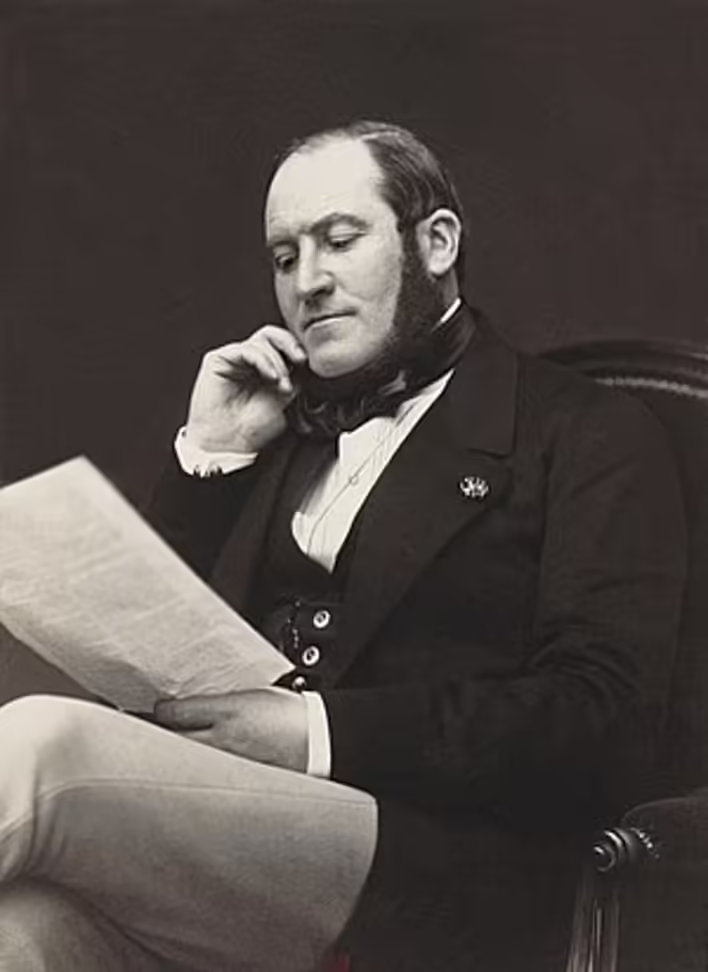
Haussmann's renovation of Paris — a grand public works program commissioned by Emperor Napoleon III carried out by Georges-Eugène Haussmann from 1853 to 1870.
The cost of the project was 2.5 billion francs (15 billion $ today) by the 1870s
The work continued until 1927
The problems of Paris were known since the 18th century:
- Voltaire was dissatisfied with the markets, which "were located on narrow streets, flaunting their filth, spreading infections and causing constant disorders," he wrote that the facade of the Louvre was beautiful, but hidden behind buildings worthy of cash and vandals
- The 18th-century architectural theorist and historian Catmer de Quincy proposed to create and expand squares in each district of the city, to enlarge the square in front of Notre-Dame Cathedral and the Church of Saint-Jervais, to build a wide street to connect the Louvre with the Hôtel de Ville (city hall)
- In 1794, during the French Revolution, the "Commission of Artists" developed an ambitious plan to build wide boulevards, including one street in a straight line from the Place de la Nation to the Louvre largely using land confiscated from the church during the revolution
By the mid-19th century, the center of Paris was overcrowded, gloomy, dangerous, and unsanitary
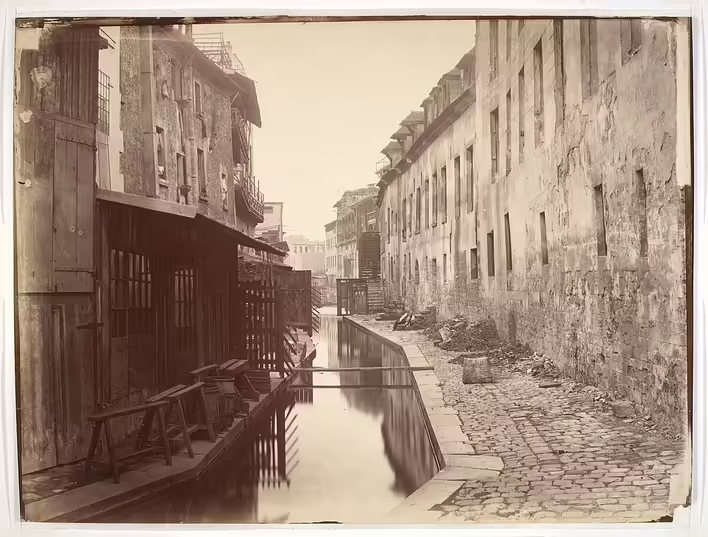
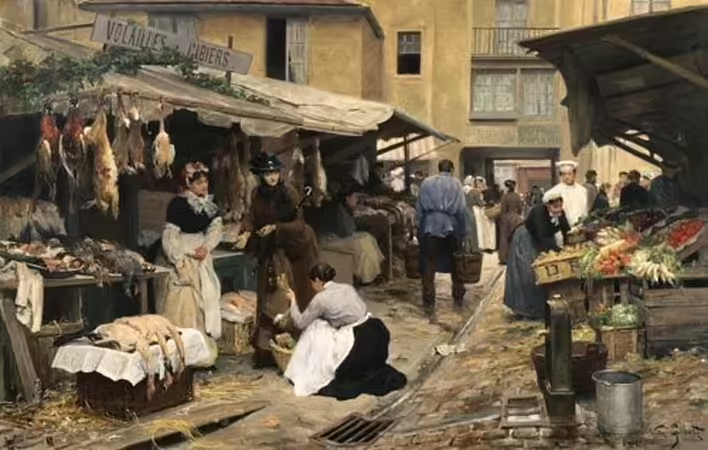
In 1840, a doctor described a building on Île de la Cité, where in one room of 5 sq. m. on the fourth floor lived 23 people. In such conditions, diseases spread very quickly
Paris is a vast workshop of decay, where poverty, epidemics, and diseases coexist, where sunlight and air rarely penetrate. Paris is a terrible place where plants wither and die, where of seven small children, four die within a year
Victor Considerant, French public figure, 1845
The widest streets in the city center were 5 m, the narrowest — 1–2 m
Wagons, carriages, and carts struggled to move through the streets
The city center was also a cradle of discontent and revolution; between 1830 and 1848, 7 armed uprisings and riots broke out in the center of Paris
Paris before the renovation
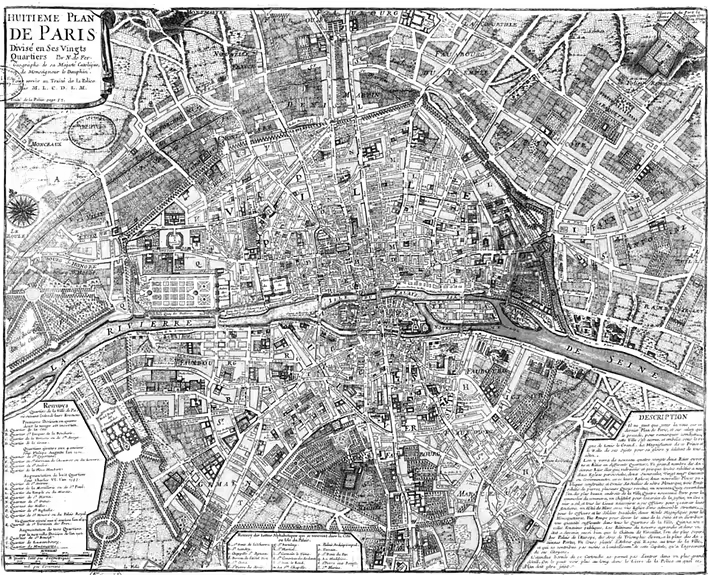
Renovation of Paris: boulevards and avenues added during the renovation
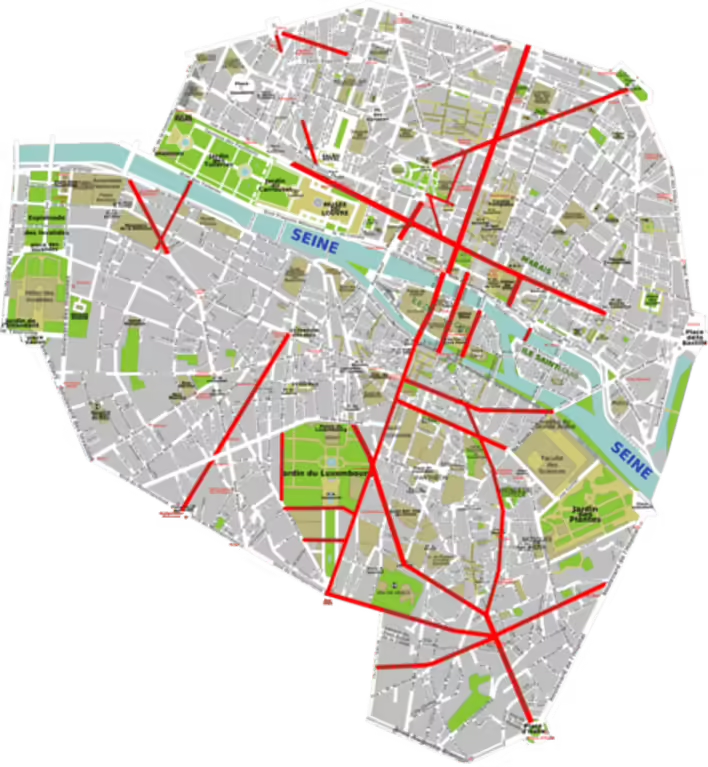
The renovation included
- the demolition of overcrowded and unsanitary medieval quarters,
- the construction of wide boulevards, parks, and squares,
- the annexation of suburbs surrounding Paris,
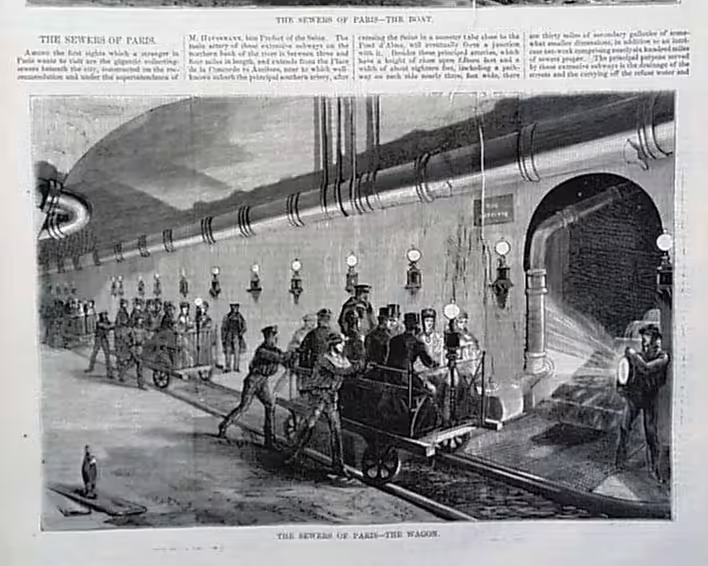
- the construction of new sewer collectors, fountains, and aqueducts
During this massive reconstruction, the city saw the emergence of central sewerage, water supply, public toilets, a ring railway, and gas lamps on the streets
Long and straight boulevards were significantly more convenient for suppressing possible uprisings — if necessary, they could be fired upon with artillery along their entire length, and the large width and gravel covering of the streets made it impossible to build barricades
The first reconstructed street in Paris — Rue de Rivoli
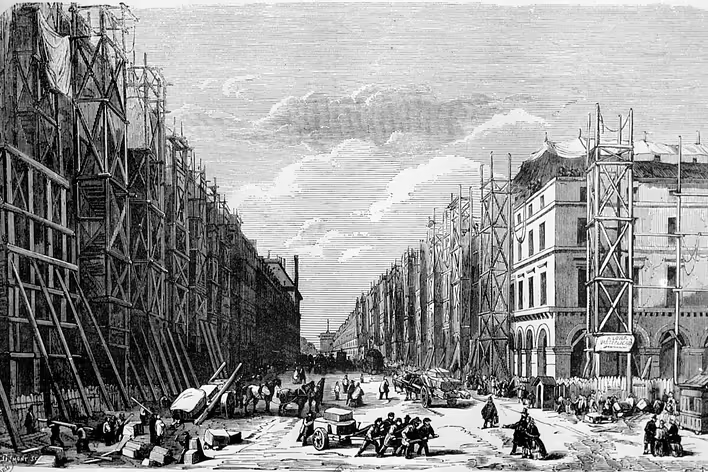
On it, the luxurious hotel "Grand Hôtel de Louvre" was built
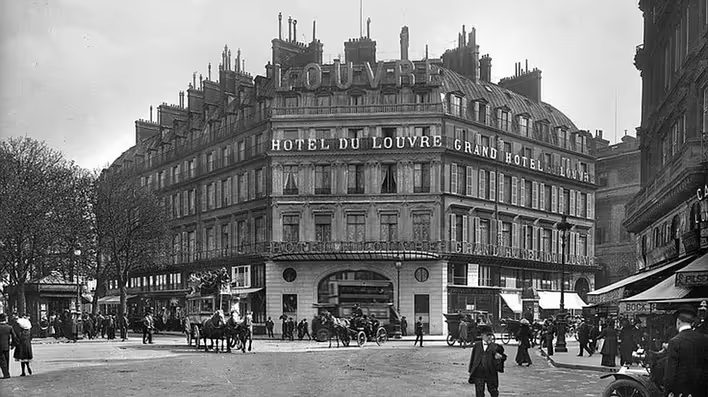
Consier Street. Before the reconstruction, it was a "dead end," the entire area had a bad reputation and was one of the dirtiest in old Paris
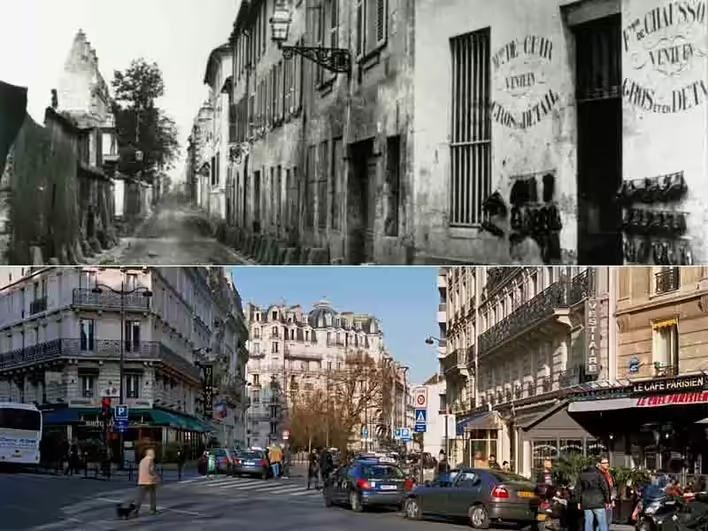
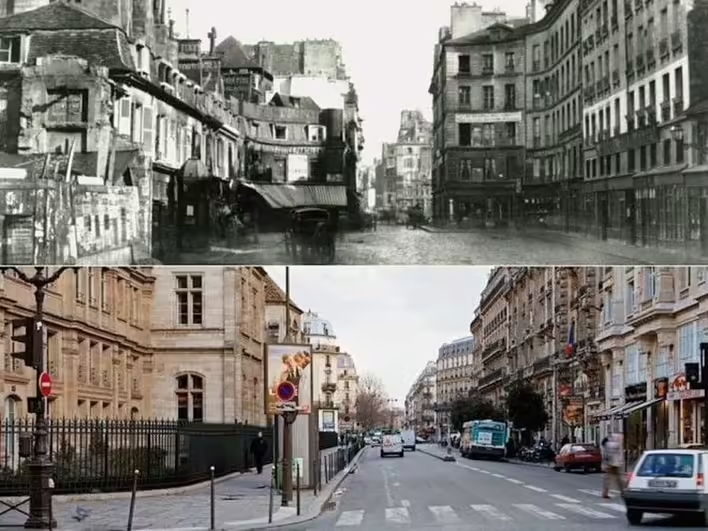
Réaumur Street
On the left, you can see the "Court of Miracles" — one of the most crime-ridden slums of pre-Haussmann Paris, described in Victor Hugo's novel "The Hunchback of Notre-Dame"
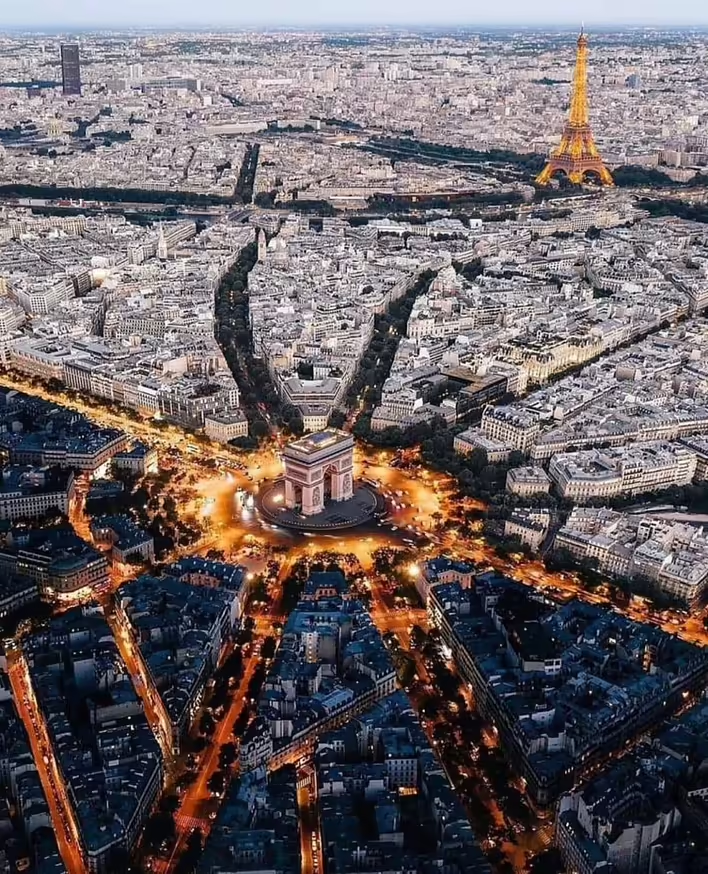
Place de l'Étoile, from which 12 avenues radiate, named after the Marshals of France and victories achieved by French troops
Sewer collectors
New transport
The area of the city during the reconstruction doubled
Over 17 years, the city saw
- the planting of 600,000 trees
- the addition of 2,000 hectares of parks and other green spaces
- the creation of the "lungs of the city" — the Bois de Boulogne and the Bois de Vincennes
Thanks to these changes, the city became significantly more pleasant for walking, and at that time the genre of street photography began to emerge
However, contemporary Parisians often complained that this reconstruction kills the city's character and makes residents feel like strangers in it
Baron Haussmann was criticized:
- the project was expensive
- 57 streets and alleys were lost after the reconstruction
- 2,227 houses were demolished
- 25,000 poor residents were relocated to the outskirts of the city
But what we see in Paris today is all thanks to the long work of many generations. No expense was spared on building materials, which is why the Haussmann renovation made Paris unique and so romantic. Historical buildings were restored or rebuilt with modern safety and comfort standards in mind, while preserving their uniqueness. The urban landscape gained new green spaces, parks, and squares, expanding opportunities for recreation. Overall, Paris after the Haussmann renovation became a modern, comfortable, and attractive place to live, work, and relax.
Like it?React
🧵
This post doesn't have any additions from the author yet.