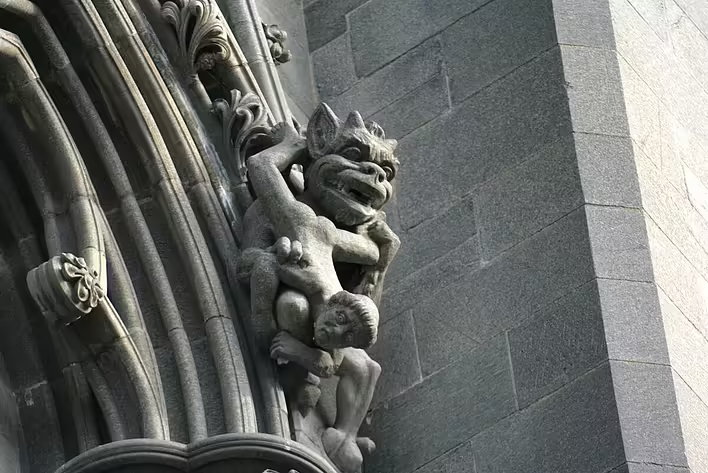
In architecture, a grotesque is a fantastic or mythical figure carved from stone and attached to the walls or roof of a building.
A chimera is a type of grotesque that depicts a mythical combination of several animals (sometimes including humans). Grotesques are often referred to as gargoyles, although the term "gargoyles" specifically refers to figures carved for the purpose of diverting water from the sides of buildings. In the Middle Ages, the term babewyn was used to refer to both gargoyles and chimeras. This word comes from the Italian word babbuino, meaning "baboon."
Гротеск на соборі Нідарос, Тронхейм "Джерело - Вікіпедія"
What do grotesques depict?
Grotesques often depict whimsical, mythical creatures in dramatic or humorous forms. Historically, they have been a key element of architecture in many periods, including the Renaissance and the Middle Ages, and stylistically evolved in conjunction with these times. Although grotesques typically portray a wide range of subjects, they are often hybrids of various mythical, human, and animal traits.
Where can grotesques be found and what do they mean?
Many scholars describe the grotesque as a means of protection against evil and as a reminder of the separation between the earthly and the divine. Grotesques are predominantly carved on buildings of religious significance, particularly churches and cathedrals. Despite their presence in religious spaces, their anthropomorphic constructions are mostly not directly religious, but rather often more whimsical without religious connotations. They are usually located on high projections and roofs, and often situated out of public reach.
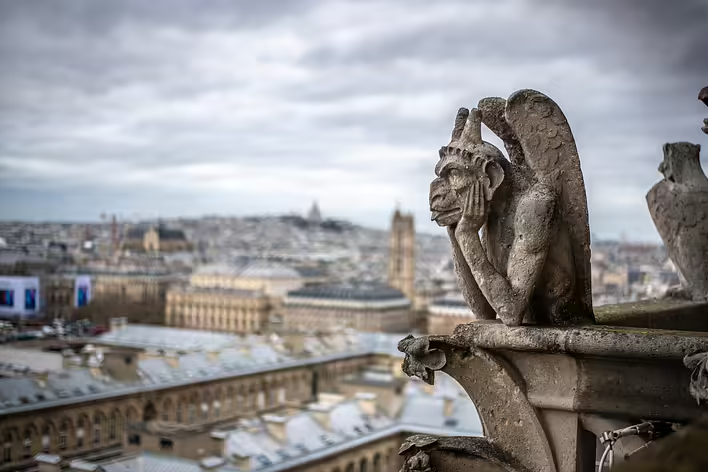
Notable examples of preserved grotesques exist on buildings such as the Florence Cathedral and Notre-Dame de Paris.
Grotesque, Notre-Dame de Paris "Джерело - www.cbs58.com"
Historically, grotesques have also had a significant impact on the design of sculptural trends, and often their architects were initially sculptors or artists. This meant that the widespread appearance of the grotesque often coincided with popular art styles that existed at the time, particularly with the combined rise of the Gothic style and the addition of grotesques in architecture. Among the key architects who frequently included grotesques in their designs were Brunelleschi and Gundulf of Rochester.
Opinions on the grotesque have varied
Bridham in his book "Gargoyles, Chimeras, and the Grotesque in French Gothic Sculpture" noted that the sculptors of Gothic cathedrals in the twelfth and thirteenth centuries were tasked by the Pope to be "preachers in stone" for the illiterate who inhabited Europe at the time. The sculptors were responsible not only for depicting Bible stories but also for illustrating animals and creatures that populated the folklore of the time. Many of these turned out to be grotesque.
Some critics, such as Francis Barash, dismissed the use of the grotesque as a hollow toy that offered little benefit. They also argued that it perpetuates superstitions rather than articulating what is real or true.
Another meaning of "Grotesque" in architecture
The meaning and use of the grotesque can also be different in architecture. Besides sculpture, for example, this term has been used to describe the search for the abnormal or the depiction of caricature. There are also scholars who use the architectural definition of grotesque as a term to denote disharmony. Among them is Peter Eisenman, a Jewish deconstructivist architect who has utilized this concept in his work. In particular, he used this term to represent a stylistic opposition to the form of aesthetics that is identified with the Kantian notion of the sublime in architecture.
The history of the grotesque in architecture
Originally developed as spouts for draining water from buildings and gutters now known as gargoyles, grotesques became a sculptural feature during the medieval period, and their often intricate designs evolved alongside the Gothic architectural period that took place in Europe from the 12th to the 16th century, creating a foundation for common characteristics of grotesque designs.
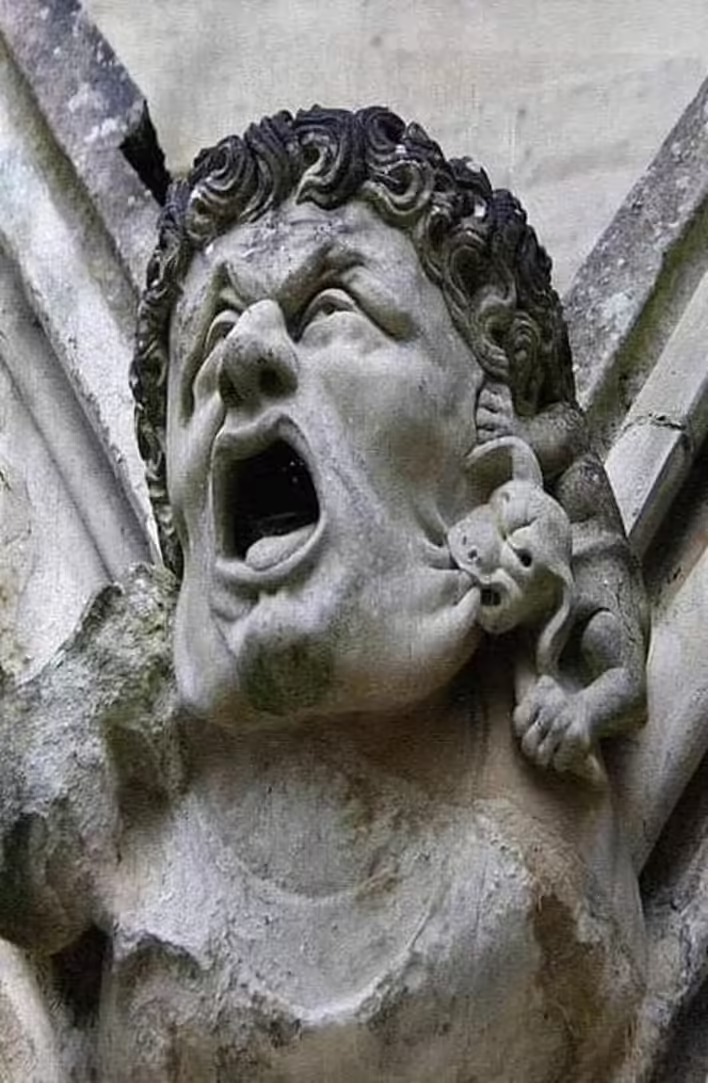
The earliest examples of grotesques in architecture exist in historical sites such as Salisbury Cathedral.
Salisbury Cathedral, England "Джерело - www.reddit.com"
The earliest instances of grotesques in architecture were initially deeply intertwined with religious spaces. The architect of such buildings as Salisbury Cathedral was a monk, which contributed to the growing interest in grotesque imagery in religious structures. Even after they became a key feature of early medieval architecture, they continued to be based on religious circumstances, even into the Renaissance period nearly 500 years later. Even in these early examples of grotesques in architecture, clear mythological influences are evident, and their whimsical style was established early on.
Thus, the grotesque in architecture is a decorative element that depicts fantastic or mythical figures, often in dramatic or humorous forms. It has historically appeared in various architectural styles, from antiquity to modernity, and serves a variety of functions, from decorative and functional to symbolic.