This content has been automatically translated from Ukrainian.
1. Very diverse in terms of socio-economic development, area, population, and planning structure
For example:
Singapore — the world's number 1 high-tech city
Doha (Qatar) — the city with the highest income level
Manila (Philippines) is the most densely populated city in the world — with 41,515 people per km² (2015)
2. Many cities are post-colonial
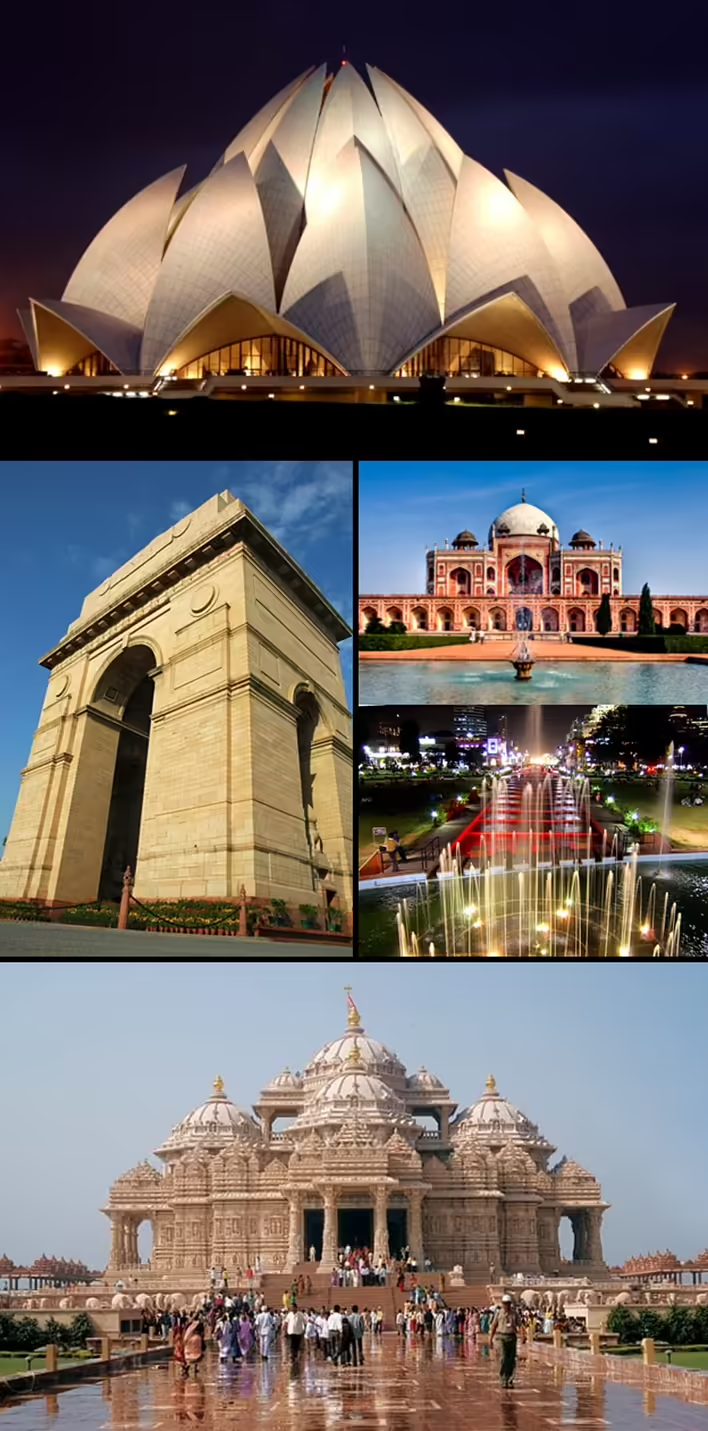
This means that their central parts reflect the cultural and architectural heritage of the colonial period. For example, the city of Delhi, the capital of India, is a vivid example of such post-colonial heritage. In its center, one can see architectural and cultural shades of the colonial period that have been preserved to this day and have become an integral part of the urban landscape.
3. Asia has global cities of various levels
Global cities of various levels in Asia play a key role in the world economy and cultural life. Cities like Tokyo in Japan are leading global centers that set trends in economic, technological, and cultural development. Besides Tokyo, this group includes cities like Hong Kong, Seoul, Beijing, and others that also play significant roles in global affairs and international relations. These cities attract investments, talents, and cultural exchange, making them key focal points on the world map.
4. Cities in Asia experience rapid population growth
One example of this trend is the city of Guangzhou in China. Located in southeastern China, Guangzhou is one of the fastest-growing megacities in the world. In recent decades, its population has significantly increased, putting pressure on infrastructure, the housing market, and other sectors. This creates a need for the implementation of sustainable development strategies and effective urban resource management to ensure the quality of life for residents and the sustainable development of the city.
5. Cities are developing very quickly
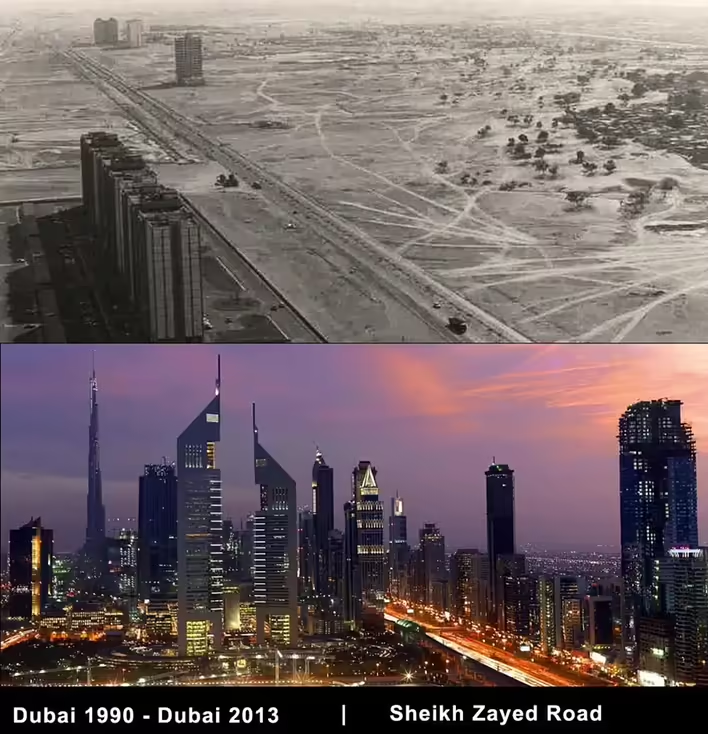
For example, Dubai in the United Arab Emirates is an ideal example of instant urbanization. This city-state has transformed from a desert into one of the most developed and modern megacities in the world over the past few decades. Its iconic skyscrapers, high-tech buildings, wide highways, and luxurious shopping malls testify to the rapid pace of growth and position Dubai among the most dazzling urban phenomena in the world.
6. The presence of slums is a common phenomenon in cities
For example:
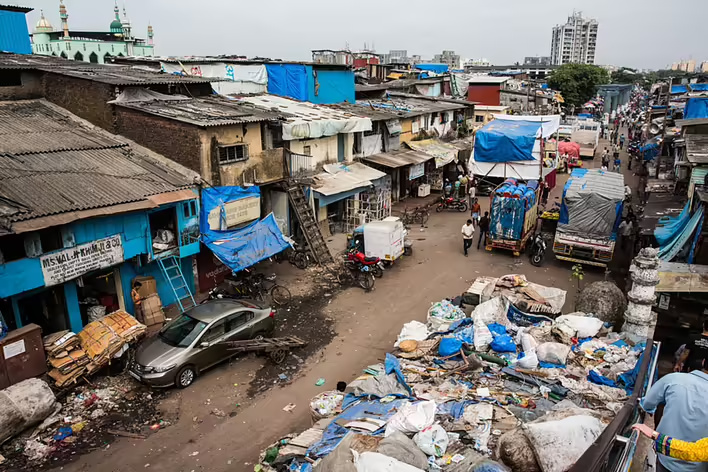
the Dharavi slum area in Mumbai
On an area of 2.5 sq. km, 1 million people live — this is the most densely populated place on planet Earth
Complete unsanitary conditions, a family of 10 can live in 10 sq. m, housing may be separated from each other by cardboard
The average life expectancy here is less than 60 years, with a salary of $1–2 per day
1 toilet is shared by approximately 1450 people
7. Cities in Asia are characterized by ongoing conflicts and wars
This primarily concerns cities in the Middle East, which often become arenas for various conflicts and wars that have religious, political, and clan foundations. Cities like Baghdad, Beirut, Damascus, and Jerusalem regularly find themselves at the epicenter of tense situations arising from religious disputes, territorial claims, ideological differences, and other factors. These conflicts have a serious impact on the stability and development of cities, complicating their socio-economic situation and exacerbating security issues.
8. Asia hosts the largest number of important pilgrimage cities
Among them are Mecca and Medina in Saudi Arabia, Jerusalem, a holy city for Christian, Jewish, and Muslim pilgrims, Lhasa in Tibet, Karbala and Najaf in Iraq for Shiites, and many others. These cities are places of deep religious and spiritual significance where believers pray and seek spiritual renewal.
9. Cities in different countries of Asia develop according to different urban development strategies
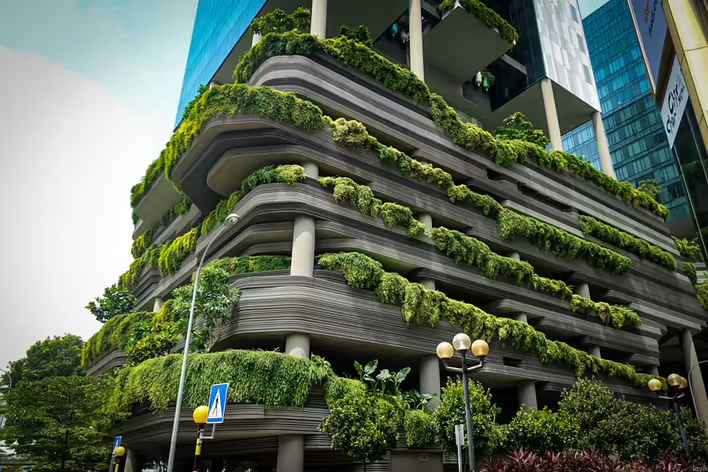
For example, in China, there is a strong emphasis on large-scale construction and high-rise skyscrapers aimed at rapid economic development and addressing overpopulation issues. In Singapore, on the other hand, the priority is to create a high-tech and environmentally friendly urban environment, where special attention is paid to innovation and sustainable development.
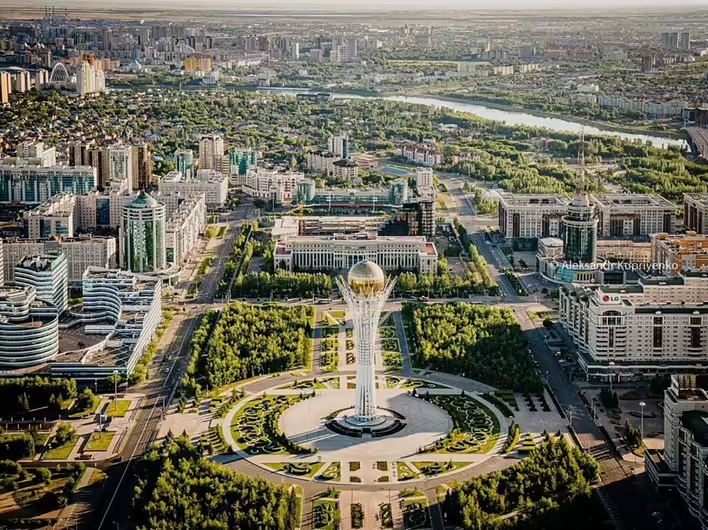
Astana, the capital of Kazakhstan, aims to become the country's showcase by investing efforts into creating architectural masterpieces and modern infrastructure to attract investments and develop tourism.
10. Greening of cities
China, National Program for Building a Middle-Class Society and Creating an Ecologically Civilized, Beautiful China
By 2020, it was planned to create:
- 6 agglomerations of forest cities (including mountains, water systems, road networks, and forest areas; intercity communication through created ecological corridors; urban greening)
Of these, three will be formed in the most economically developed regions of the country — Beijing-Tianjin-Hebei, the Yangtze River delta, and the Pearl River delta
- 200 forest cities
- 100 exemplary forest villages and settlements
The city of Shanghai
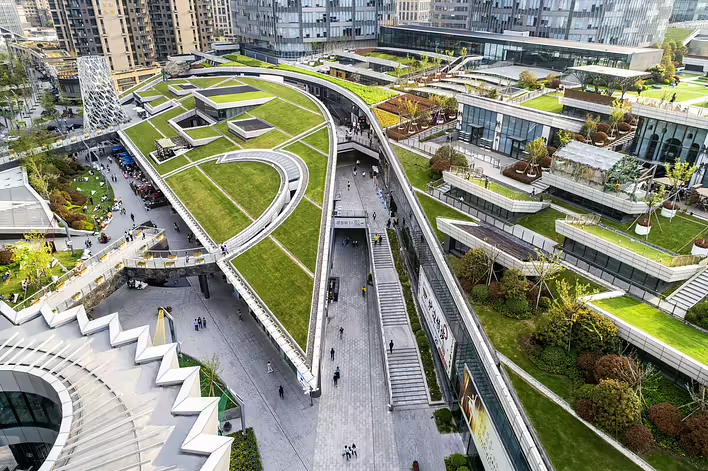
One of the most interesting projects is the Shanghai Greenland Center — a kind of urban farm located on an area of 20,000 sq. m. This complex of green urban valleys is located above one of the metro stations in Shanghai, combining terraces and slopes in a three-dimensional form at different heights. This project contributes to the creation of green infrastructure and the improvement of the quality of life for local residents.
11. Land scarcity
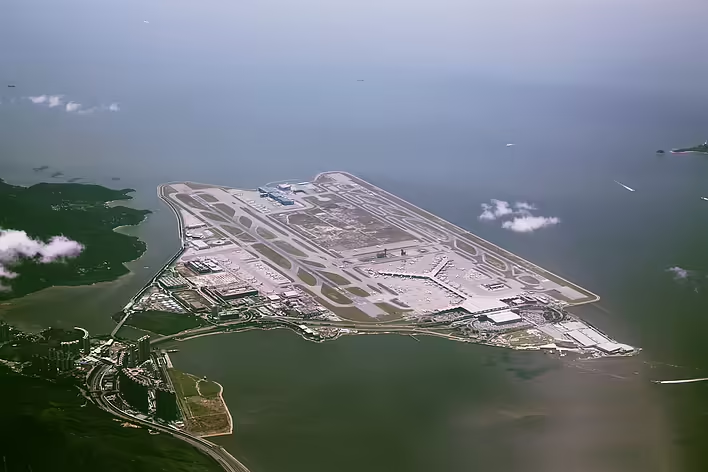
Land scarcity is becoming a serious problem in Asia, and countries are beginning to implement innovative approaches to address this issue. For example, in the city of Hong Kong, artificial islands are being constructed for various purposes. In 1998, an artificial island of 10 hectares was created for airport construction, allowing the city to expand and improve its infrastructure. At the same time, artificial islands are used for building residential complexes, contributing to urban space development and population expansion.
Hong Kong, Lantau Tomorrow Vision Project (2025–2032), €70 billion
Reasons:
housing crisis (many residents are forced to live in tiny apartments, sometimes as small as 2 sq. m), the most expensive housing costs among cities in the world
Essence of the project:
reclamation of 1,000 hectares of land near Lantau Island — creation of the world's largest artificial archipelago construction of 260,000 apartments, of which over 70% will be social housing
Criticism:
- unprecedented cost of the project, exceeding half of Hong Kong's financial reserves. There are concerns that the budget may nearly double during the process;
- environmental disaster: the already small population of pink dolphins (Sousa chinensis) is at risk. Greenpeace and the World Wildlife Fund note that former industrial zones, of which there are over 1,200 hectares in Hong Kong, could have been allocated for development. Cleaning these areas would be significantly cheaper;
- demographic forecast, according to which Hong Kong's population will peak in 2043 at 8.2 million and then decline to 7.6 million by 2064.
Like it?React
🧵
This post doesn't have any additions from the author yet.