This content has been automatically translated from Ukrainian.
Just think for a moment: what makes cities so unique?
These are the pulsating hearts of civilization, where diverse cultures, ideas, and opportunities meet. Cities are magnets for dreamers, scholars, entrepreneurs, and adventurers.But how do you choose the perfect city for the best living experience? There are rankings for that—a mosaic of data and impressions that helps reveal the true essence of urban life.
Let me open the door to the fascinating world of cities and their rankings.
You will gain insight into the best and worst cities to live in, learn about rankings that assess everything from stability and housing quality to healthcare accessibility and economic competitiveness. Next up are the largest and most expensive cities that attract with their grandeur and prestige. During our journey, you will learn about the cities with the largest populations and the smallest town of Hum.
The Economist Intelligence Unit (EIU) evaluated 140 cities based on factors such as stability, infrastructure, education, and access to healthcare.
2021 Ranking
The Most Livable Cities in the World
1. Auckland (New Zealand)
2. Osaka (Japan)
3. Adelaide (New Zealand)
4. Wellington (New Zealand)
5. Tokyo (Japan)
6. Perth (Australia)
7. Zurich (Switzerland)
8. Geneva (Switzerland)
9. Melbourne (Australia)10. Brisbane (Australia)
What Makes These Cities So Comfortable?
The cities in this ranking have a high quality of life, which includes accessibility to education, healthcare, and housing.
They are economic centers with a large number of job opportunities and career growth potential.
High-ranking cities are stable and safe for living, making them comfortable for residents, especially families with children.
Such cities offer a wide range of cultural events, restaurants, museums, and other entertainment venues that cater to the diverse interests and tastes of everyone.
These cities also have access to beautiful natural landscapes, parks, and green spaces that promote an active and healthy lifestyle for the population.
The Least Livable Cities in the World
1. Damascus (Syria)
2. Lagos (Nigeria)
3. Port Moresby (Papua New Guinea)
4. Dhaka (Bangladesh)
5. Algiers (Algeria)
6. Tripoli (Libya)
7. Karachi (Pakistan)
8. Harare (Zimbabwe)
9. Douala (Cameroon)
10. Caracas (Venezuela)
The cities in this ranking have completely opposite living conditions compared to the ranking of "The Most Livable Cities in the World." Why?
Many of these cities are politically unstable, with conflicts occurring that threaten the safety of residents. The cities face serious environmental pollution issues.
Such cities have low levels of economic development, high unemployment, and limited access to essential resources.
In these cities, there are problems with access to quality healthcare, education, and housing, as well as high levels of crime and corruption.
The Mercer ranking of the most comfortable cities is based on 10 indicators:
entertainment, housing quality, transportation, climate, education, healthcare quality, public transport, political and social environment, sociocultural environment, and availability of consumer goods
- Vienna (Austria)
- Zurich (Switzerland)
- Vancouver (Canada)
- Munich (Germany)
- Auckland (New Zealand)
- Düsseldorf (Germany)
- Frankfurt (Germany)
- Copenhagen (Denmark)
- Geneva and Basel (Switzerland)
The British publication The Economist
The ranking of the most comfortable cities to live in 2022
Living conditions in 172 cities worldwide were evaluated based on over 30 components grouped into 5 categories:
stability, healthcare, culture and environment, education, and infrastructure.
It was considered how cities coped with the consequences of the coronavirus pandemic.
- Vienna (Austria) 2018, 2019, 2022
- Copenhagen (Denmark)
- Zurich (Switzerland)
- Calgary (Canada)
- Vancouver (Canada)
- Geneva (Switzerland)
- Frankfurt (Germany)
- Toronto (Canada)
- Osaka (Japan)
- Melbourne (Australia)
The worst cities for comfortable living are Damascus (Syria), Lagos (Nigeria) and Tripoli (Libya)
What is this related to?
- Political instability and conflicts:
Cities like Damascus in Syria and Tripoli in Libya are experiencing significant political and military conflicts, leading to threats to safety and instability for residents.
- Economic difficulties:
Low levels of economic development, high unemployment, and limited access to essential resources.
- Social issues:
Problems with access to quality healthcare, education, and housing, as well as high levels of crime and corruption make these cities unsuitable for comfortable living.
- Environmental issues:
Cities face serious environmental pollution problems that negatively affect the health of residents and the overall quality of life.
The Most Expensive Cities in the World
The Economist Intelligence Unit Ranking
2022
- New York (USA)
- Singapore
- Tel Aviv (Israel)
- Hong Kong
- Los Angeles (USA)
- Zurich (Switzerland)
- Geneva (Switzerland)
- San Francisco (USA)
- Paris (France)
- Copenhagen (Denmark)
These cities are economic centers with a wealth of business opportunities and high income levels. The cities have high-quality housing, developed infrastructure, and are popular among tourists and migrants. The cities in the ranking are global financial centers where the high cost of living reflects high income and expenses.
The Largest Cities in the World by Area
- Chongqing (China) — 82,400 km²
- Hangzhou (China) — 16,853 km²
- Beijing (China) — 16,808 km²
- Brisbane (Australia) — 15,826 km²
- Kinshasa (Congo) — 9,965 km²
- Istanbul (Turkey) — 5,345 km²
- Anchorage (USA, Alaska) — 5,099 km²
The Most Populated Cities
Shanghai (China), 24.2 million
Karachi (Pakistan), 23.5 million
Delhi (India), 18.9 million
Mumbai (India), 18.4 million
Guangzhou (China), 17.3 million
Dhaka (Bangladesh), 16.6 million
Lagos (Nigeria), 16.1 million
Tianjin (China), 15.5 million
São Paulo (Brazil), 13.7 million
Mexico City (Mexico)
Tokyo (Japan)
Osaka (Japan)
Beijing (China)
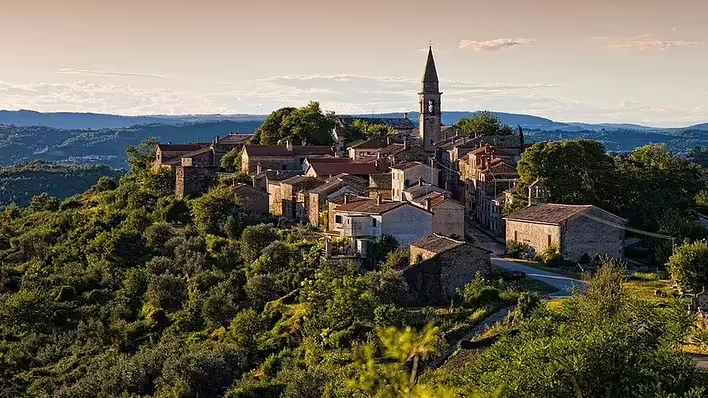
The smallest city in the world by population is the town of Hum on the Istrian peninsula in Croatia — 17 people (listed in the Guinness World Records)
The town was founded in the 11th century.
At its peak in the 15th-16th centuries, it had a population of 300.
According to some sources, it is considered the smallest city in the world by population. Known as the "City of Truffles," Hum attracts tourists with its charming atmosphere and unique natural landscapes.
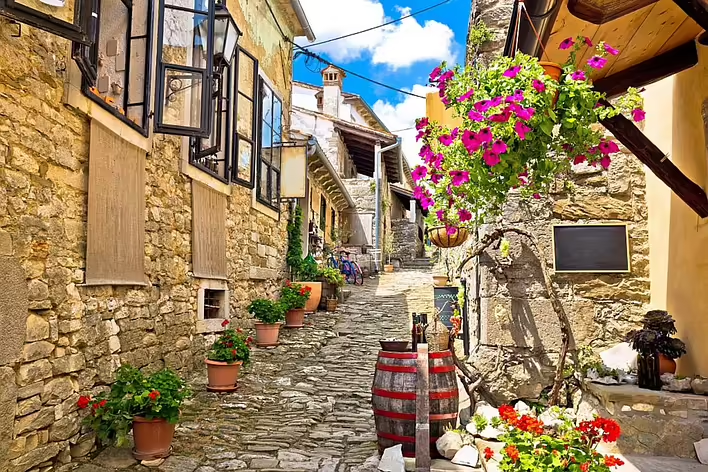
The town is famous for its history, architecture, and cultural traditions. Narrow streets, stone buildings, and medieval towers create an atmosphere that transports visitors back in time.
The main landmark of the town is the Walls of Hum, dating back to the 11th century, which remain a symbol of the town. Hum is also known for its truffles that grow in the nearby forests, and the town's restaurants offer dishes prepared with this precious fungus.
For many travelers, Hum has become a place of respite from noisy cities and modern life. Visitors can enjoy the tranquility, the beauty of nature, and the unique culinary experiences that this small yet charming town offers.
Like it?React
🧵
This post doesn't have any additions from the author yet.