This content has been automatically translated from Ukrainian.
Geographical Division of Labor (GDL)
spatial division of labor
- GDL — an objective process of economic development of regions, which involves the differentiation of various types of labor activities and the specialization of individual production units and the exchange of their products.
- Economies of scale
- Production agglomeration
- Production localization
Geographical Division of Labor
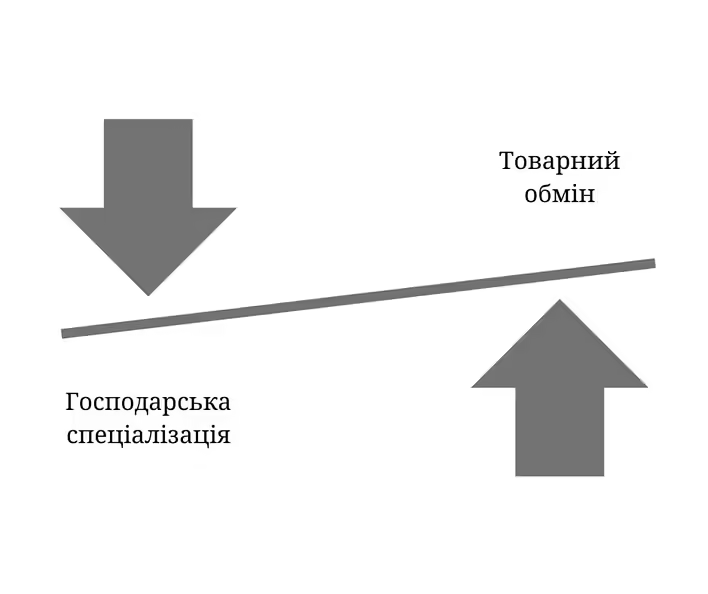
Historical Nature of the GDL Concept
- Origins of the concept — the works of K. Marx and F. Engels on the rupture between the labor of workers and the appropriation of the results of labor by large capital
- Development of the concept by M. Baransky, Yu. Saushkin, and other scholars
- Modern vision — taking into account not only the labor factor but also all types of resources (land, water, subsoil, capital, information).
Types of Geographical Division of Labor (according to Yu. Saushkin)
- General (international)
This type of division of labor is established at the international level and includes the distribution of production functions among different countries based on their competitive advantages. Each country specializes in the production of those goods or services in which it has a relative advantage and trades these goods in international markets.
- Division of labor between individual economic centers
This type of division of labor provides for the distribution of production functions among individual regional or national centers within a country or region. For example, large cities may specialize in the production of certain goods or services, while other regions may specialize in other types of activities.
- Division of labor around an economic center (node)
This type of division of labor is complicated by the concentration of certain types of production or services around a central economic node. For example, around large cities or industrial centers, there may arise a concentration of enterprises from related industries, which contributes to the further development of this region.
- Stage-wise geographical division of labor
This type of division of labor is completed by the sequential production of different stages of production in various regions or countries. For example, some countries may specialize in the cultivation of raw materials, while others may focus on processing these raw materials into finished goods.
- Phase division of labor
This type of division of labor is based on the distribution of production functions among different countries or regions based on differences in the level of technological development. More developed countries may specialize in high-tech productions, while less developed countries produce less complex goods.
- Occasional division of labor
This type of division of labor operates in connection with temporary or seasonal changes in demand for goods or services. For example, depending on the season, the demand for certain goods, such as clothing or food products, may change, potentially leading to a temporary concentration of production in certain regions or countries.
Dynamics of the GDL Concept
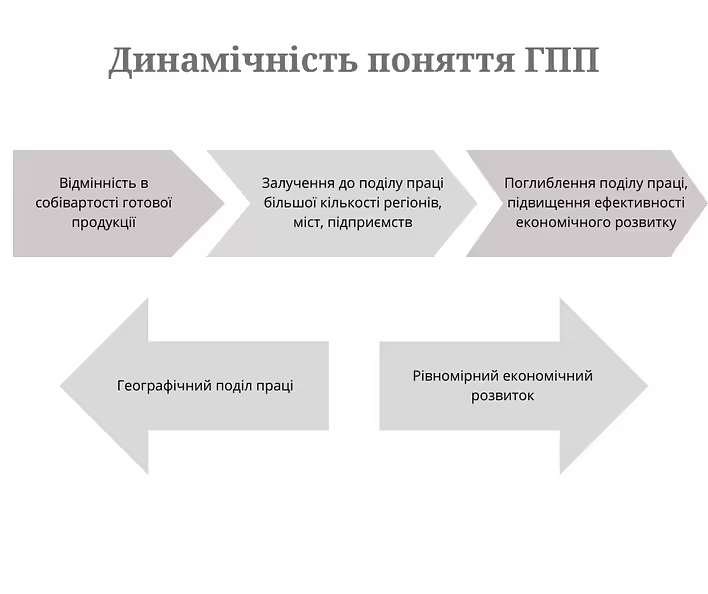
- New International Division of Labor (NIDL) — reorganization of the division of labor from a national scale towards a global one.
- Manifestations: value-added chains become longer, transnational companies increase their share in the global economy, national products gradually disappear from markets
Like it?React
🧵
This post doesn't have any additions from the author yet.