This content has been automatically translated from Ukrainian.
The main goal of building spatial models is to find the optimal location for enterprises or the specialization of agriculture
Models are divided into two groups:
- static (early stage of science development, simple models);
- dynamic (more complex, later models that take into account not only spatial relationships but also spatio-temporal ones).
Static location models
Classical location models:
- Johann Heinrich von Thünen's model
- Alfred Weber's model
- Albert Schaeffle's model
- Wilhelm Launhardt's model
- Walter Christaller's model
- August Lösch's model
Common features of classical location theories
1. Development of models based on empirical material (data obtained from experience and practice)
2. Sectoral nature of models (designed to justify the location of enterprises in a specific sector)
3. Models typically have classical graphical representations (circle, triangle, hexagon)
4. Models do not take into account local development features (relief, settlement system, climate)
5. Models do not provide an answer to the question of a unique optimal location for an enterprise — according to the model, there may be several such locations
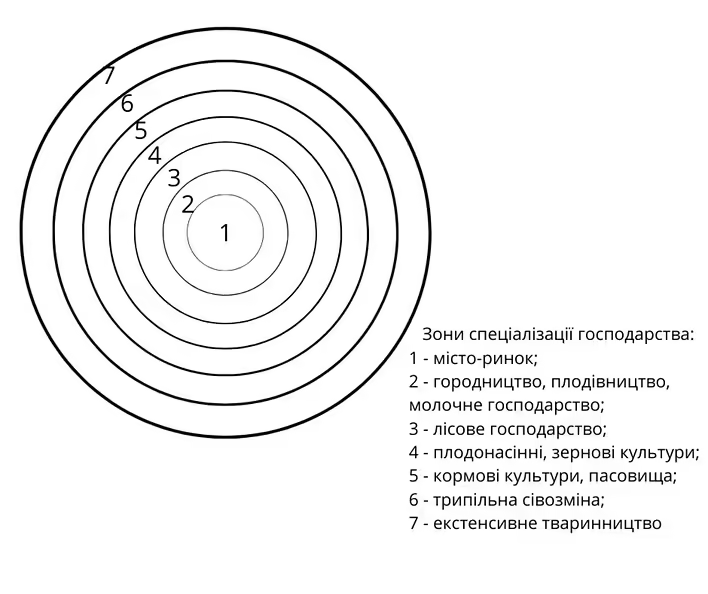
Location of agriculture: Johann Thünen's "rings"
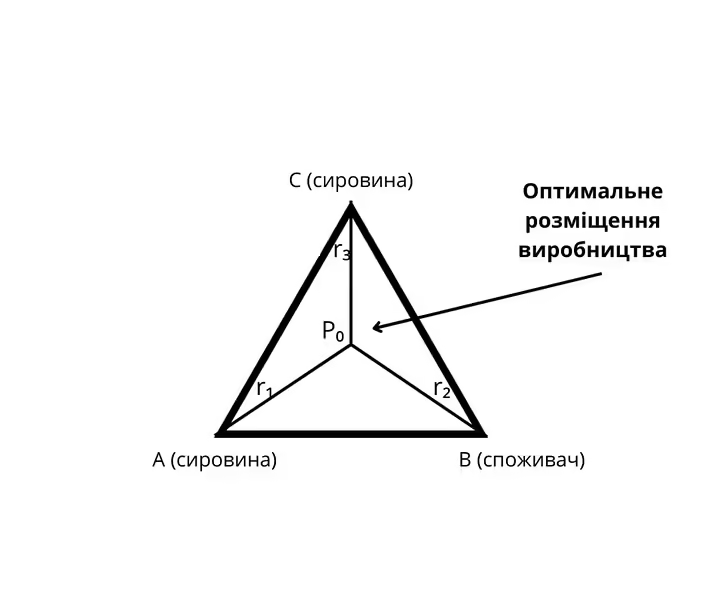
Location of industry: Alfred Weber's "factor triangle"
Dynamic location models
The main purpose of dynamic models:
- taking into account fluctuations in demand and supply in local markets, price fluctuations, and other factors. Thus, an important task became the search for balance, both in the economic development of the country as a whole and in the territorial aspect (balanced development of regions)
Key concepts of the models — uneven development of regions, divergence and convergence of space, factors of production
Main viewpoints on the dynamics of regional development
1. Model of spatial economic equilibrium by L. Walras. The main positions: under conditions of free competition and mobility of factors of production, regional systems tend towards equilibrium and stable development. Such theories are called convergence theories — R. Solow, T. Swan, G. Mankiw.
2. Theory of spatial unevenness of economic development (cumulative growth) — D. Williamson, G. Richardson, G. Myrdal, F. Perrou. The main thesis is that uniform economic development of a region is impossible.
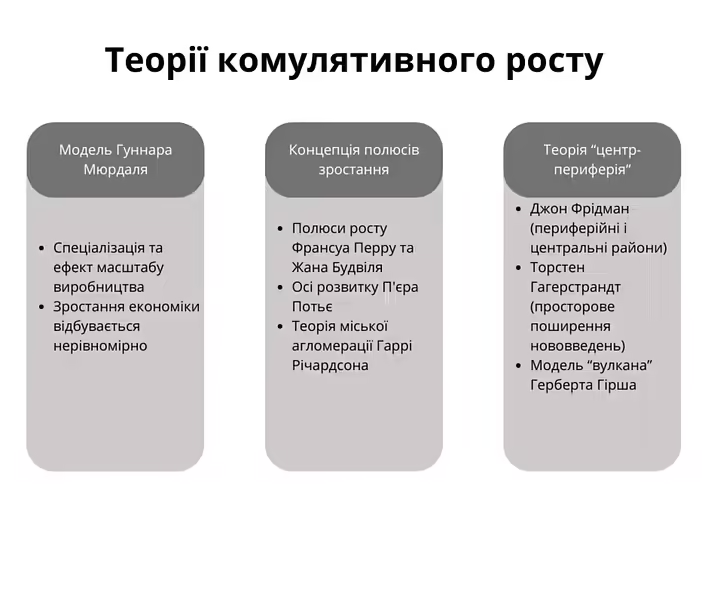
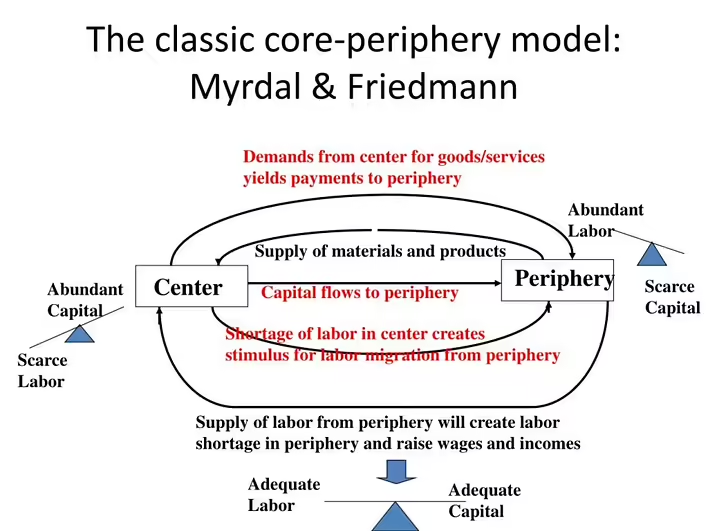
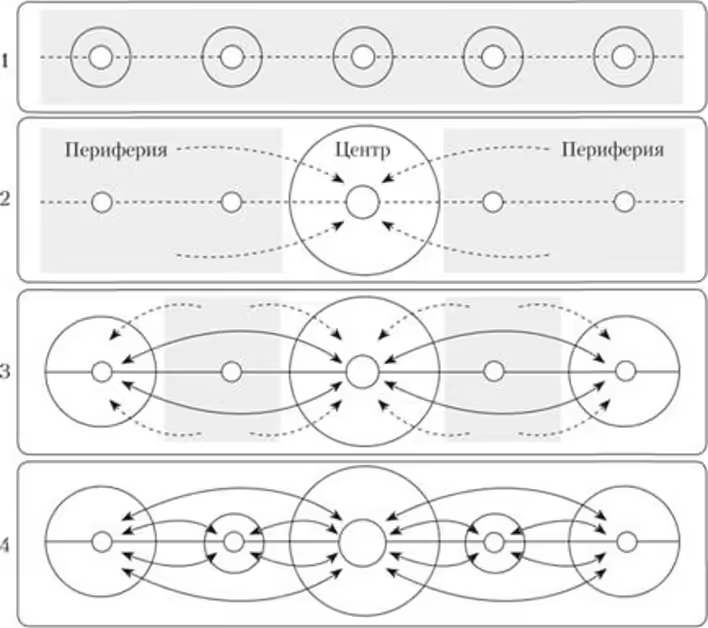
Center-periphery model — such a representation of a region, the structural components of which are divided into two generalized groups (central and peripheral), formed based on the action of objective laws of territorial differentiation and concentration and characterized by different parameters of territorial spread, internal structure, and configuration, having different functions and properties.
Authors of the concept: John Friedmann and Gunnar Myrdal
Related research:
Torsten Hägerstrand and his theory of the diffusion of innovations
J. Friedmann identified four types of regions:
- core regions — areas of concentration of advanced production with the highest innovation potential;
- growing regions (“development corridors”), — neighboring territories of cores that are rapidly developing due to industrialization and the development of infrastructure serving the center;
- newly developed regions — areas where agriculture, logging, and mining primarily develop;
- depressed, peripheral regions with an old settlement system, stagnation of all sectors of the economy, where there is an exacerbation of socio-economic problems and migration of the population to more developed regions.
Like it?React
🧵
This post doesn't have any additions from the author yet.