Clerestory is an architectural element consisting of a series of windows located at the upper part of a building's wall, usually above ground level or above the roof level of the lower floor
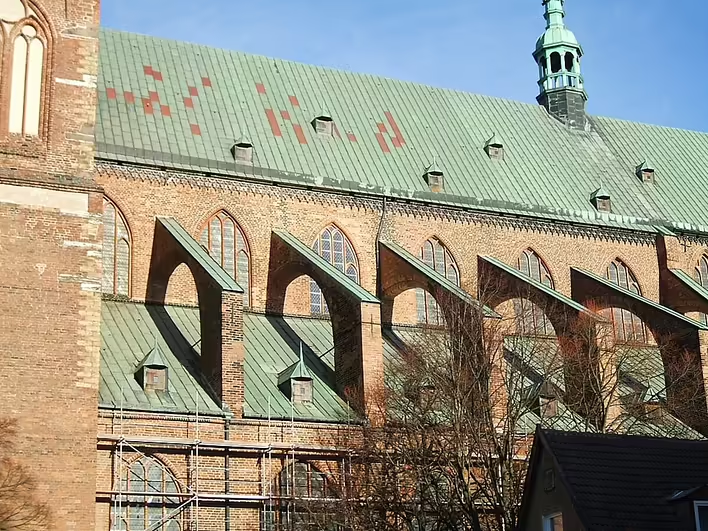
Historically, the clerestory formed the upper level of the Roman basilica or the nave of a Romanesque or Gothic church, whose walls rise above the roof lines of the lower aisles and are pierced with windows.
Церква Святого Миколая, Штральзунд у Німеччині – clerestory – це рівень між двома зеленими дахами, укріпленими тут опорами "Джерело - Вікіпедія"
Functions and Uses of Clerestory
The main function of the clerestory is to allow natural light into interior spaces, helping to reduce the use of artificial lighting and providing natural illumination to the room. This is especially useful in large buildings such as churches, temples, train stations, airports, museums, and other public buildings where ample lighting is needed, as well as in buildings with high ceilings where light has difficulty penetrating through regular windows.
Additionally, clerestories can be used to provide ventilation and air circulation in interior spaces. They can be open or fixed windows that help to expel warm air and prevent overheating in the room.
History
The technology of clerestory seems to originate from the temples of Ancient Egypt. The term "clerestory" applies to Egyptian temples where the lighting of the columned hall was obtained above the stone roofs of the adjacent aisles through gaps left in the vertical stone slabs. The clerestory appeared in Egypt at least as early as the Amarna period.
Modern Clerestory Windows for Energy-Efficient Buildings
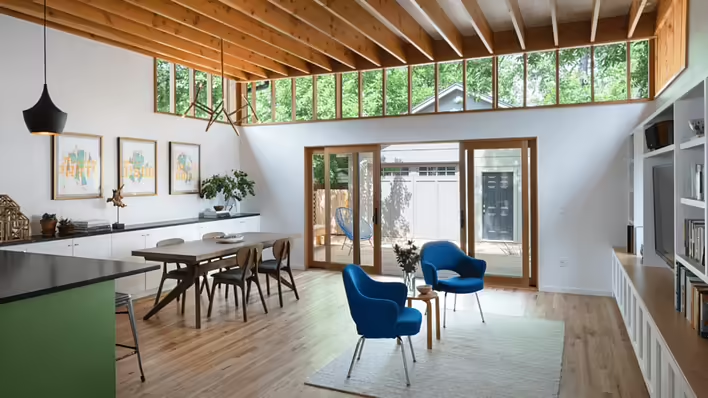
Modern clerestories are often defined as vertical windows located on high walls that extend upward from the roof line, designed to allow light and wind into the space without compromising privacy. Factory buildings are often constructed with clerestory windows; modern housing designs sometimes include them as well.
Clerestory Windows в сучасних будинках "Джерело - Pinterest"
Modern clerestory windows can play another, particularly important role, besides daylighting and ventilation: they can be part of passive solar strategies in very energy-efficient buildings (passive houses and zero-energy buildings).
For this purpose, clerestories are used in combination with stone, brick, concrete, and other massive walls and floors, properly positioned to collect solar heat during the hotter parts of the day — allowing the walls and floor to act as a thermal bank during cooler times of the day.
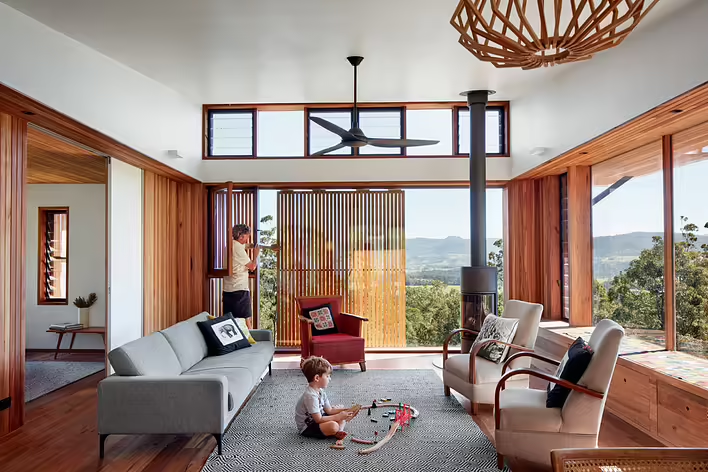
Конструкції вікон Clerestory для освітлення та вентиляції "Джерело - www.houzz.com.au"