This content has been automatically translated from Ukrainian.
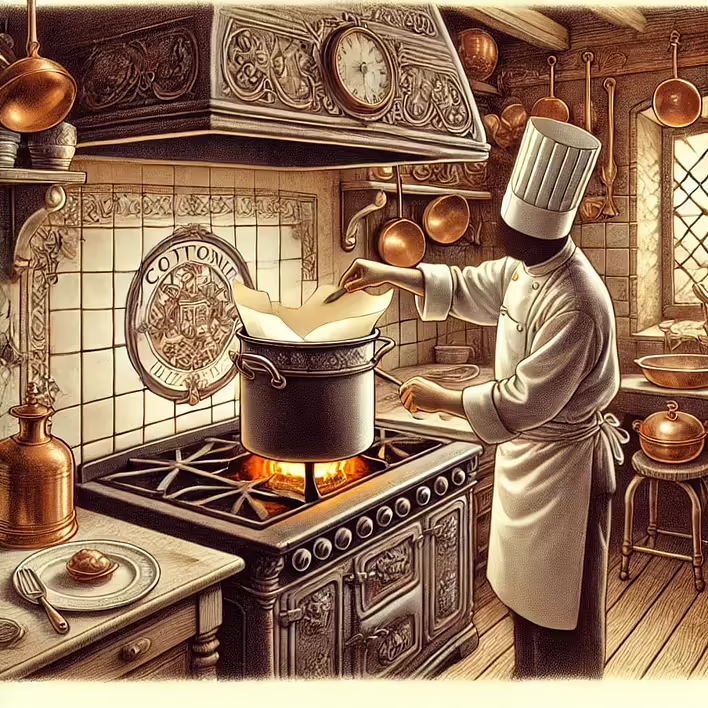
Cartouche in cooking is a round (less often oval) piece of parchment paper, cut to perfectly fit the size of the dish (pot, saucepan, or frying pan) in which the dish is prepared. It is used to reduce the evaporation of liquid during the thermal processing of foods, especially in cases where a controlled stewing, caramelization, or boiling process is required.
This technique originates from French cuisine. The word “cartouche” translates from French as “cartridge” or “tube.” In the context of cooking, it is associated with the idea of wrapping or covering and symbolizes a barrier between the ingredients and the air during cooking.
How is a cartouche used?
A cartouche is placed directly on the surface of the dish being cooked, replacing a regular lid. It not only retains moisture but also promotes even cooking by creating a barrier between the ingredients and the surrounding environment. This culinary technique is especially popular when preparing stewed vegetables and sauces.
How to make a cartouche?
- Take a piece of parchment paper and fold it several times into a triangle.
- Measure the length from the center of the pot to its edge.
- Cut off the excess paper to size, then unfold it to create a circle.
- You can cut a small hole in the center (cut off the tip of the triangle) for better control of evaporation.
A cartouche provides gentle thermal processing of ingredients, helps preserve their texture and flavor, richness, and juiciness, as well as avoid drying them out.
How can the cartouche technique be used in practice?
A cartouche can be used for slow cooking vegetables, for example, in making potato or pumpkin puree. The parchment prevents liquid evaporation and retains steam, ensuring even thermal processing.
In sauces that are made by evaporation (reduction), a cartouche helps avoid the formation of an unwanted film or crust on the surface. For example, it can be used to prepare velouté or béchamel (two of the four classic French sauces).
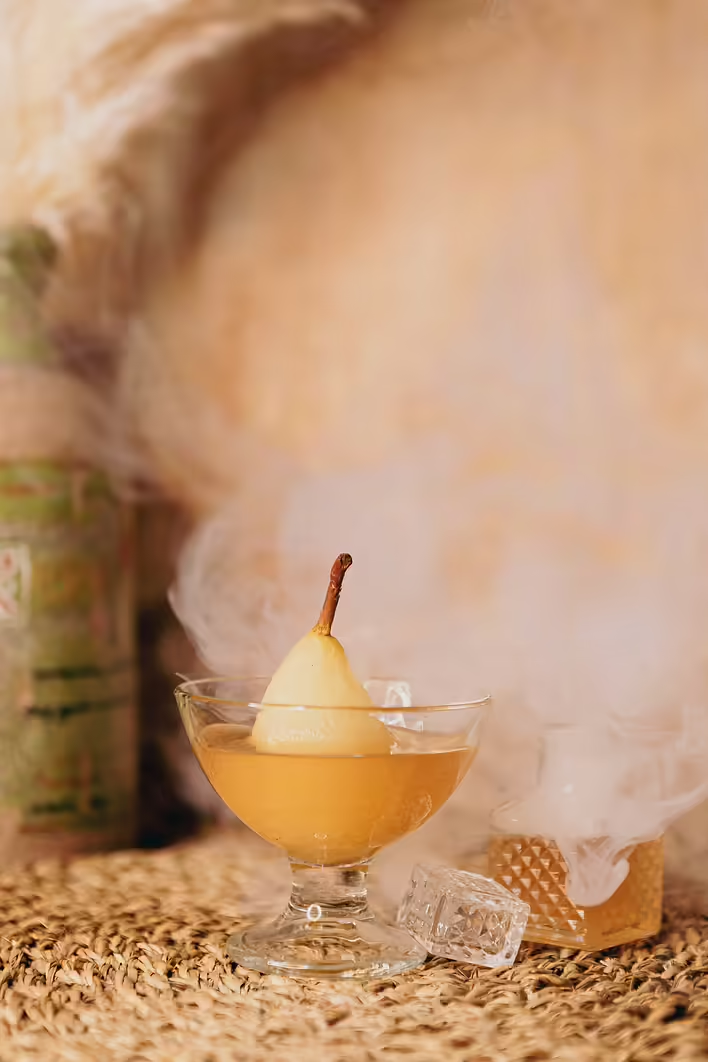
During slow stewing (confit), for example, onions or pears in their own juice, a cartouche protects the surface of the ingredients from drying out. It also significantly eases the preparation of caramelized vegetables.
For delicate fish fillet cooked in a fragrant sauce, a cartouche helps retain aroma, juiciness, and integrity, as well as ensure the fish is infused with the sauce. For example, it can be used to prepare the classic French fish dish sole meunière.
In some cases, when stewing meat, a cartouche is used to create a richer texture for the dish.
A cartouche can also be used for baking dishes in the oven to prevent the top layer from drying out, for example, in casseroles or pies.
Thus, a cartouche is quite a versatile technique that offers many possibilities in cooking. It is relatively simple, as behind the exotic name lies a mundane sheet of parchment, but everything genius is simple, isn’t it?
Like it?React
🧵
This post doesn't have any additions from the author yet.