This content has been automatically translated from Ukrainian.
Have you seen a teenager dyeing their hair alone in the bathroom, falling in love with someone clearly unsuitable, or choosing a hairstyle they will later wish to forget? According to the laws of modern memes, it's best not to interfere. Maybe it's their canon event.
This is what people jokingly call an experience that a person is supposed to go through on their own. It can be a mistake, disappointment, a strange life phase, or just an awkward situation that later becomes part of their personal story.
Hence one of the most common meme formulas: “You can't interfere, it's a canon event”.
What does canon event mean
In modern slang, a canon event is an event or experience that has significantly impacted a person and has become part of who they are now.
This is how the phrase is already recorded in English dictionaries. Merriam-Webster defines it as a formative life experience and notes that social media often refers to familiar, sometimes awkward or funny situations related to growing up.
For example, one might refer to their first failed relationship, working in a terrible team, a teenage phase of being obsessed with a certain subculture, or a decision everyone warned against, but at the time, they didn't want to listen to anyone else's advice, as their canon event.
Moreover, a canon event doesn't necessarily have to be traumatic. It can be a positive or simply funny experience. What's more important is that looking back, a person sees it as part of their own story—a conditional episode without which their “plot” would be a bit different.
Why “canon”
To understand the joke, it's worth first clarifying the word canon.
The concept is much older than modern pop culture. The English canon comes from Latin, which in turn derives from the Greek kanōn—“rule,” “measure,” or “standard.” Over time, the word began to be used regarding an officially recognized body of texts, and later it became established in literature and mass culture.
In modern fandoms, canon refers to events, facts, and connections that truly exist within the official story of a work.
If a certain event occurred in a movie or series, it belongs to the canon. Fan theories, alternative versions, and interpretations of characters do not belong to it unless confirmed by the work itself or its creators.
Therefore, the phrase canon event can literally be understood as “a canon event” or “canonical event”—something that must happen within a certain story.
The phrase may have appeared before, but its modern meme meaning formed after the release of “Spider-Man: Across the Spider-Verse” in 2023.
How canon event is connected to “Spider-Man”
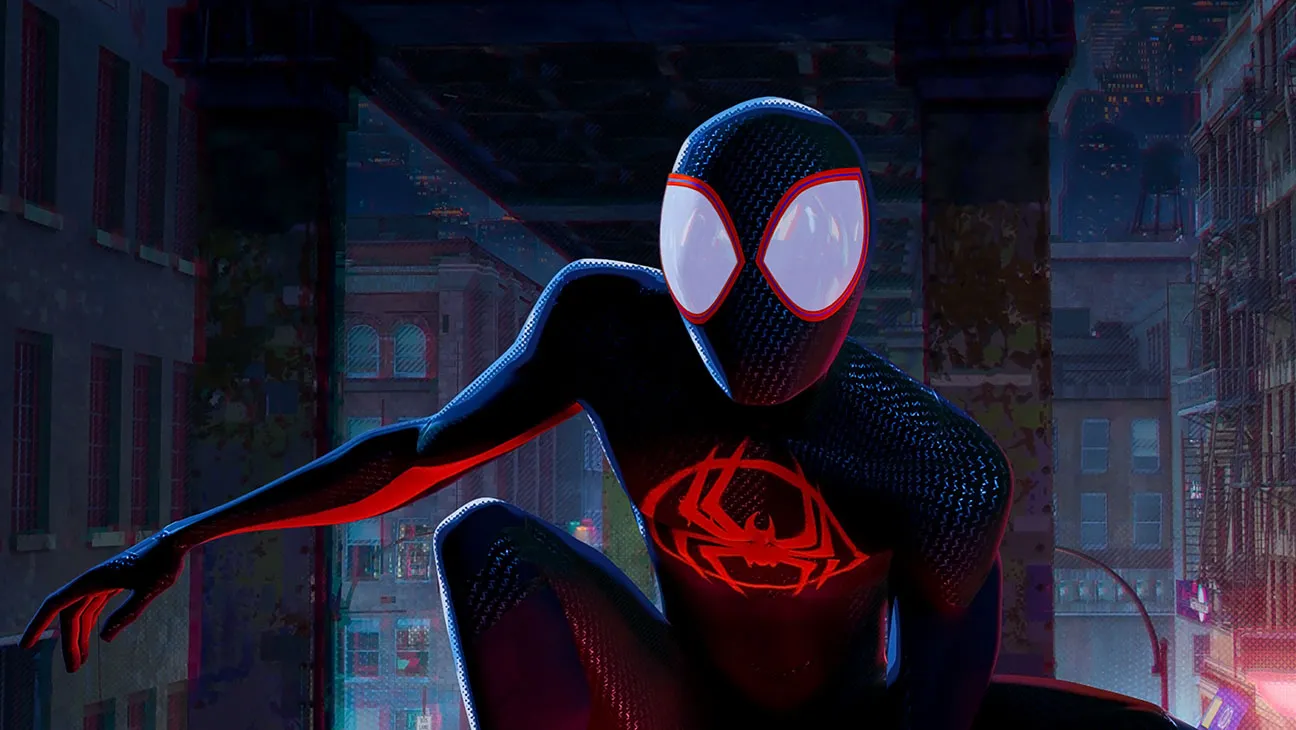
The key to popularizing the phrase was the animated film “Spider-Man: Across the Spider-Verse” (Spider-Man: Across the Spider-Verse), released in 2023.
In its world, there are numerous parallel universes and different versions of Spider-Man. They differ in appearance, biography, and life circumstances, but certain pivotal moments repeat in their stories.
Miguel O'Hara, also known as Spider-Man 2099, refers to such moments as canon events. In his view, these are key events that connect the stories of different Spider-People and should not be disrupted. If one interferes with such an event, it could threaten the stability of the respective universe, according to his theory.
Among such recurring motifs are gaining spider abilities, the death of a loved one, and other losses that impact the hero's development.
It is around this idea that one of the main conflicts of the film unfolds: Miles Morales does not want to accept the notion that a tragedy must occur simply because it is supposedly part of a predetermined plot.
Here is an important detail. It is not entirely correct to say that the film establishes the immutability of canon events as an indisputable law. This nature is explained by Miguel O'Hara, but the plot actually questions his views and conclusions.
Therefore, a canon event in the film can also be perceived as a play on the very concept of canon: how many familiar tragedies must the next version of a superhero endure to remain a “true” Spider-Man?
How canon event turned into a meme
The internet quickly transferred the logic of the Spider-Verse to everyday life.
According to the timeline Know Your Meme, memes about canon events began to appear on June 2, 2023, the day of the American theatrical release of Across the Spider-Verse. One of the early viral examples was a TikTok video suggesting that a certain unpleasant experience was not just a trauma but a “canon event.” Within six days, it garnered over two million views.
A format then emerged that defined the modern meme meaning of the phrase.
Someone sees another person about to make a mistake. They already have a rough idea of how it will end because they once went through something similar. But according to meme logic, one cannot warn:
I can't interfere. It's a canon event.
That is: “I can't interfere. It's a canonical event”.
On TikTok, such jokes were often accompanied by music associated with Miguel O'Hara, and the format quickly spread to other social networks.
Thus, the meaning shifted. In Spider-Verse, a canon event is a key event in the story of Spider-Man. In memes, it has become an inevitable or formative stage in the life of an ordinary person.
Why this meme has thrived
The canon event aptly combines two long-familiar habits of internet culture.
The first is describing one's life in the language of a narrative plot. Hence main character, “new plot arc,” “this is part of my lore,” character development, and other expressions in which a real person seems to become a character in a series about themselves.
The second is a familiar feeling for many when watching someone else's mistake and already having a rough idea of the continuation.
An older sister observes the first dramatic relationship of a younger sibling. An adult sees a teenage experiment they once went through. An experienced worker listens to a new colleague convinced that this time the toxic boss “just seems strict.”
A canon event allows all of this to be condensed into one phrase: the person does not yet know, but right now, a part of their future lore is being created.
This is the reason for the meme's universality. To understand it, over time, it has even become unnecessary to watch “Spider-Man.”
It is telling that the phrase quickly transcended jokes about the Spider-Verse.
In 2023, canon event found itself among the words that Collins highlighted in its language summaries for the year. Today, Collins Dictionary already defines it as an important event in life that influences who a person is and who they become.
This clearly shows how far the concept has strayed from its original context. The definition no longer requires a mention of Spider-Man: a canon event functions as a standalone slang expression.
Is canon event used in Ukrainian
Yes, canon event is used in the Ukrainian-speaking internet, although there is currently no single established variant.
The most common forms are:
canon event — the original English spelling;
канон івент — a colloquial adaptation that retains the English structure and the characteristic sound of the meme;
канонічна подія — a literal and quite understandable Ukrainian translation.
The choice of form largely depends on the context. Canon event looks natural in posts where the author is oriented towards English-speaking meme culture or quotes the phrase itself. “Канон івент” sounds more slangy and conveys the way English meme constructions are often adapted in informal Ukrainian speech.
“Канонічна подія”, on the other hand, is understandable even to someone who has not seen the English term before. It conveys the literal meaning well, although it may sound a bit more neutral than the original meme.
You may also encounter the spelling “канон-івент”, but there is no basis to consider it a separate established norm. Overall, the phrase is still at the stage of borrowing, where the English original, the transliterated form, and the translation coexist peacefully in parallel.
To explain the term in Ukrainian, it is most convenient to use canon event (“канонічна подія”) at the first mention, and then choose the form depending on the style of the text. If it specifically concerns slang and internet memes, the English canon event or the colloquial “канон івент” better preserve its original intonation.
Like it?React
🧵
This post doesn't have any additions from the author yet.