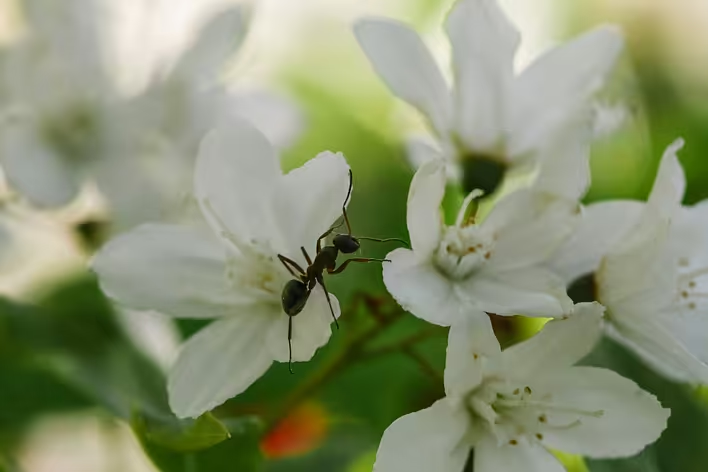
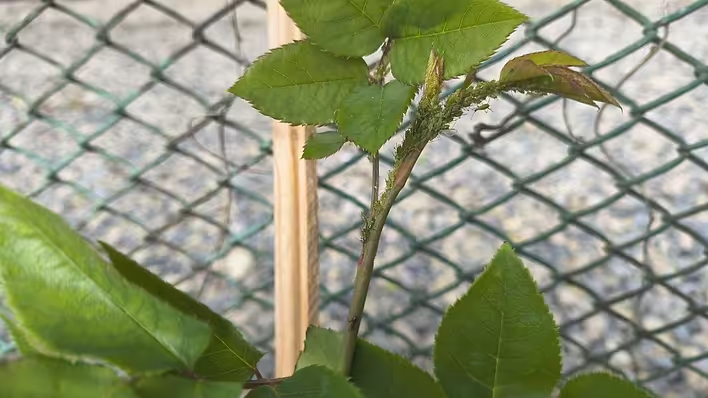
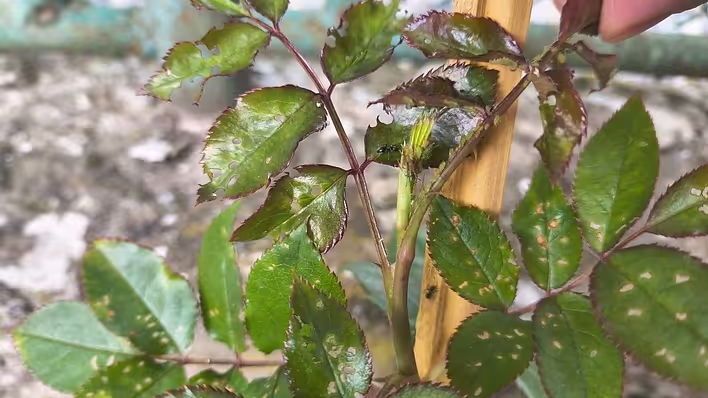
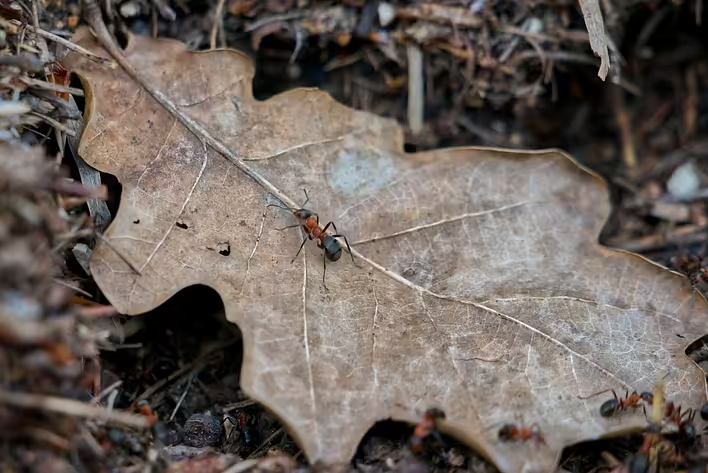
Many gardeners and flower enthusiasts have noticed a strange sight: small green or black aphids sitting on the stems of roses, peonies, or young shoots of other plants, while ants bustle around nearby. At first glance, it seems that the ants are hunting the pests or just running around by chance. In reality, there is a true symbiosis between them — one of the most interesting examples of "cooperation" in the insect world.
Aphids and ants are so closely linked that scientists often compare this relationship to human livestock farming. Ants literally "farm" aphids, taking care of them, protecting them, and even moving them to new plants.
What is an aphid and why do gardeners dislike it
An aphid is a small insect that feeds on plant sap. It pierces young shoots, leaves, or buds with its thin proboscis and sucks out the nutrients. As a result, the plant weakens, the leaves curl, the buds deform, and young shoots may even dry out.
Aphids particularly favor roses, currants, viburnum, young fruit trees, peonies, nasturtiums, and vegetable crops.
Aphids reproduce very quickly. In warm weather, one colony can multiply several times in just a few days. This is why gardeners often notice the problem suddenly: just yesterday the plant looked healthy, and today the entire shoot is already covered with small insects.
Why do ants need aphids
The main secret of this alliance is the sweet liquid that aphids secrete. It is called honeydew.
When aphids feed on plant sap, they absorb a lot of sugars but cannot fully digest them. The excess sugary liquid is excreted by the insect in small droplets. For ants, this is a true delicacy.
Ants literally "milk" aphids: they touch them with their antennae, stimulating the release of a sweet drop, which they then lick up. Sometimes you can even see an ant circling around an aphid colony almost like a shepherd circles around a flock.
If there are ants on a plant, they often behave very aggressively towards other insects. The reason is simple: ladybugs, lacewings, and some larvae actively eat aphids, thus depriving ants of their food source.
Because of this, ants drive away predatory insects, attack ladybugs, and even move aphids to new shoots, helping the colony to grow faster. Sometimes they go even further: scientists have observed ants hiding aphid eggs in their anthills for the winter and bringing them back to plants in the spring. For the insect world, this is a very unusual and complex form of coexistence.
Scientists believe that the cooperation between ants and aphids originated millions of years ago. There are even species of ants in nature that specialize in "servicing" aphids.
This symbiosis has proven so successful that today it can be seen almost all over the world — from wild forests to urban flower beds and home gardens.
For humans, such cooperation seems almost amusing: small ants take care of even smaller insects for a sweet "reward." But for plants, this is a real problem, as aphid colonies under the protection of ants can grow much faster.
Why do aphids often appear on flowers
Flowers and young ornamental plants are particularly vulnerable due to their tender, juicy shoots. These are what aphids love the most. Roses are generally considered one of the favorite targets of this pest.
Aphids most often attack young buds, shoot tips, and yet-to-unfold leaves. Colonies develop especially quickly on plants that receive too much nitrogen fertilizer, as the juicy young tissues become an ideal environment for the insects.
When a colony begins to actively secrete honeydew, ants find it very quickly. This is why the appearance of a large number of ants on flowers is often a signal that there are already aphids nearby — even if they are not immediately visible.
Do ants harm plants
Ants themselves are usually not as dangerous to plants as aphids. However, due to their protection of colonies, they indirectly significantly exacerbate the problem.
Ants can transport aphids between different plants, helping the pests to spread more quickly throughout the garden. Additionally, honeydew on the leaves often leads to the development of sooty mold — a dark coating that prevents the plant from breathing properly and receiving light. If there are too many ants near the roots, they can sometimes hinder young plants from developing normally.
This is why in gardening, the fight against aphids often automatically means controlling ants as well.
How to fight aphids and ants
Gardeners usually advise taking a comprehensive approach. If you only remove the aphids, the ants may bring in a new colony. And if you only fight the ants, the aphids will still remain on the plants.
In the early stages of infestation, sometimes simply washing off the aphids with a strong stream of water helps. Soap solutions or infusions based on garlic, tobacco, or ash are also used. However, such methods work best only when the colony is still small.
If aphids have already covered the shoots and buds en masse, it usually becomes necessary to use special insecticides. For ornamental plants and flowers, products based on imidacloprid, acetamiprid, thiamethoxam, or pyrethroids are often used. They may be sold under various trade names, but the principle of action is similar: the agent either contacts the pest directly or penetrates the plant's sap, through which the aphids die while feeding.
Treatments are usually carried out in dry, windless weather, early in the morning or in the evening, to avoid burning the leaves and harming bees. It is especially important to thoroughly spray the undersides of leaves and young shoot tips — this is where aphid colonies most often hide.
After a few days, the treatment is often repeated, as new insects may hatch from the eggs. It is also worth remembering that some products can cause resistance in pests, so experienced gardeners sometimes alternate different active substances.
Separately, it is advisable to control the ants as well. If there is a large anthill near the plants, ants may constantly carry aphids back to the shoots. For this, special baits, gels, powders, or barrier adhesive tapes on the trunks of trees and shrubs are used.
Trimming heavily infested shoots and moderate use of nitrogen fertilizers also helps, as an excess of young juicy greenery literally attracts aphids.