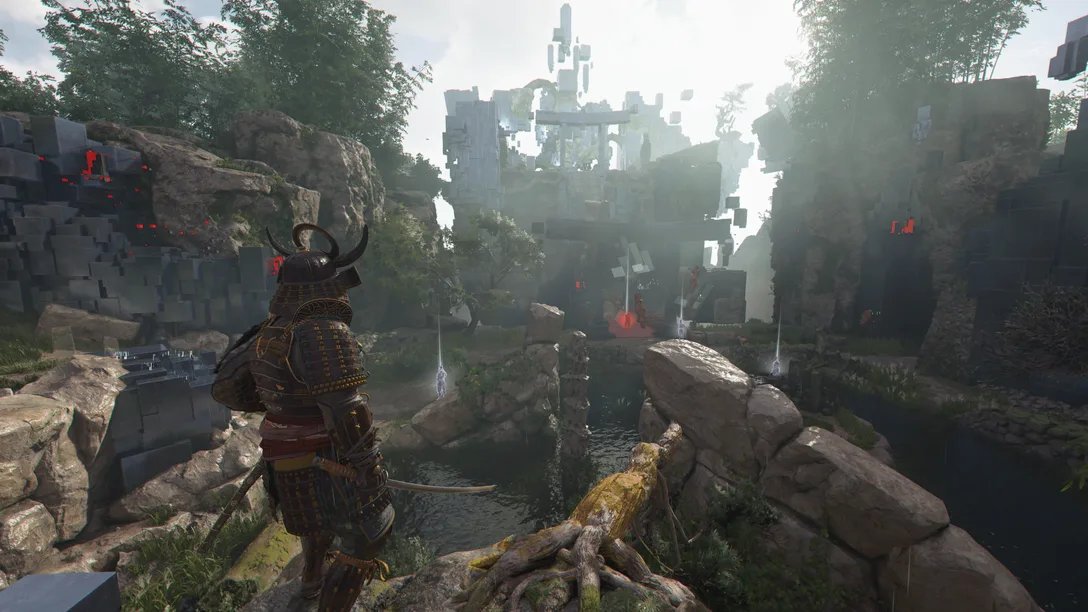
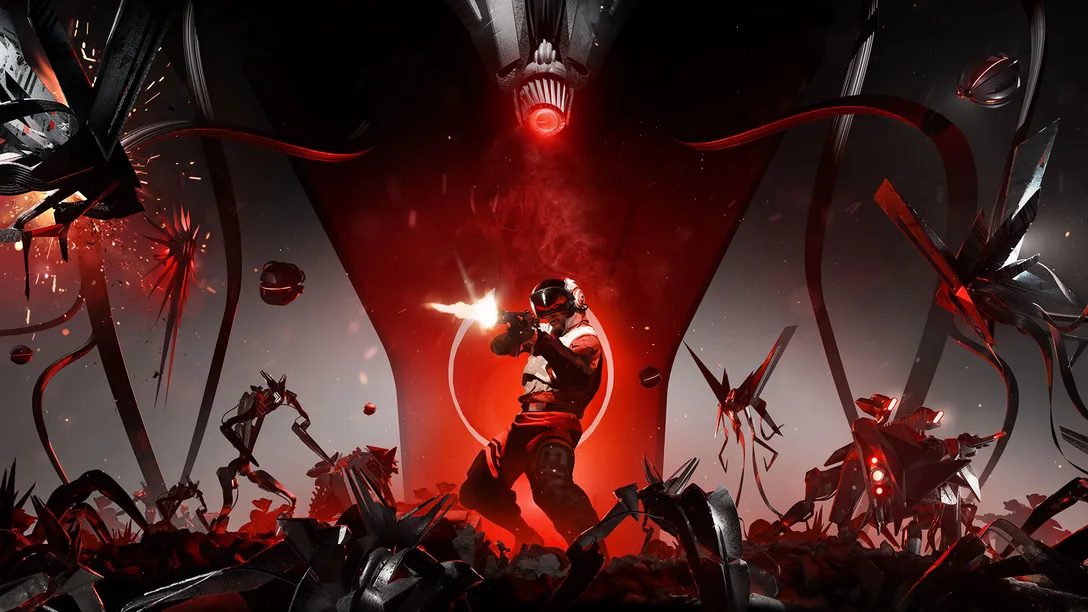
Housemarque published a technical breakdown of the visual effects in Saros and explained how the studio transitioned from its own NGP engine to the new unified Graphite architecture. This architecture combines GPU simulation, rendering, team tools, and integration with DCC software, such as graphics creation packages like Houdini.
The studio emphasizes that Graphite did not replace previous developments from scratch — NGP became a part of it and gained a new level of capabilities. All of this is necessary for each Housemarque game to continue having a recognizable visual style.
Volumetric fog that reacts to everything around
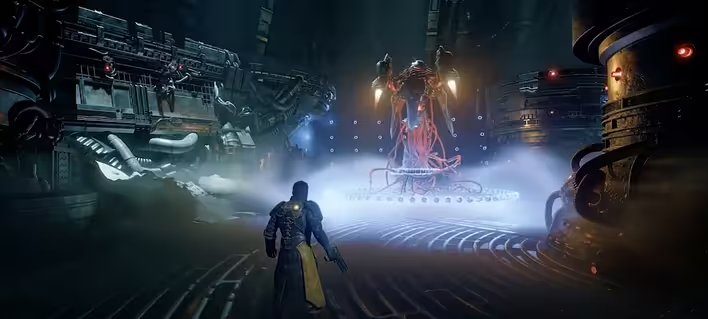
For Saros, the team redesigned the fog so that it is not just a background, but a living part of the scene. Compared to Returnal, where volumetric fog already reacted to events, in the new game the fog became more detailed and received two separate systems: a low-frequency one for atmosphere and a high-frequency one for narrative effects.
The low-frequency fog is based on a reworked version of froxel fog — a voxel grid aligned to the camera. For frame stability, the studio reduced the hysteresis coefficient from 90% to 50% and added blue noise jitter and depth clamping. Separately, the team implemented physically accurate light scattering, color absorption, self-shadowing, and sky lighting.
The high-frequency fog operates through its own ray marcher, which processes data in groups of 8x8x8 voxels and skips empty areas for better performance. Both systems are combined, and the fog also reacts to player movement, gunfire, explosions, and enemies in real time.
Houdini, particles, and player spawn scene
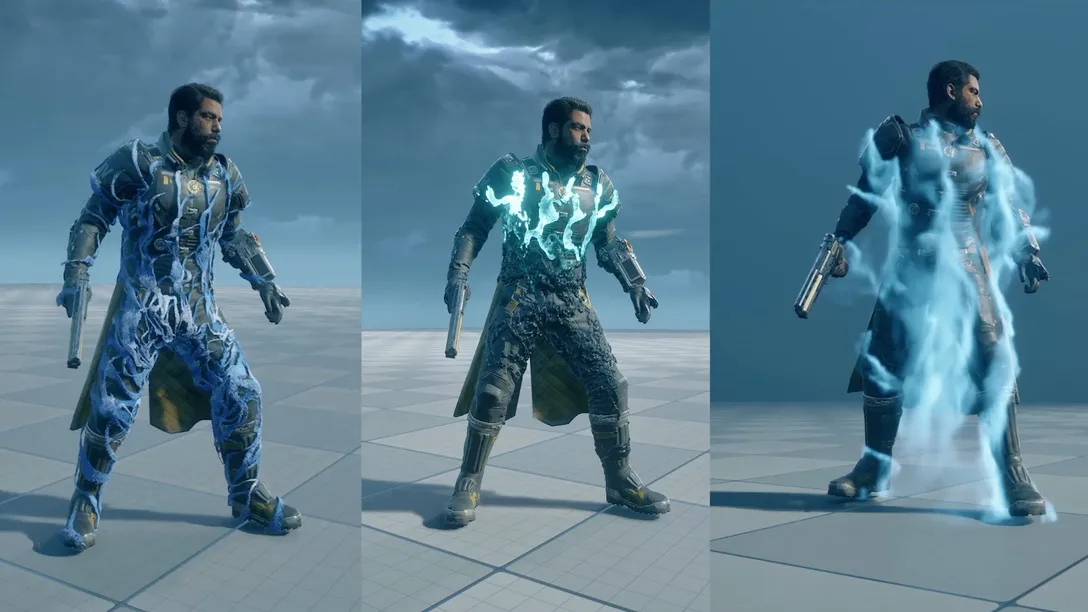
A separate block of material is dedicated to how Graphite works with data from Houdini. Previously, volumetric effects were built through logic at the level of each voxel and fluid simulations, but this complicated precise control over where exactly the density of the effect appears. Now the studio uses particles to more accurately bind effects to animated models.
For this, Housemarque created two new components: an offline data pipeline from Houdini and a runtime point cloud rasterizer — a component that converts simulated points into volume in real time. In practice, this was used in the player spawn scene in Saros: splines are initially prepared in Houdini, then in the engine they behave dynamically, forming the character from parts, smoke, steam, and sparks based on collision data.
The team emphasizes that this entire scene operates in real time at 60 fps on the base PS5 and does not require pre-prepared simulation assets. This allows for multiple variations of the spawn animation with slight random differences.