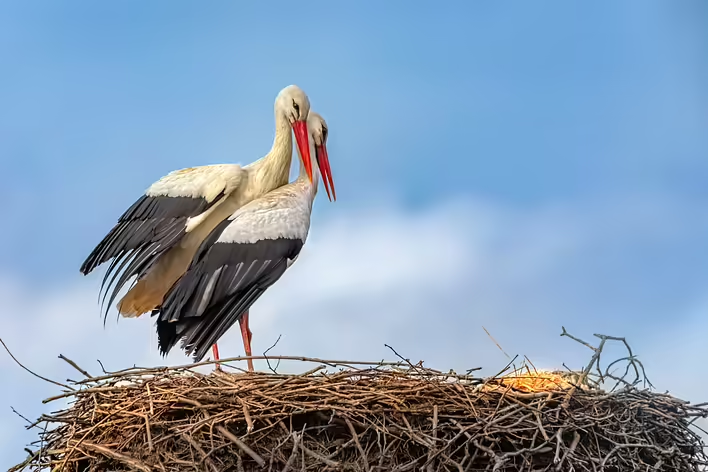
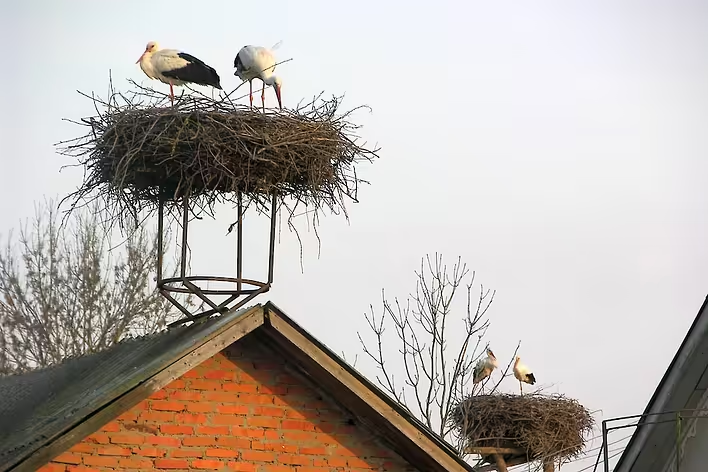
As soon as the snow melts and the warm rays of the spring sun touch the Ukrainian fields, familiar silhouettes reappear in the sky — the storks are returning. These majestic birds travel thousands of kilometers every year from Africa to Ukraine to nest here again. But why do they choose Ukraine? What makes it better than warm Africa, where storks spend the winter?
The main reason is food
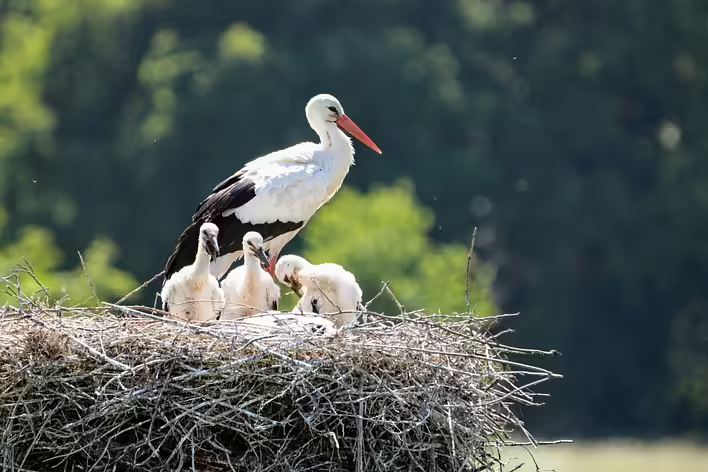
Spring and summer in Ukraine are a true explosion of life. During this time, frogs, mice, earthworms, insects, and other small creatures become active, which storks feed to their ravenous chicks. One nest can consume up to four kilograms of food daily! Such a rich food resource is essential to raise healthy and viable offspring. In Africa, where storks winter, the summer period brings heat, drought, water scarcity, and a decrease in the amount of available food — especially for the chicks.
Long days — more time for feeding
In summer, the days in Ukraine are much longer than in tropical regions. This means that storks have more hours to search for food and feed their young. Even one extra hour of daylight significantly increases the chances of the chicks surviving and strengthening. In Africa, especially in equatorial latitudes, the day is shorter — and this time is insufficient for proper care of the offspring.
Лелека білий з пташенятами
Favorable climate and moisture
In addition to food, Ukraine provides another key condition — a sufficient amount of water. Unlike the arid Africa, our climate has plenty of wet meadows, river valleys, and marshy areas that become ideal environments for hunting and nesting. Here, storks have everything they need for safe and effective child-rearing.
Instinct and evolution
For thousands of years, storks have adapted to this cycle: wintering in Africa, breeding in the north. Those populations that nested in Ukraine, Poland, or Germany proved to be more successful — their offspring survived better, and over time, this model became evolutionarily established. Today, most storks instinctively return to the places where they were born.
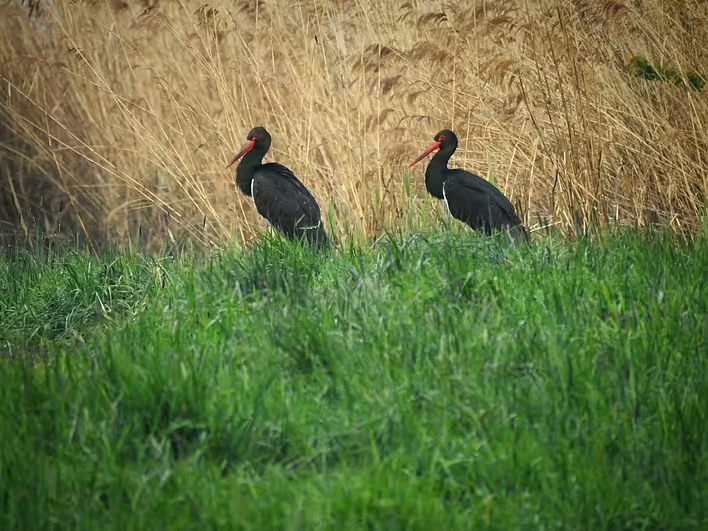
Лелека чорний
Where else do storks arrive?
Although Ukraine is one of the most important countries for storks, it is not the only one. Every year, these birds also return to Poland (which has over 25,000 pairs), Belarus, Lithuania, Latvia, Romania, Hungary, Bulgaria, Germany (where over 7,000 pairs nest each year). In Western Europe, many storks nest in Spain, Portugal, France, and Italy. Some populations reach as far as Great Britain and Central Asian countries, although they are rarer there.
Where do they fly for the winter?
In winter, storks migrate to Africa. Western populations head through Gibraltar to West Africa (Mali, Nigeria), while eastern ones go through Turkey, Sinai, and the Nile Valley to East Africa (Kenya, Tanzania, Uganda). In Morocco, near the Atlas Mountains and the coast, a significant number of storks winter. Some of them stay there permanently — especially near cities where there are landfills or farms with easy access to food.
However, recently climate change has also affected storks. Some stay to winter in Spain or even in southern Europe, where there are landfills or other food sources. At the same time, this raises concerns, as storks may feed on waste that is dangerous for them.