Avocado oil has recently become a trend among health food enthusiasts due to its composition, nutritional characteristics, and versatility of use. This post will not be entirely about recipes. Rather, we will mention dishes we have already prepared that use avocado in one form or another. Sometimes it is useful to know more about the products we consume and how they affect our bodies.
So, a bit about the composition of this fruit (indeed, according to classification, it is nothing more than a fruit):
The flesh of the avocado contains about 60% oil, 7% skin, and approximately 2% seeds. The caloric content is 118 kilocalories per 100 grams of flesh. These same 100 grams also contain:
Vitamin K — 14.6 mgDietary fiber — 3.65 mgPotassium — 437.27 mgFolic acid — 45.19 mgVitamin B6 — 0.2 mgVitamin C — 5.77 mgCopper — 0.19 mg
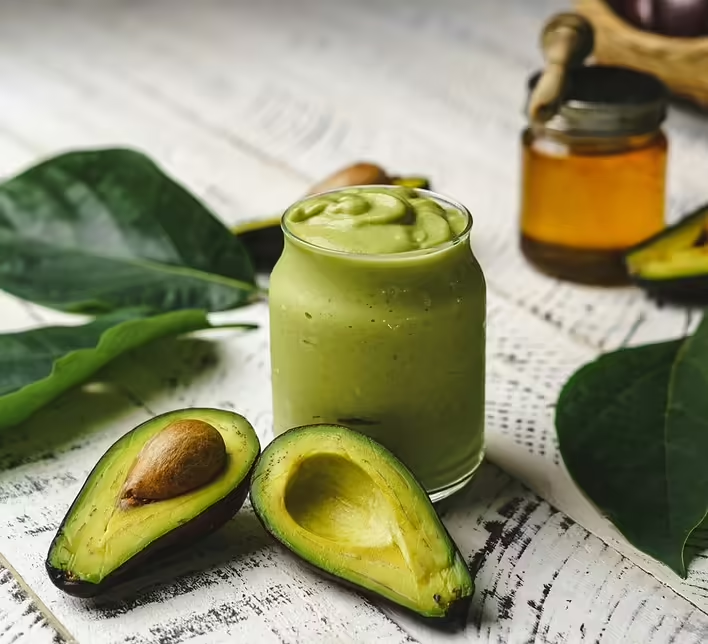
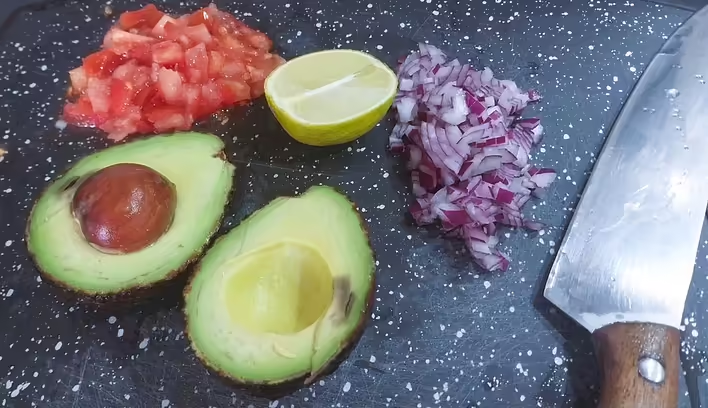
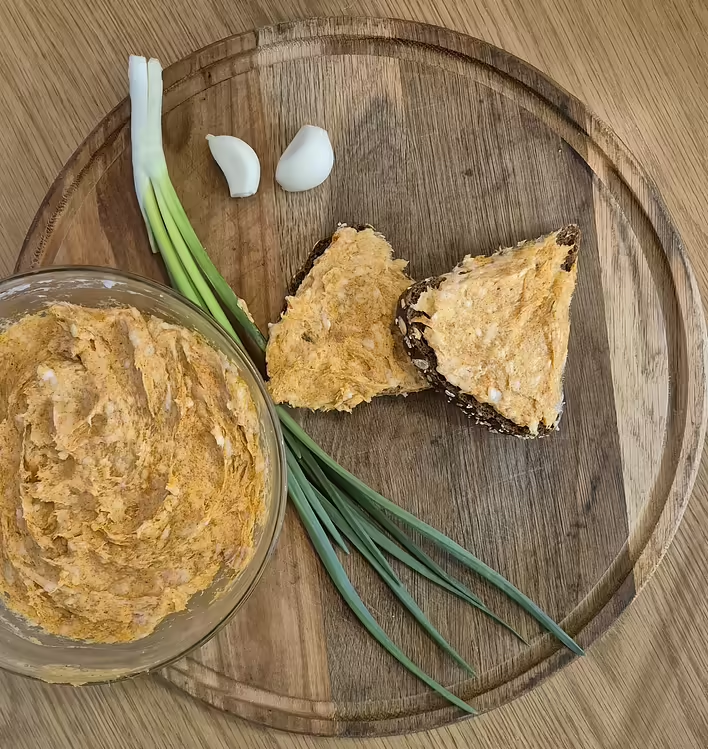
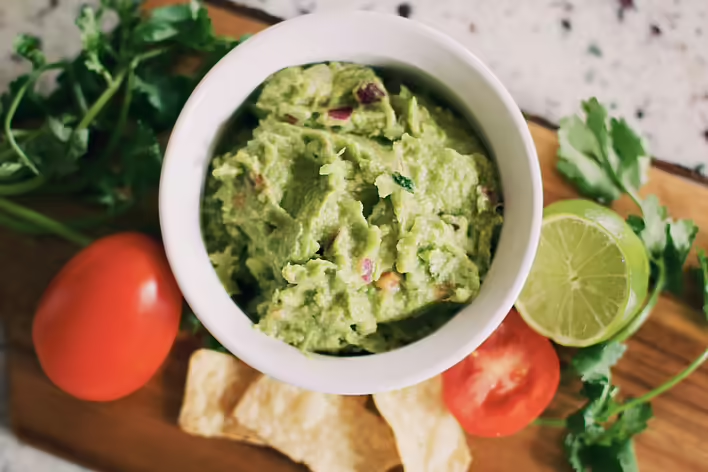
The flesh of the avocado is consumed raw, as a spread on bread. It is an ingredient in guacamole, a traditional dish of Mexican cuisine, which we have already written about here. The peoples of East Asia consume the fruit as a dessert. In tropical countries of Oceania, avocado is often used for milkshakes and is frequently added to other desserts.
з цих інгредієнтів можна приготувати гуакамоле
The flesh is also actively used in cosmetology. However, today we will shift our focus to the oil obtained from this fruit. And, jumping ahead, we will give the verdict right now: this oil is indeed a super-healthy product. Why do we have this impression? Read on ;)
Moving on to the oil
The main producers of avocado oil in the world are New Zealand, Mexico, the USA, South Africa, and Chile. It is a liquid of a slightly amber color, sometimes with a greenish tint, obtained through the physical extraction of the flesh and seeds of the fruit. "Pure" avocado oil is a product that contains at least 98.5% refined avocado oil. There are no international parameters for avocado oil. Usually, values recommended for olive oil are used. Quality standards for olive oil are available in Codex Alimentarius and the International Olive Council (IOC).
In a PubMed study, we found an interesting article about other classifications of avocado oil:
High-quality avocado oil, “extra virgin”, corresponds to that produced from high-quality fruits, extracted only by mechanical means, using temperatures below 50 °C and without the use of chemical solvents.
“Virgin” avocado oil is produced from fruits of somewhat lower quality (with small areas of rot and physical changes), extracted by mechanical means, using temperatures below 50 °C and without the use of chemical solvents.
“Pure” avocado oil is a type of oil for which the quality of the fruit does not matter; it is bleached and deodorized oil, supplemented with natural flavorings (herbs or fruits).
There is also “blended” avocado oil, which is combined with olive oil, macadamia oil, and others. Thus, it is no longer pure avocado oil but rather an oil with additives. It acquires entirely new taste, aromatic, and physicochemical properties. And the composition will be supplemented with other components from the ingredients included in the final product.
Composition and benefits of avocado oil
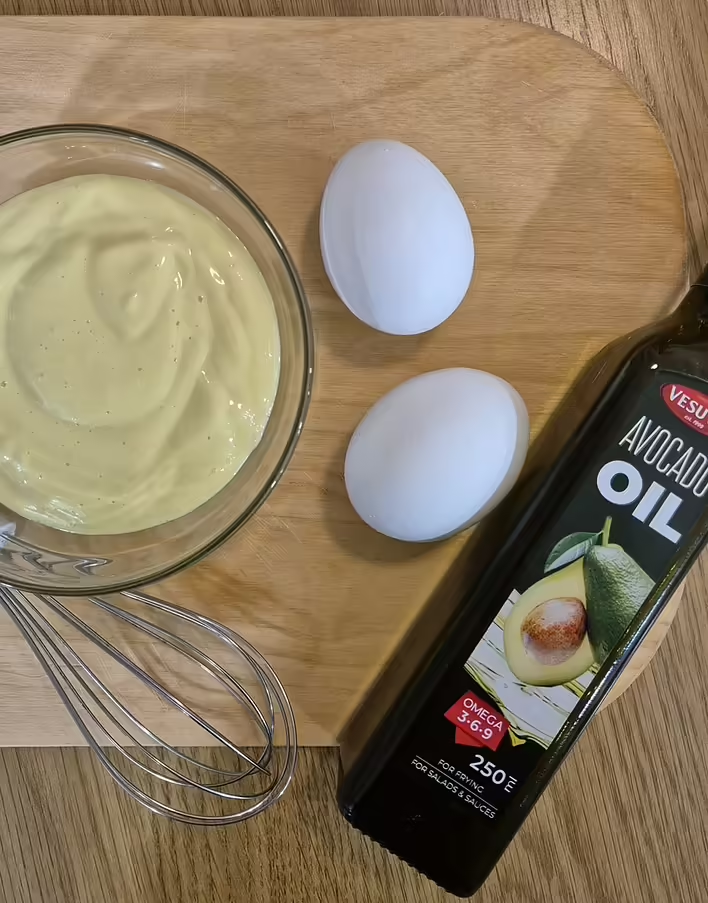
Avocado oil is mainly used for direct consumption “as is” due to its phenomenal content of fatty acids, vitamins, and antioxidants. With the highest smoke point among other oils (the omega-6 to omega-3 ratio is 12:1, and the actual smoke point is 271°C), it is ideal for frying. It can be used to dress salads. You can make a delicious and healthy homemade mayonnaise from it.
ось такий домашній майонез можна приготувати з олії авокадо
Avocado oil consists of more than 60% monounsaturated fatty acids. Compared to olive oil, avocado oil contains a larger share of saturated fatty acids (16.4%), with palmitic acid predominating (15.7%), a smaller share of monounsaturated fatty acids (67.8%), with oleic acid predominating (60.3%), and a larger share of polyunsaturated fatty acids (15.2%), the most important of which is linoleic acid at 13.7%.
Adding avocado oil to the diet normalizes levels of insulin, glucose, total cholesterol, low-density lipoproteins, triglycerides, and reduces inflammatory proteins (C-reactive protein (CRP) and interleukin-6). In other words, if you do not want to deal with cardiovascular diseases (hypertension, ischemic heart disease, heart attack, and stroke as the worst versions), endocrine system issues (obesity, diabetes), skin problems (dryness, peeling) – it is worth paying attention to this product.
Moreover, adding avocado oil to skin cream with vitamin B12 has shown that such a cosmetic product has the potential for long-term topical therapy of psoriasis. And all this evidence can also be read in the same article on PubMed.
Verdict
So, once again, the verdict: avocado oil is delicious, healthy, and nutritious. It is a somewhat expensive product, but considering that we are what we eat - it is better to invest in good and healthy products than to spend thousands of dollars on treating diseases we acquire by eating all sorts of synthetic rubbish. So love yourself and choose healthy eating!
If you enjoy our posts and recipes – you can always support our blog on the Buy Me a Coffee service. Your donations will inspire us to create new and useful Ukrainian-language content. We will be able to buy new ingredients, devices, and interesting cookbooks. This will allow us to regularly adapt recipes for simple and understandable preparation at home. Or you can simply share this post on social media, which will also help the Tseivo platform grow ;)